Showing posts with label flight crew. Show all posts

Monday, May 9, 2016

PRESSURISATION SWITCH IN THE WRONG POSITION

HELIOS AIRWAYS FLIGHT 522: 14 AUG 2005: BOEING 737 – 300

SYNOPSIS

On 14 Aug 2005, Helios Airways international Flight 522 departed from Larnaca, Cyprus, at 06:07h for an intermediate stop at Athens, Greece on way to Prague, Czech Republic. The planned flying time was 1 hour and 23 minutes. While climbing through an altitude of 12040 ft, for FL 340, the cabin altitude warning horn sounded at 06:12h. The German captain and the Cypriot co-pilot tried to solve the problem but encountered some problems communicating with each other.

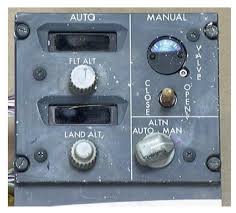
Helios' Boeing 737-300 5B-DBY underwent maintenance on the night prior to the accident. The pressurization system was checked, but after completion of the tests the Pressurization Mode Selector (PMS) was reportedly left in the "Manual" position instead of the "Auto" mode. In manual mode the crew had to manually open or close the outflow valves in order to control the cabin pressure. The outflow valves were one-third in the open position which meant that the cabin would not pressurize after takeoff. The PMS mode was apparently not noted during the pre-departure checks by the crew.

At 06:14h while climbing through an altitude of 15966 ft, the Captain contacted the Company Operations Centre (COC) and informed, “Take off configuration warning ON” and “Cooling equipment Normal and Alternate Offline”. Because of a lack of cooling air another alarm activated, indicating a temperature warning for the avionics bay. 

There were a few communications between the Captain and the COC during the period of 06:14h and 06:20h. On a query from the Captain, “where are my equipment cooling circuit breakers?” The engineer replied, “Behind the Captain’s seat”. These needed to be pulled out to turn off the alarm. The captain got up from his seat to look for the circuit breakers. At 06:20h, the Captain made his last communication, at which time the aircraft was climbing through 28900 ft.

During the communications between the Captain and the COC, at an altitude of approx. 18000 ft, the cabin altitude exceeded 14000 ft, leading to the deployment of oxygen masks in the passenger cabin, as per design.

The crew was not wearing their oxygen masks as their mindset and actions were determined by the preconception that the problems were not related to the lack of cabin pressure. As the airplane was still climbing, the lack of oxygen seriously impaired the flight crew. The captain probably became unconscious when he was trying to find the circuit breaker. The first officer was still in his seat when he also became unconscious. There were no further two way communications with the aircraft after 06:20h.

The aircraft continued to climb and leveled out at FL 340, as programmed. The aircraft continued on track maintaining FL 340 and eventually fed in to a standard instrument approach procedure for runway 03L at Athens International airport, while continuing to maintain FL 340. The approach was followed by a missed approach, and setting up of a holding pattern over KEA VOR, while continuing to maintain altitude.

All efforts by Greek air traffic controllers to contact the pilots were futile. Around 07:00h, two Greek F-16 fighter planes were scrambled to intercept the aircraft. The F-16s intercepted the aircraft on its sixth holding pattern, at about 07:23h. The F-16 pilots reported that they were not able to observe the captain, while the first officer seemed to be unconscious and slumped over the controls. Oxygen masks were reported to be dangling in a dark passenger cabin.

At 08:49h, the F-16's reported a person not wearing an oxygen mask entering the cockpit and occupying the captain's seat. The F-16 pilot tried to attract his attention without success. At 08:50h, the left engine flamed out due to fuel depletion and the aircraft started descending. At 08:54h, two Mayday messages were recorded on the CVR, in a very weak voice. At 09:00h, the right engine also flamed out at an altitude of 7084 ft. The aircraft continued descending rapidly and impacted hilly terrain about 33 kms northwest of Athens, close to Grammatiko village.

All 121 persons on board the aircraft, including 6 crew members and 115 passengers, were fatally injured during the accident.

DIRECT CAUSES
1. Non-recognition that the cabin pressurization mode selector was in the MAN (manual) position during the performance of the:
a) Pre-flight procedure;
b) Before Start checklist; and
c) After Takeoff checklist.

Image Courtesy: Google Images. Pressurisation Mode Selector in Manual Mode


2. Non-identification of the warnings and the reasons for the activation of the warnings (cabin altitude warning horn, passenger oxygen masks deployment indication, Master Caution), and continuation of the climb. (The initial actions by the flight crew to disconnect the autopilot, to retard and then again advance the throttles, indicated that it interpreted the warning horn as a Takeoff Configuration Warning). (At an aircraft altitude of 17 000 to 18 000 ft, the Master Caution was activated and was not cancelled for 53 seconds. The reason for its activation may have been either the inadequate cooling of the Equipment or the deployment of the oxygen masks in the cabin. Independently of the Master Caution indication, there are separate indications for both malfunctions on the overhead panel. The flight crew possibly identified the reason for the Master Caution to be only the inadequate cooling of the Equipment that was indicated on the overhead panel, and did not identify the second reason for its activation, i.e., passenger oxygen masks deployment, that was later also indicated on the Overhead panel. The crew became preoccupied with the Equipment Cooling fan situation and did not detect the problem with the pressurization system. The workload in the cockpit during the climb was already high and was exacerbated by the loud warning horn that the flight crew did not cancel).

3. Incapacitation of the flight crew due to hypoxia, resulting in continuation of the flight via the flight management computer and the autopilot, depletion of the fuel and engine flameout, and impact of the aircraft with the ground. (The incorrect interpretation of the reason for the warning horn indicated that the flight crew was not aware of the inadequate pressurization of the aircraft).


LATENT CAUSES

1. The Operator’s deficiencies in organization, quality management and safety culture, documented diachronically as findings in numerous audits.

2. The Regulatory Authority’s diachronic inadequate execution of its oversight responsibilities to ensure the safety of operations of the airlines under its supervision and its inadequate responses to findings of deficiencies documented in numerous audits.

3. Inadequate application of Crew Resource Management (CRM) principles by the flight crew.

4. Ineffectiveness and inadequacy of measures taken by the manufacturer in response to previous pressurization incidents in the particular type of aircraft, both with regard to modifications to aircraft systems as well as to guidance to the crews.


CONTRIBUTING FACTORS TO THE ACCIDENT

1. Omission of returning the pressurization mode selector to AUTO after un-scheduled maintenance on the aircraft.

2. Lack of specific procedures (on an international basis) for cabin crew procedures to address the situation of loss of pressurization, passenger oxygen masks deployment, and continuation of the aircraft ascent (climb).


3. Ineffectiveness of international aviation authorities to enforce implementation of corrective action plans after relevant audits.

Saturday, April 27, 2013

AIRASIA INDIA'S GAME PLAN


AirAsia India has filed for a No Objection Certificate (NOC) with the Aviation Ministry on 23 Apr 2013, after having obtained formal approval of the Foreign Investment Promotion Board (FIPB) on 06 Mar 2013. The NOC is for the launch of a low cost airline in India as a joint venture between AirAsia, Tata Sons and Telestra Tradeplace in the ratio of 49: 30: 21.   This newly-formed airline is the Indian arm of Malaysia's low-cost carrier group AirAsia, which is going to exercise control over its operations. As per reports, AirAsia India has plans to launch operations starting with 3 - 5 aircraft based in Chennai, and plans to connect small towns and cities in the South. Thereafter, as per reports, it proposes to ramp up to 36 planes in five years, with 12 each based at Chennai, Bangalore, and Kolkata. Dr Tony Fernandes, the AirAsia Group CEO is quoted to have said that, “India will be the final piece of the puzzle for the time being and there will be no further joint ventures”. He believes that India is a “huge opportunity” and that he has not “jumped in quickly”. He believes that AirAsia has done their homework and are entering “into the domestic market with eyes wide open”. Fernandes believes that a number of failures in the Indian market had been due to cost levels, and thus argues that cost would be the main differentiator in the Indian venture. How does he plan to keep the cost low?

India is known for high operating costs in terms of taxes, airport charges, landing and navigation charges, etc. This has been one of the contributing factors, besides others, for the losses that have continuously been mounting at the airlines. A study of the annual financial results of the three listed airlines, Jet Airways, Kingfisher Airlines and Spice Jet, from March 2008 to March 2012 indicates that they have been making huge overall losses every financial year; Spice Jet  made relatively small profits in FY 2009-10 and 2010-11. Reportedly Indigo Airlines, an unlisted airline, is the only one that has made consistent profits; although even it made a loss of Rs 80 Crores in FY 2011-12. Mounting losses led Kingfisher to gradually cut down on its services, and eventually it ceased to operate in the latter half of 2012. The closure of Kingfisher operations was good news for the remaining airlines, which made a profit in the QE Dec 2012, by commanding better ticket prices due to the sudden demand/ supply mismatch. India is known to have a very challenging environment for airlines to launch and sustain operations; we have had many start-ups like East West, Modiluft, Damania, and now Kingfisher fail. It is under these circumstances that AirAsia India is confident of replicating its proven business model in India; a ‘low cost, no frills’ model that assures low fares to the passengers, along with profits for the company. Considering these facts, will AirAsia be able to expand the available passenger base so that the profitable demand/ supply equation is not affected, after the increase in the number of players and services? What is it that AirAsia India would do differently from what the other three purely low cost carriers (LCC) operating in India has not been able to do thus far?

Fernandes conceded that, “It has been tough for us to develop a low-cost structure to compete effectively in India”,  and goes on to add that “we now have the recipe to achieve this”. Tony Fernandes told CNBC that he was confident the airline's "really low cost product" would work in India. All this sounds cliché and the real test is going to be in how this attractive new product is going to be configured. The company’s vision statement may hold some answers. AirAsia’s vision is “To be the largest low cost airline in Asia and serving the 3 billion people who are currently underserved with poor connectivity and high fares”. Flowing from this, one of the mission statements is “To attain the lowest cost so that everyone can fly with AirAsia”. To achieve this, the key strategies are “Safety First, High Aircraft Utilisation, Low Fare, No Frills, Streamline Operations, Lean Distribution System, and Point to Point Network”. This is not something visionary that the other low cost carriers already operating in India are not privy to. What specifically is AirAsia India going to do that the others have not been able to do?

The most important difference between the present Indian LCCs and AirAsia India is that AirAsia India is part of a larger group that has deep pockets. Also, the group already has a large international network in place to 19 countries, along with domestic operations in 5 of these destination countries. Relevant to AirAsia India operations, the group is already operating international services to 5 destinations in India, and is connecting these cities to 23 destinations in 17 countries in the East, including Malaysia, Thailand, China and Australia. A study of the group network reveals that it is operating to 99 destinations in 19 countries, as on 17 Apr 1013. Comparing this with the present Indian LCCs is informative. The three LCCs in India primarily operate domestically within India, with limited international operations; Indigo operates to five international destinations in five countries; Spice Jet is operating to 8 international destinations in eight countries; GoAir is yet to commence international operations because of the government policy of 20 aircraft/ 5 years.

Also, AirAsia group has a total of 120 A-320s aircraft as on date. Compare this with Indigo’s 62; Spice Jet’s 48; and Go Air’s 13 as on 07 Dec 2013, as per the DGCA website. AirAsia group has a further order of 360 more A-320s/ A-320 Neo aircraft that are due to be delivered by 2026; this is excluding the leased aircraft. AirAsia group strength by the end of 2013 is likely to reach 150. All these factors give AirAsia India an advantage over the present Indian LCCs. More importantly, these factors help AirAsia India to technically circumvent the Indian government restriction of ‘20 aircraft/ requirement of 5 years domestic experience’ before a carrier can fly to international destinations that most of the present carriers have had to put up with. The already challenging Indian aviation environment is even more challenging with these restrictions.

India is a large country with a very well developed railway network that links to every small town across the country. As against this, the country has only 67 licenced aerodromes for public use, as per the DGCA website; adding a few defence and other airports to this still does not match the reach of the railways. It can thus be said that infrastructural constraints restrict a large population of India to access air travel, whereas rail travel is conveniently available to a majority of the population. Also, Indians by nature are very value conscious, and time is not yet considered a valuable resource with the vast majority of us. In addition, railways are considered a common man’s mode of travel and are also the largest public sector employer. These facts lead the government to directly and indirectly subsidise the operations, reflected in cheap rail tickets. Air travel is still considered elitist and thus is heavily taxed, which fact is again reflected in the ticket pricing. The large difference in ticket pricing between the railways and the airlines is one of the factors that is hampering rail passengers from making the switch to air travel. Air travel would grow much faster if the air tickets could be priced somewhere between the cost of 2nd AC and 1st AC train tickets. This can realistically happen only if the dynamics of the free market govern the ticket pricing of the railways, like in the case of the airlines. Air Deccan had unrealistically attempted this approach, but had bled through the process; it was however successful in luring rail passengers to travel by air.

Air travel is the preferred mode of travel when either natural or manmade barriers add problems to travelling by surface. Going across hills/ mountains/ large water bodies, or across international borders are good examples where air travel automatically becomes the preferred mode of travel. It is a fact that holiday packages in the tourist friendly ASEAN countries are very slightly more expensive than domestic holidays. It is also common knowledge that many utility items are available at much lower prices in these countries. These two facts open up a host of possibilities for AirAsia India. The low cost of items bought abroad helps partially offset the higher cost of the holiday, and also, people are happier to go abroad for their holidays. Indian government policies, limited & poor infrastructure at domestic tourist destinations and the Indian people’s fascination for travel abroad will work to the advantage of this new airline, as AirAsia’s focus customer is the leisure traveller. AirAsia India’s entry in to the Indian airspace will lead to a large increase in connectivity between India and the rest of Asia in the East. AirAsia India will be able to convert a lot of domestic leisure travellers to travel abroad Eastwards, by serving as a seamless feeder airline for the already established airlines of the group. In doing this it would be giving tough competition to the other Indian LCCs domestically. As per reports in the press, the airline in keeping with its strategy of keeping costs as low as possible, is likely to discontinue some status quo items of the Indian aviation sector; items like free transportation and free meals for the flight crew. This may discourage some experienced flight crew from joining the airline. However, this is not likely to pose a problem presently, as Kingfisher Airlines crew who happen to be qualified and experienced on A-320s are presently available to meet the initial requirements of this airline.

Innovative schemes are another hallmark of this group. Even before it had applied for the NOC, the group had announced up to 70 percent discount on international flights from India. The group offered two million seats under this scheme for bookings done in April this year for travel period between 01 January and 30 April 2014. The group is also known to earn 18% of its total revenue from ancillary sales. These and other such innovative features are likely to help AirAsia India maintain its profitable edge even in a challenging aviation market like India. How the other LCCs are going to fare is something that we will have to wait and watch.  

Thursday, January 24, 2013

CREW RESOURCE MANAGEMENT (CRM) AND THE AIRCRAFT COMMANDER


Formal CRM training started sometime in the 70s; the first being KLM that introduced a human factors training programme, based on the Edwards SHEL model and the trans-cockpit authority gradient. Accidents involving fully airworthy aircraft were perplexing the aviation community – the most notable example being the collision of two B-747s in 1977, while on the runway at Tenerife. Accidents like these were pointing towards the breakdown of crew co-ordination and communications between the cockpit crew. It was finally the NASA workshop of 1979 where the role of human factors in aviation accidents came in to sharp focus. Participants at this conference were convinced that formal training in crew co-ordination was required to reduce accidents due to human error. The origin of CRM (initially called Cockpit Resource Management and later changed to Crew Resource Management in recognition of the complex nature of aviation operations - where human errors, anywhere in the chain, can lay dormant for extended periods until an active failure at the hands of pilot leads to an accident) training is now universally traced to this NASA workshop of 1979. As more knowledge was gained on the subject the training has undergone many generational changes, from the first generation CRM to the present day sixth generation CRM, also called Threat and Error Management. CRM training is crucial for flight crew (besides for others too who are connected with aviation) as they are aviation’s last of line of defence to prevent an accident from happening.

 Amongst the flight crew, the Commander of the aircraft has been given the final authority with regards to the safety of the aircraft, and its contents, from the time he/ she assumes command until he/ she relinquishes the command of the flight. This is elaborated in Rule 141 of the Aircraft Rules, which states that “The Pilot-in-command (PIC) shall have final authority as to the disposition of the aircraft while he is in command.” The rule also states that the PIC “shall supervise and direct the other members of the crew in the proper discharge of their duties in the flight operations.” It further clarifies that “In addition to being responsible for the operation and safety of the aircraft during flight time, the Pilot-in-command shall be responsible for the safety of the passengers and cargo carried and for the maintenance of flight discipline and safety of the members of the crew.” This is indeed a very onerous task for any one individual, especially one who is flying above mother earth, in the third dimension. Why?

It is because the PIC is human, and has all the capabilities and limitations like any other human being. These capabilities and limitations have been studied by experts in the respective fields. These are required to be known by pilots to get any aviation licence, and pilots are also being tested for the same, before issue of the licence. ‘Human factors’ is the term designated by the ICAO for this important area of study by pilots (and lately by others like ATCOs, Maintenance too). This article is not going to go into details of the physiological factors like hypoxia, hyperventilation, decompression sickness, fatigue, sleep, etc. or the factors like illusions that most of the pilots are familiar with. The author has participated/ facilitated CRM training and always felt that the training mainly focussed on the ‘What’ and ‘How’ of CRM, after briefly telling the participants about ‘Why’ it is important for the aviation industry to have an even lower accident rate. It is the author’s view that if the CRM training focussed more on convincing the participants of the ‘Why’ it is important for the participants, then the person would be more receptive, and self motivated to listen to the ‘how’ and ‘what’.

This article will attempt to make a strong case for ‘Why’ CRM is important for any crew, and especially so for the Commander because it is the Commander who finally signs on to the task of undertaking a safe flight from A to B, with the help of the crew, of course. It seems simple and every Commander intellectually understands its importance, but this fact needs to be internalised and acted upon if we want to prevent accidents like the one at Mangalore, and others around the world, where in fully serviceable aircraft met with fatal accidents.

 It is a fact that with the new generation of highly reliable aircraft and engines, the major cause of accident is due to factors that are termed as human error. When an accident does[J1]  take place due to human error, it was found that the accident happened due to the active failure in the hands of the pilot, but a number of passive errors had happened at various stages in the life cycle of the aircraft viz., the design, manufacturing, loading, servicing stage, etc. or have been caused due to an error by the regulator, company management, ATC, dispatch or by the meteorologist. The other fact is that in some cases the PIC was the final person who could have prevented the accident from happening. A human error accident in the hands of the pilot is an acceptance by industry professionals that the accident could have been prevented; thus a human error (aircrew) is more appropriately a ‘pilot preventable’ accident. This brings us to larger questions – Firstly, Do human beings like to err? And the answer is ‘No’. Secondly, do humans err?  The answer is ‘Yes’. Think of the number of times one tries to open the lock with the wrong key, or punches in the wrong password. This implies that although no human likes to err, ‘to err is human’. This also implies that PICs, being human, are also prone to errors. Why?

Research in to the human brain has brought out a large number of limitations of the brain. The following are some of the important memory (storage and retrieval of information) problems that most human beings, including pilots, suffer from: -
  • Absent mindedness – Forgetting due to lack of attention.
  • Blocking – Temporarily forgetting – “did he clear us to land?”
  • Transience – Forgetting information with time – “What is the Approach frequency…?
  • Misattribution – Forgetting the source of the information.
  • Suggestibility – Developing a false memory because of new information received during retrieval.
  • Bias – Unconscious reshaping of memory due to personal beliefs or mood.
  • Persistence – Negative distortion of a memory of a traumatic event.
  • Memory changes – Memory changes from person to person, and also within the same person due to reasons like physical & emotional health, stress, quality and quantity of sleep, diet and age.
  • Inattention blindness - Attention resources are very limited and it is a known fact that things to which we are not paying attention to are not perceived; more importantly if we are devoting attention to one task, then we may not have adequate attention resources for other maybe more important primary tasks – fixation – a cause factor in many aviation accidents. Inattention blindness is affected by the following  factors:
    • Conspicuity – All warnings in the cockpit are designed keeping this in mind.
    • Mental workload and task interference
    • Low workload and the effects of automation – Low arousal; low performance.
  • Limited processing capability of the brain as compared to large acquiring capability of the five senses. In aviation eyes, ears (hearing and vestibular apparatus) and seat of the pants are the most relevant sense organs. For example in the human visual system, the amount of information coming down the optic nerve is estimated to be in the range of 10 million bits per second. This far exceeds what the brain is capable of fully processing and assimilating; about 16 bits/ second (max 40 bits/ second). Guess why two people looking at the same scene would pick up different images – this is primarily based on what is being paid attention to by each of them.
  • Limitations (in terms of time, and capacity) of the working memory (like the RAM in the computer) in humans.

These severe limitations of the human information processing mechanism would convince any human about what he is up to when he/ she is interacting with the outside world and trying to make sense of what is going on, or in aviation parlance when he is trying to get and remain situationally aware.

This already difficult situation becomes even worse when the same set of information is to be processed under time constraints, like in a non-normal or unanticipated situation in the air. Being situationally aware at all times is very important for a crew primarily because without being situationally aware it would not be possible to take the right decisions every time. Poor situational awareness leads to bad decisions; a situation that is detrimental to the task at hand – of ‘flying the aircraft safely and efficiently from one place to another’ – the primary task of the PIC. How do we ensure that we are situationally aware at all times, or regain situational awareness at the earliest, if it is lost due to any reason?

This requires the application of crew resource management – “the effective use of all available resources: human resources, hardware, and information.” The PIC is the final decision maker in the air, but knowing his/ her limitations, he should be the one who makes all efforts to use all available resources to become situationally aware, and there after go on to making the right decision. This sounds simple and logical but a glance through the history of aviation accidents/ incidents would be able to convince any pilot that this is not so. The reasons are many. The reasons could be attributed to the way in which an average human grows up in this world – our formative years in school where we are taught to excel as individuals and compete with each other to stand first in class/ sports etc. The same pattern continues through college, and life there after – our individual successes are celebrated. When we enter aviation, our first solo is the most celebrated event, and solo flights are cherished by ‘real pilots’. ‘The individual is required to be competitive, and is complete’, is the message that life has given us thus far. Even our traditional checks and proficiency testing in aviation are done on an individual basis – testing is of our skills as individual pilot’s (a column for CRM has also been added to the check proforma to assess the pilot’s CRM behaviour). The early pilot’s with the leather jackets, white silk scarves and glasses is the macho image of a pilot, which even today is ingrained in many individual pilot’s minds, some of whom have never been close to a fighter. The author flew single seat fighter aircraft for over two decades and can vouch for the fact that he always felt complete – missed out a few checks here and there; made approaches on the wrong runway; had ‘action total’ on first solo; miscalculated fuel in the air while doing low level navigation, etc. Single seat fighter flying accepted a certain amount of risk due to the nature of the task, but commercial aviation is required to be safe, and risk free. Commercial pilots have to work with a different mindset where the aim safe and efficient flying has to be kept paramount.

Commercial pilot’s need to be convinced about using CRM techniques, if we wish to better aviation’s accident record. The rapid growth in aviation, leading to a larger number of departures, in the coming years would lead to larger number of accidents, if nothing is done to bring down the accident rate/ million departures. The accident rate in commercial aviation has been brought down substantially over the years, from the 1950 – 60s, due to the move from  reciprocating engines to the more reliable jet engines as a means of propulsion,  and due to usage of better technology. However, the accident rate has stagnated at a low figure over the past few decades – it has refused to reduce any further. The major cause of accidents is now human factors. Aviation’s greatest challenge is to tackle this cause factor if we wish to reduce the number of accidents, with the growth of aviation. The most significant contributions to reducing human error accidents can come from internalisation of CRM techniques by the pilot community, because the pilot is the last line of defence of preventing accidents in the aviation system.

Being situationally aware in terms of our location, spatial orientation, environment, aircraft systems, time and fuel requires all inputs that are available to the PIC. It has been found in many accidents that the accident happened in the hands of a situationally unaware PIC, when he was the PF, even though other crew members were situationally aware – the Mangalore accident is our own case in point. What this implies is that the whole crew should be on the same page and there should be no unresolved issues in the cockpit. It is not the PF who causes an accident; it is the entire crew. Accidents happen because either the PIC does not ask for, or permit (through verbal or non verbal communications) free flow of relevant information between the crew, or the crew does not share the relevant information due to reasons that are part of being human. You can be disrespectful/ rude to a machine and it would even then give you the right information if you have pressed the right buttons and controls, but humans are different – we are emotional beings. Emotions are facts as far as humans are concerned. Our life should convince us that emotions always matter. Other reasons could be: a human may feel that the other is aware; knows every-thing; or the other does not need to be told as he is so experienced; or a plain ‘I am not OK, you are OK situation’; or ‘why should I tell him’ he is responsible for his actions. These may be false assumptions, as has been brought to light in a number of aircraft accident/ incident investigations.

Similar to situation awareness, the PIC needs all the inputs to make a correct decision – two heads are always better than one; time permitting though. There may be times when there is no time available and the PIC would then need to take a decision, as he deems fit based on his training and experience. However, when time is available it is best to solicit opinions on the problem; options; pros and cons of each option before taking a decision. Each of these should be weighed in terms of ‘what’ is right, and not ‘who’ is right, under the given set of circumstances. After the decision has been made; and responsibilities assigned to implement the decision, it should be reviewed, and the same process of decision making (DODAR) should continue. This sounds simple but how do we ensure inputs from all sources? This can only happen by empowering the crew.

It is the PIC’s responsibility to empower the crew by facilitating the formation of a team at the earliest opportunity provided. This seems difficult but is actually not so. All crew members on the line are trained, licensed, and proficient to do their jobs well. However, it should be remembered that proficient individuals do not always make competent teams. Our cricket team brings this out clearly. It is the responsibility of the leader, the Commander, to turn these competent individual crew members in to a competent team. The team members are technically qualified, trained and proficient to undertake the flight, and contribute to the task of a safe flight. However, it is the human aspects that need greater attention by each and every PIC before, during, and after the flight to ensure optimum performance from every crew member. A study of past accidents/ incidents points towards a deficiency in this area.

Just thinking of the co-pilot as a ‘Second in Command’, and the cabin crew as additional ‘eyes, ears and brains’ that are available, would help the PIC in finding better ways to making optimum use of all the available human resources within the aircraft itself. In addition, there are other human resources available too via the Radio Telephony. This suggested way of thinking subtly implies that the PIC needs to internalise the fact that each one of his crew in the aircraft, besides others who are outside the aircraft, are making vital contributions to the accomplishment of the common goal of safe flight from A to B, while being assigned seemingly different roles. The contribution of the crew towards the achievement of the common goal should be emphasised, valued, and acknowledged during the first meeting of the crew at the reporting point itself through appropriate behaviours and communicated through words, tone, and body language, so as to create an effective leader/ team relationship.

Research has shown that high performance Captains use three methods to build an effective leader/ team authority relationship. They establish their capability to assume the legitimate authority bestowed on them through law, by establishing competence through a well organised and logical briefing about the specific task at hand – each flight may follow the same routing, but no two flights can ever be the same. Having briefed, they balance the leader/ crew relationship by having the crew members take responsibility for the work of the group as well – this is an important element to empower the other crew members. One Captain is known to have made this statement before an extremely effective crew performance in the simulator: “I just want you guys to understand that they assign seats in this airplane based on seniority, not on the basis of competence. So anything you can see or do which will help out, I’d sure appreciate hearing about it.” Lastly, these Captains interact with humans (emotional beings, unlike robots) who would be filling in different roles on the flight. Crew were encouraged to converse and made to feel comfortable, particularly when conversation was related to the task at hand. Questions and comments were encouraged by all crew members on any aspects of the briefing/ task. By doing this, these Captains had set an authority pattern ranging from the authoritative to consultative, to participative and finally to the democratic. This is what balances the need of a single authority responsible for the safety of the flight with the contributions of all crew members to achieve a safe flight. It is important for the PIC to understand the role of verbal and non verbal communications in the accomplishment of the task. Effective communications before (in the form of a briefing), during (inquiring if something is amiss/ not as planned; advocating one’s own professional opinion, with reasons; etc.), and after the flight (a thorough critique is essential for learning/ team building and growth) is crucial towards effective team work on the aircraft. Effective communications is more likely to result in a situation where the crews are empowered.

The regulator and the company management empower the crew by laying down rules, SOPs and checklists that are required to be followed. The PIC can empower them further by providing them the right leadership, through effective communications, and by communicating, and more importantly by following all laid down SOPs and checklists. As has already been brought out, the leadership style utilised by the PIC would vary from Autocratic (in time critical situations) to Consultative, to Participative, to Democratic. However, it should always be borne in mind that this does not absolve the PIC of any of his responsibilities as laid down by the law. The law gives the PIC the authority, but he needs to earn the respect of his team members by his behaviour. A PIC who respects the others will be respected by the others. The formation of the team starts the moment the individual crew members start assembling at the reporting point.

The Captain must lead by example by following all checklists, laid down procedures and SOPs so that all crew members are on the same page, and know exactly what is being done, and what needs to be done at each stage of the flight. This helps the crew to identify, and point out deviations from the normal, which could be unintentional. Following the Captain’s lead, other crew members would be less tempted to resort to violations or the intentional disregard for laid down procedures. Sterile cockpit procedures are one such procedure that has been violated on a number of flights that have met with accidents or incidents. Sterile cockpit needs to be observed so that our single channel processing brain does not get distracted from the task at hand during crucial phases of flight. The Captain sets the tone for this, and is also responsible to ensure its sanctity by disciplining non conforming crew members.

The workload in the cockpit keeps varying on different crew members during different times/ flights. Workload management is one of the key responsibilities of the Captain. He must ensure that the work load is evenly distributed and that no crew is over or underworked – both situations lead to a drop in the arousal levels and in turn affect the processing capabilities of the brain. High workload leads to stress and fatigue, and its attendant problems, whereas under load leads to boredom, sleepiness, and loss of attention. Low workload situations are encountered during auto-pilot cruise on long flights. The Captain must ensure that the crew continue to monitor the systems for correct functioning. Even when the aircraft is on autopilot, the PF is responsible to ensure that the flight is on the desired trajectory and the systems are functioning as designed. The PM (PNF) must monitor any changes, even when engaged in non critical activities like flight plan, tuning, communications, etc. The standard dictum of flight prioritisation viz., ‘Aviate, Navigate and communicate’ should be followed.

High or low workload, it is a known fact that a highly motivated individual performs better under all conditions. Motivating pilots is relatively simple because most love their job – it is easier to motivate an individual who loves his job, as the motivator is in the job content itself. The Commander should try and provide opportunities for the crew to grow, of course within the laid down regulations. This is very motivating for the crew and the performance of the team improves. Mentoring a relatively inexperienced crew member pays rich dividends in terms of motivation and job satisfaction for both the mentor and the mentee.

Having gone through this paper, one is tempted to ask, “So what is CRM?” It is nothing but understanding that aviation is a complex system; we are human in that our physical, physiological and psychological performance keeps changing and that our information processing system has serious limitations (specially under time critical situations); that humans are emotional beings; that we need all the help possible to fly safely from A to B; that it is humanly not possible to do things by ourselves and that other crew members can be a big help, but would need to be led, motivated, involved to bring out their most optimum performance. Past accidents provide evidence that technical competence is an important requirement, but not the only requirement for safe operations; interpersonal and cognitive (information processing has severe limitations, especially under time critical situations) functions also have to be integrated in to flight operations to achieve a safe flight.

Finally, CRM is a concept that recognises the critical role of human factors in determining the effectiveness of technically proficient crew in both normal and non normal situations and gives one a practical approach which can help in an attitudinal/ behavioural change so that competent individuals can come together to form a competent team.

How does one recognise a competent team from just a technically proficient team? A competent team is one that can operate a safe and efficient flight from A to B, and also terminate the flight with the crews deriving satisfaction from working as valued professional members of the team, and also with a readiness/ willingness to perform together as a crew in the future.


 [J1]

Sunday, September 14, 2008

HUMAN LIMITATIONS - CRM AND ERROR MANAGEMENT

Basics about the Cockpit
In aviation, the Captain has been assigned a very important position. He is the designated leader, and is given the legal authority for the flight. He is responsible, along with his crew, for the safe and efficient operation of the flight. His decision under most normal conditions of flight is final. However, he may take the help of all available resources to arrive at the final decision, as he may not have the full picture, at all times. He is also responsible for crew performance, directing actions of the crew and can ask for assistance of any crew member. The First Officer (F/O) is a qualified crew member who has the education, training, and skills and as some one rightly put it ‘he is like a second in command’ who can take over as Captain in the event of incapacitation of the Captain. This is an important point. However, depending on his experience and personality, the F/O may not be able to handle all situations like the Captain but would be competent to handle all probable situations in flight. With these basics, let us analyse the worst case.

Human Limitations
It must be understood that both the Captain and the F/O are human beings and that their performance is susceptible to all human limitations. These include being prone to loss of situational awareness, stress and fatigue; having an attitude and perceptual problems. Other problems may include limitations in the application of knowledge, exercise of judgment, short term memory (working memory, which is akin to the RAM in a computer) overload, and finally incapacitation. Also, we are all familiar with the saying that ‘to err is human’. This saying will continue to be true as long as we human beings have limitations. However, in aviation – a profession that is very constrained by time; is highly stressful; has complex processes; and which is closely scrutinized the media, regulator and public, we can ill afford to have human errors, as these errors can be fatal, and have been so in the past. Human errors are defined as ‘the unintentional act of performing a task incorrectly which can potentially degrade the system’. Errors can include problems in practice, procedures, and systems. Human error has been a major contributor to incidents/ accidents in the past. Here it also needs to be emphasized that accidents do not generally happen due to a single factor. They are a culmination of a ‘chain of events’ of small factors. The aircrew is the last link in this chain that can prevent these errors from turning into incidents/ accidents. To prevent these incidents/ accidents, the crews need to be aware of error management.
Error Management
Error management can be best accomplished by ‘Error Avoidance’. In case this is not possible then the next step would be ‘Early detection’. Finally, in case the error has been detected late or not detected, then steps have to be taken to ‘minimise the consequences’ as a result of these residual errors. Let’s take an example to understand this process. We have been cleared for a radar vectored ILS approach for R/W 28 at Delhi. The local QNH is 983 hpa and the weather is Rain/ Thundershowers with low clouds at 300ft. We are descending through transition level, and about to change the altimeter setting when the TCAS warning goes off. You are put off for a while, and forget to change your altimeter setting to local QNH with the result that you are now flying 900 ft. below the required altitude. An error has been made. This could have been prevented if the crew had remembered to call out the QNH changeover, after the excitement about the TCAS had been resolved. Once this error has been made, the next option is to detect it at the earliest. This can happen when the PF calls for the completion of the approach checklist. The next checkpoint would be when the radio altimeter is called out and altimeter cross checked. The next stage would be the callout at the Outer Marker, followed lastly by the Landing checklist. In case this error goes undetected then it would be vital to mitigate the consequences of this error by initiating go around at the Decision Altitude, if there are no visual references to land. This is a very mild example of an error and the three step process to prevent incident/ accident. The PNF (PM) by just doing his job of giving the callouts at the correct time would help in neutralizing the error. In an actual case the error could have been introduced by any component of the aviation system involved with the preparation, launch, execution and recovery of the flight. In such cases it may be very difficult, at times, to prevent the error and equally so to detect the error. A 2-crew operation can help in such cases. Our checks, callouts, and procedures have been designed with an aim of detecting and neutralizing errors before they can become problematic. The 2-crew cockpit has the inherent advantage of built in redundancy. It also helps in workload sharing and in ensuring constant crosschecking and monitoring of all actions (by both crew members); monitoring of aircraft trajectory; automation systems and mode status; and aircraft systems and components. To ensure all of this, it is vital to practice CRM. The major rationale for CRM is to enhance crew co-ordination and through this ‘to reduce the frequency and severity of errors’, or error management. Error management can be further enhanced by optimizing human performance in the here and now. What is CRM? NTSB defines CRM as ‘using all available resources – information, equipment and people to achieve safe and efficient flight operations’

Monday, September 1, 2008

GARUDA INDONESIA ACCIDENT ON 07 MAR 2007 - FACTS AND CAUSE

Relevant Facts leading to the accident
On 07 Mar 2007, Garuda Indonesia flight 200 was being operated on a domestic flight from Jakarta to Yogyakarta (Indonesia). The PIC was also the PF. The PIC intended to carry out an ILS approach to R/W 09 at Yogyakarta, and had briefed for the same. ATC cleared the aircraft for a visual approach, with a requirement to proceed to long final and report runway in sight. Although the crew acknowledged the visual approach clearance, they continued with the ILS approach, without informing the controller. Descent and approach were carried out in VMC. At 10.1 miles (initial fix) from the R/W, the aircraft was at 3927 feet (against an altitude of 2500’, as published in the approach chart) at a speed of 283 kts. The PIC intended to make the FAF (6.6 DME) at the correct altitude and thus carried out a steep descent. This did not permit the speed to wash off at the anticipated rate (a tail wind at this altitude also added to the problem). Speed brakes were not selected. He was aware that it was difficult to make the FAF correctly. Flap 1 was selected and thereafter gear was selected down. The PIC called ‘Check speed, flaps 15’. The copilot called ‘Flaps 5’, as the speed was beyond the flap 15 speed of 205 kts. Flaps 5 were selected. The PIC called for ‘flap 15’ twice but the copilot did not select flap 15 as the speeds were beyond the limits. The PIC called ‘Check speed, flaps 15’ again but the copilot did not select flaps as the speed was beyond 240 kts. Also, he did not apprise the PIC of this fact. During the approach the GPWS alerts and warnings sounded 15 times, and the co-pilot also called for a go-around. The PIC continued the approach with flaps 5, and the aircraft attained glide slope close to R/W 09 threshold. The PIC asked the copilot if the landing checklist had been completed, to which he received no response from the copilot. The aircraft crossed threshold at 232 kts (98 kts faster than the flaps 40 landing speed). Ground speed was 235 kts. The aircraft touched down at 221 kts, bounced twice before settling on the runway. Shortly after touchdown, the copilot called for a go around. The PIC selected thrust reverser and continued with the landing. The aircraft overran the R/W, to the right of the centerline at 110 kts. The aircraft crossed a road, and impacted an embankment before stopping in a paddy field 252 metres from R/W 27 threshold. The aircraft was destroyed by the impact forces and post impact fire. 119 of the total 140 occupants survived the accident.

Causes
1. Flight crew communication and co-ordination was less than effective after the aircraft passed 2336’ on descent after flap 1 was selected.
2. The PIC flew the aircraft at an excessively high airspeed and steep descent during the approach. The PIC did not go around when stabilized approach criteria were not met.
3. The PIC did not act on the GPWS warnings, and the two call outs by the copilot to go around. (The PIC was 'fixated' on landing the aircraft - was responding to only one stimuli when there were a host of other stimuli seeking his attention. Happens under stress)
4. The copilot did not follow company instructions to take over control of the aircraft when he saw that the PIC repeatedly ignored warnings to go around.
5. Garuda did not provide simulator training to its B737 flight crews covering vital actions and required responses to GPWS alerts and warnings.