Showing posts with label AIRCRAFT. Show all posts

Saturday, July 10, 2021

Mayday! Mayday! Mayday!

Mayday is the word used around the world to make a distress call via radio communications. Mayday signals a life-threatening emergency, usually on a ship or a plane, although it may be used in a variety of other situations. Procedure calls for the mayday distress signal to be said three times in a row — Mayday! Mayday! Mayday!

24 Aug 1984, Hasimara, WB - Flaming Arrows: We had been operating a 4 aircraft detachment at Leh since April 1984, as the IAF fighter component of Op Meghdoot. I had returned to Hasimara for a short break, and was programmed to fly a 2 vs 1 air combat mission at around mid day. Bonny was the leader with Missy as his No 2, comprising the defender pair, and I was the lone attacker. The idea was to practice a few offensive/ defensive splits, in which the defender pair tries to present two distinct targets to the attacker, forcing him to choose, track and commit to one aircraft of the pair. The other defender of the pair then manoeuvres to position behind the attacker and get into a 'kill' situation, before the attacker can reach a kill situation with the other defender. Those were the days of guns and short range air to air missiles, where-in most air combat was in the visual range. Kill is when one is in a position to launch his weapon at his adversary; range, angle-off and tracking wise. All of this is filmed in the air, so as to effect a professional debrief on ground. A 2-minute combat in the air sometimes takes hours to debrief untangling the manoeuvres; and claims of kill.


Hunter Aircraft
Image Courtesy: Bharat Rakshak

The defender pair had positioned itself in fighting position, and I was positioned at about 2.0 to 2.5 kms astern, with a 50 knots overtake speed. Combat, combat, Go! I am trying to catch up while keeping both aircraft in contact. I can hear the leader call out the split, as we are all on the same channel, as this is not real combat. I decide to go for the lower of the two while trying to keep the other in contact. I am turning hard left behind the lower aircraft, slowly catching up with them, with my head turned fully to the left & upwards, looking well inside my turn to keep the aircraft in contact. I glance right for the other aircraft, and look back at the aircraft I am tracking. Something did not seem right, I tell myself and this time force myself to look right, inside the cockpit, at the fire warning light. 

I sensed right, my fire warning light is ON. I ease the turn, look down and check my jet pipe temperature (JPT) and engine oil pressure gauges. Both are off the clock. I immediately throttle back and ask my formation members to check my wake for smoke. Bonny responds, "Joe, you are trailing thick black smoke". Fire is confirmed. I now take the final action of pressing the fire warning light, to empty the fire extinguisher into the engine. The thick black smoke slowly dies out, and Bonny calls out that now the wake is clear of smoke. I am relieved and start to glide towards base. Mentally calculate my height and distance to base, get my speed to the best glide speed, settle down and make the call to ATC........... 

Mayday! Mayday! Mayday!

Fire in the Air; fire extinguished; Gliding towards base for a forced landing; 20 nms from base at 12000 ft.

I am now heading towards base, and can see the runway directly in-front. Suddenly the aircraft starts to roll to the left. I am in manual controls as the hydraulic power controls are lost. I try to stop the roll with the stick, by deflecting the stick to the right; aileron trimmer to the right, but the roll continues. As per the book, I jettison drop tanks, to rule out roll being caused due to unequal weight of fuel in the drop tanks. The aircraft continues to roll with increasing roll rate. As it gets into inverted position, I find that my nose has dropped about 60 degrees below the horizon, and the aircraft is no longer in my control. I decide to eject. This is a tough call, as one feels very secure in the cocoon-like structure of a fighter cockpit, where-in the pilot is more than familiar with every switch, instrument, and every other item. Getting out of this cocoon in the air is unthinkable, but this time there was no second thought needed.


Representative Image of an Ejection Seat firing from an Aircraft.
Image Courtesy: Google Images

I wait for the aircraft to come right side up, before pulling on the face blind ejection handle. As per the book, the canopy cartridges fire first and the canopy flies off due to the airflow lifting off the canopy from the front; the seat cartridges are supposed to fire after 0.75 seconds to give the canopy time to clear the aircraft tail. I am waiting, nothing happens; my entire life flashed in-front of eyes - my wife and 4 years old daughter ......... thoughts flash through my mind! 0.75 second looks like an eternity; no wonder it is said that time is our creation, and is relative. I am just in the process of moving my hands down to the seat pan handle, the alternate firing handle, as the aircraft roll and pitch rate have increased too much.

I hear a bang; I black out due to the g-forces. The first thing I do when I come back to my senses is, look up. Thank God; relieved to see the orange and white parachute deployed. I look around and see my squadron mates, both Bonny and Missy, orbiting around me. Comforted. Things couldn't get better than this, in this situation. I peer down. I am at about 12,000 feet and I can see the rivers Teesta, Toorsa and all the other tributaries going from the Himalayas to Bangladesh. I can see forests and high tension cables under me. It will take me about 20 minutes to hit the ground. I silently pray to God to spare me from falling onto high tension cables, the jungles or in the rivers. The ride down is slow; one does not have the mind frame to enjoy the beautiful view afforded by this unplanned slow descent towards the ground. It is comforting to have Bonny and Missy as company on the way down. I am sure they have informed ATC, and that a helicopter would be dispatched to pick me up.

As I keep coming down, I see huge crowds running down from all the villages around, from all directions, towards where I was likely to land. I see water all over. Monsoons in the East are unbelievable. As I approach the ground, I can see hundreds of faces looking up towards me, coming down strapped to a parachute. God had answered my prayers in His own graceful way; I land in the middle of a paddy field with knee deep water. People rush to help me, pick up my parachute and give me those bewildered looks. Language is a barrier; none of them speak Hindi or English; I do not speak Bengali/ Assamese; we are in an area on the West Bengal/ Assam border. I finally ask loudly, "Does any one understand Hindi". One young man comes forward. He is from the Army, on leave. Thank God. He speaks a little Hindi. I ask him to take me to a dry place, where a helicopter can land. He says that the village school playground is on raised ground and should be dry.

Our trudge to the playground commences with him in the lead, me following, with a huge crowd following thereafter along with my parachute and survival pack. As we approach the school play ground, I can see the chopper landing there. The chopper flight was in the process of packing up for the day, with the choppers already pushed inside the hangar. The hangar doors were being closed when the news of my ejection reached the Helicopter flight. Sqn Ldr Sengupta heard of it, ran down to the hangar and pulled out the chopper, with the others. They got airborne immediately. If I remember right, he was in uniform when he came to pick me up, as he did not waste time, on hearing about the ejection, to change into overalls. I got into the chopper and we were back in base in a short while. The squadron guys were all very happy to see me back, seemingly in one piece and fit. I requested them not to inform my wife, as she may get worried and that I would inform  her, after she had physically seen me in the hospital. I was taken to the Military Hospital to check out my spine for any injuries due to the ejection. I was admitted to the ward and another officer went home and fetched my wife to the hospital. She came down and was happy to see me hale and hearty, but was concerned about my mental well being, as I told her that I was now entitled to join the 'Caterpillar Club'. She told me later that my mental health was her biggest concern on hearing me discussing about joining caterpillars in a club.

I stayed in the Hospital for the mandatory X-rays and observation, after which I was discharged, fully fit. I went back to Leh, and returned with the squadron in September. 


I am grateful to Martin Baker, and all those connected with this event; people who made it possible for me to live to see another day. God is kind, and I am grateful. 

A court of inquiry was conducted. Hunters were on their last leg. Nothing conclusive came off the inquiry as the aircraft had burnt out. It was most likely a case of failure of the hydraulic pipelines, leading to a leak, fire, pipeline burst and loss of control. All is well that ends well. Hunters were slowly phased out in due course, one squadron at a time. Just over three months after my ejection, i.e. in December of 1984, our squadron was re-equipped with Jaguars. 


Monday, May 9, 2016

PRESSURISATION SWITCH IN THE WRONG POSITION

HELIOS AIRWAYS FLIGHT 522: 14 AUG 2005: BOEING 737 – 300

SYNOPSIS

On 14 Aug 2005, Helios Airways international Flight 522 departed from Larnaca, Cyprus, at 06:07h for an intermediate stop at Athens, Greece on way to Prague, Czech Republic. The planned flying time was 1 hour and 23 minutes. While climbing through an altitude of 12040 ft, for FL 340, the cabin altitude warning horn sounded at 06:12h. The German captain and the Cypriot co-pilot tried to solve the problem but encountered some problems communicating with each other.

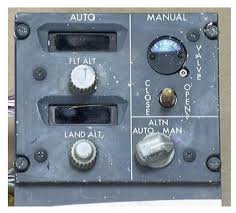
Helios' Boeing 737-300 5B-DBY underwent maintenance on the night prior to the accident. The pressurization system was checked, but after completion of the tests the Pressurization Mode Selector (PMS) was reportedly left in the "Manual" position instead of the "Auto" mode. In manual mode the crew had to manually open or close the outflow valves in order to control the cabin pressure. The outflow valves were one-third in the open position which meant that the cabin would not pressurize after takeoff. The PMS mode was apparently not noted during the pre-departure checks by the crew.

At 06:14h while climbing through an altitude of 15966 ft, the Captain contacted the Company Operations Centre (COC) and informed, “Take off configuration warning ON” and “Cooling equipment Normal and Alternate Offline”. Because of a lack of cooling air another alarm activated, indicating a temperature warning for the avionics bay. 

There were a few communications between the Captain and the COC during the period of 06:14h and 06:20h. On a query from the Captain, “where are my equipment cooling circuit breakers?” The engineer replied, “Behind the Captain’s seat”. These needed to be pulled out to turn off the alarm. The captain got up from his seat to look for the circuit breakers. At 06:20h, the Captain made his last communication, at which time the aircraft was climbing through 28900 ft.

During the communications between the Captain and the COC, at an altitude of approx. 18000 ft, the cabin altitude exceeded 14000 ft, leading to the deployment of oxygen masks in the passenger cabin, as per design.

The crew was not wearing their oxygen masks as their mindset and actions were determined by the preconception that the problems were not related to the lack of cabin pressure. As the airplane was still climbing, the lack of oxygen seriously impaired the flight crew. The captain probably became unconscious when he was trying to find the circuit breaker. The first officer was still in his seat when he also became unconscious. There were no further two way communications with the aircraft after 06:20h.

The aircraft continued to climb and leveled out at FL 340, as programmed. The aircraft continued on track maintaining FL 340 and eventually fed in to a standard instrument approach procedure for runway 03L at Athens International airport, while continuing to maintain FL 340. The approach was followed by a missed approach, and setting up of a holding pattern over KEA VOR, while continuing to maintain altitude.

All efforts by Greek air traffic controllers to contact the pilots were futile. Around 07:00h, two Greek F-16 fighter planes were scrambled to intercept the aircraft. The F-16s intercepted the aircraft on its sixth holding pattern, at about 07:23h. The F-16 pilots reported that they were not able to observe the captain, while the first officer seemed to be unconscious and slumped over the controls. Oxygen masks were reported to be dangling in a dark passenger cabin.

At 08:49h, the F-16's reported a person not wearing an oxygen mask entering the cockpit and occupying the captain's seat. The F-16 pilot tried to attract his attention without success. At 08:50h, the left engine flamed out due to fuel depletion and the aircraft started descending. At 08:54h, two Mayday messages were recorded on the CVR, in a very weak voice. At 09:00h, the right engine also flamed out at an altitude of 7084 ft. The aircraft continued descending rapidly and impacted hilly terrain about 33 kms northwest of Athens, close to Grammatiko village.

All 121 persons on board the aircraft, including 6 crew members and 115 passengers, were fatally injured during the accident.

DIRECT CAUSES
1. Non-recognition that the cabin pressurization mode selector was in the MAN (manual) position during the performance of the:
a) Pre-flight procedure;
b) Before Start checklist; and
c) After Takeoff checklist.

Image Courtesy: Google Images. Pressurisation Mode Selector in Manual Mode


2. Non-identification of the warnings and the reasons for the activation of the warnings (cabin altitude warning horn, passenger oxygen masks deployment indication, Master Caution), and continuation of the climb. (The initial actions by the flight crew to disconnect the autopilot, to retard and then again advance the throttles, indicated that it interpreted the warning horn as a Takeoff Configuration Warning). (At an aircraft altitude of 17 000 to 18 000 ft, the Master Caution was activated and was not cancelled for 53 seconds. The reason for its activation may have been either the inadequate cooling of the Equipment or the deployment of the oxygen masks in the cabin. Independently of the Master Caution indication, there are separate indications for both malfunctions on the overhead panel. The flight crew possibly identified the reason for the Master Caution to be only the inadequate cooling of the Equipment that was indicated on the overhead panel, and did not identify the second reason for its activation, i.e., passenger oxygen masks deployment, that was later also indicated on the Overhead panel. The crew became preoccupied with the Equipment Cooling fan situation and did not detect the problem with the pressurization system. The workload in the cockpit during the climb was already high and was exacerbated by the loud warning horn that the flight crew did not cancel).

3. Incapacitation of the flight crew due to hypoxia, resulting in continuation of the flight via the flight management computer and the autopilot, depletion of the fuel and engine flameout, and impact of the aircraft with the ground. (The incorrect interpretation of the reason for the warning horn indicated that the flight crew was not aware of the inadequate pressurization of the aircraft).


LATENT CAUSES

1. The Operator’s deficiencies in organization, quality management and safety culture, documented diachronically as findings in numerous audits.

2. The Regulatory Authority’s diachronic inadequate execution of its oversight responsibilities to ensure the safety of operations of the airlines under its supervision and its inadequate responses to findings of deficiencies documented in numerous audits.

3. Inadequate application of Crew Resource Management (CRM) principles by the flight crew.

4. Ineffectiveness and inadequacy of measures taken by the manufacturer in response to previous pressurization incidents in the particular type of aircraft, both with regard to modifications to aircraft systems as well as to guidance to the crews.


CONTRIBUTING FACTORS TO THE ACCIDENT

1. Omission of returning the pressurization mode selector to AUTO after un-scheduled maintenance on the aircraft.

2. Lack of specific procedures (on an international basis) for cabin crew procedures to address the situation of loss of pressurization, passenger oxygen masks deployment, and continuation of the aircraft ascent (climb).


3. Ineffectiveness of international aviation authorities to enforce implementation of corrective action plans after relevant audits.

Friday, May 6, 2016

SHUTTING DOWN THE ‘GOOD’ (WRONG) ENGINE


BRITISH MIDLANDS FLIGHT 092: 08 JAN 1989: BOEING 737 – 400


SYNOPSIS

Flight 092 left London for Belfast at 19:52h with a crew of 8, and 118 passengers on board. While climbing through FL283 moderate to severe vibration that was accompanied by ingress of smoke and fumes in to the flight deck were felt, as also fluctuations in the engine parameters of the No. 1 engine. Investigations revealed that these were the result of one of the outer panel of one of the no. 1 engine fan blades getting detached in flight, causing a series of compressor stalls that lead to airframe shuddering.

Believing the No. 2 engine had suffered damage, the crew throttled it back. The shuddering stopped, leading the flight crew to believe that their actions were correct, and they thus shut down the No 2 engine. The No. 1 engine operated normally after the initial severe vibrations, and during the descent in to East Midlands, the diversionary airfield.

The flight was cleared for an approach on to runway 27. The instrument approach on No. 1 engine continued normally, although with a high level of vibrations from the live engine. At 900 feet, 2.4nm from the runway, no. 1 engine suddenly suffered a reduction in power followed by a fire warning on this engine. Attempts to restart No. 2 engine were not successful. As the speed fell below 125 knots, the stick shaker activated and the aircraft struck trees at a speed of 115 knots. The aircraft continued and impacted the western carriageway of the M1 motorway 10 m lower and came to rest against the wooded embankment, 900 m short of the runway.

39 passengers died in the accident, and 8 more died later due to the injuries sustained. Of the remaining 79 occupants, 74 suffered serious injuries.

(Image Courtesy: Google Images: Aerial view of Crash site)


PROBABLE CAUSE

The operating crew shut down the No 2 engine after a fan blade had fractured in the No 1 engine. This engine subsequently suffered a major thrust loss due to secondary fan damage after power had been increased during the final approach to land.

The following factors contributed to the incorrect response of the flight crew

1. The combination of heavy engine vibration, noise, shuddering and an associated smell of fire were outside their training and experience.

2. They reacted to the initial engine problem prematurely and in a way that was contrary to their training. (Either pilot does not remember having noticed the engine parameters like N1, EGT, N2 or Oil Pressures of the engines before throttling back No. 2 engine).

3. They did not assimilate the indications on the engine instrument display before they throttled back the No. 2 engine. (The crew’s familiarity of the newly introduced EIS on the B 737-400 variant could have been a factor. The Captain had 23 hours and the first officer had 53 hours on the B 737-400. Both were given a 1day training session on the EIS, as there was no flight simulator available with the EIS. The variants before the B737-400 had the normal electro-mechanical engine instruments).

4. As the No 2 engine was throttled back, the noise and shuddering associated with the surging of the No 1 engine ceased, persuading them that they had correctly identified the defective engine. (The Auto Throttle system was disengaged while bringing No. 2 engine throttle back to idling. This led to manual control of the engines, and No. 1 engine fuel flow settled as per the prevailing engine conditions, rather than as demanded by the auto throttle to maintain flight parameters).


5. They were not informed of the flames which had emanated from the No.1 engine and which had been observed by many on board, including 3 cabin attendants in the aft cabin. (Inadequate communications between flight and cabin crew – a CRM issue that is greatly emphasised now).

Wednesday, June 26, 2013

STANDARD OPERATING PROCEDURES AND SAFE OPERATIONS

Introduction      What are Standard Operating Procedures (SOPs)? A letter by the US Federal Aviation Administration (FAA) aptly answered this question where in it was stated that, “SOPs are written, tested procedures that are applied uniformly and consistently within an organization and involve all aspects of flight, both normal and non-normal”. It further stated that “SOPs are widely recognized as a basic element of safe aviation operations”. Safety is one of the pre-requisites for mission accomplishment in aviation, and thus the importance of SOPs can never be under estimated.

Design of SOPs

The aircraft manufacturer provides the initial SOPs for the aircraft based on lessons learned from previous operating experience; analyses performed during design; experience gained during development and certification flight testing; and also experience from the route-proving program. These manufacturer-provided SOPs are adopted without change by an aviation organisation, or these are used as the basis for the development of customized SOPs that promote standardisation across the different aircraft fleets in service at the organisation. Company SOPs so developed reflect the organisation’s operating and training philosophies. Thus, SOPs represent the collective wisdom of the aviation community on how operations could be conducted safely.

To ensure safety, training and operations need to be consistent, implying that training and operations should both be conducted as per the SOPs. This can only happen if everyone in the organisation is convinced of the need to follow SOPs. Bringing about this awareness places a great responsibility on the flying supervisory staff.  Instructors and check airman of the operator are required to ensure that crews are made aware of the reasons for SOPs; are trained as per the SOPs, and are also required to enforce the same during routine line operations.

SOPs published by the operator normally include expected procedures that would be utilised during the flight profiles that are used by the operator, including pre & post flight procedures. SOPs lay down the most effective and efficient procedure to execute any task safely. New procedures need to be added to the SOPs, and redundant ones modified/ deleted based on requirements, and also based on experiences gained by the aviation community. To undertake this task, review of SOPs should be an ongoing task, ideally accomplished with suitable feedback from the end user, the flight crew.

All of this is done with an aim of ensuring safe aviation operations. It is now abundantly clear that safety is not dependant only on the training of the crew, but also on good crew coordination as well as optimum crew performance (or good CRM). This can best be ensured if the crew has a shared mental model of each task that is being undertaken. SOPs provide that vital link that can effectively ensure this shared mental model between crew members, with the least communications, because when every crew member is following SOPs, he/ she is aware of what needs to be done; when it needs to be done; and by whom.

To ensure that every crew member follows the SOPs, these procedures should be clear, comprehensive, and readily available to the flight crew members. In addition the crew members should be aware and convinced of the need to follow the SOPs. All this sounds logical but a study of aircraft incidents and accidents indicates that some of these have been caused due to the crew not following the SOPs.

Operational and Human Factors Involved in Deviations from SOPs

To ensure effective compliance with SOPs, it is important to understand why pilots intentionally or inadvertently deviate from the SOPs. In most cases of deviation from SOPs, the procedure that was followed in place of the published procedure seemed appropriate to the crew, for the prevailing situation, considering the information available in the cockpit at the time. However, it was later found that it was either inappropriate, or at best suboptimal. Experts cite the following factors and conditions as making it more likely that a deviation from SOPs will occur. Awareness of these factors can influence adherence to SOPs and may also be useful in developing corresponding prevention strategies.

  • ·         Corporate culture (e.g., the absence of company management’s clear commitment to SOPs and standardization; double standard practices)
  • ·         Ineffective or unclear company policies (e.g., regarding schedules, costs, go around, diversion, crew duty time, etc.)
  • ·         Inadequate awareness/ knowledge of, or failure to understand the procedure, or action (e.g., quality of wording or phrasing; procedure or action being perceived as inappropriate)
  • ·         Insufficient emphasis on strict adherence to SOPs during routine training and checks.
  • ·         Insufficient vigilance (e.g., due to fatigue)
  • ·       Distractions (e.g., due to cockpit activity)
  • ·         Interruptions (e.g., due to ATC communication)
  • ·         Task saturation resulting in fixation/ degraded multi-tasking ability or task overload leading to reduced attention.
  • ·         Incorrect management of priorities (e.g., lack of or incorrect decision-making model for time-critical situations)
  • ·         Incorrect CRM techniques, especially the absence of cross-checking, crew coordination or effective backup
  • ·         Personal desires or constraints (e.g., personal schedule, press-on-itis)
  • ·         Complacency or Over confidence


An Effective SOP

An effective SOP would need the active collaboration of all stake holders, at the formulation as well as the implementation stages. The following factors should thus be considered for creating effective SOPs: -

  •  All crew members should be aware of the reasons for the procedure, and should also be convinced of the need to follow the same. It is a known fact that when flight crew members are so convinced, then they are more likely to follow the procedure, and also offer valuable feedback to improve upon an existing procedure, or  introduce a new relevant procedure.
  •   All crew members should hold the belief that the procedure is appropriate to the stated flight situation, and would cover all the likely eventualities. This should be reinforced during effective training sessions conducted by the operator’s flight instructors/ check pilots.
  •  The procedure should clearly lay down what needs to be done, by whom (PF/ PM), and when it is to be done. Each crew’s responsibilities would thus be clearly delineated.
  •  The senior supervisors should set an example through word, and more importantly through their deeds that SOPs are to be followed. Any shortcomings/ misgivings about the procedure that are pointed out by the line crew should be discussed and remedial action initiated, if considered appropriate; otherwise the crew member should be provided feedback of the reason why the suggestion is not considered worthy of implementation.

 It has been seen that many a times SOPs are not consistently implemented, in that double standards are practiced by the crew and these are also condoned by the instructors/ check pilots/ managers. Flight crews follow the SOPs during training and check rides, but do it their own way during routine line operations. When this kind of a situation exists, it is an indication that the SOP is either not practical or effective for some reason. The reason for the deviation should thus be investigated and remedial action initiated.

Summary


Safety in aviation continues to depend on good crew performance. Good crew performance, in turn, is founded on standard operating procedures that are clear, comprehensive, and readily available to the flight crew. Development of SOPs is most effective when done by collaboration, using the best resources available including the end-users themselves, the flight crew. Once developed, effective SOPs should be consistently enforced during training as well as during line operations and ineffective SOPs should be continually reviewed and renewed. Double standards should not be permitted.

Thursday, May 30, 2013

PILOTS AND COMMUNICATIONS

Aircraft Operations and Communications

An aircraft comes in to regular flight operations only once it has been accorded regulatory approval, the whole purpose of which is aimed at providing an error free product. However, latent errors can still be present. The recent Boeing 787 battery snafu that led to the world wide fleet being grounded is a case in point. Even when the approval process ensures an error free aircraft, there are still chances of errors creeping in during regular flight operations because each individual aircraft is tended to by a large number of diverse groups. These errors can be prevented and safety & efficiency can be ensured only if all these diverse groups work as a team, which can only happen when there is adequate co-ordination between, and within, the various groups, viz. the flight crew, cabin crew, dispatch, Air Traffic Control, maintenance personnel, and others directly or indirectly connected with the safe operation of the flight. Communications is that vital link that helps in ensuring good co-ordination between all of these different agencies. Thus understanding communications is important for anyone connected with aviation, and more importantly for the flight deck crew, they being aviation’s last line of defence to prevent any mishap from happening.

Communication is a two way process, in which a message is sent out from the sender to the receiver; the receiver gives feedback; and this process continues in a loop until the same meaning is shared between the sender and the receiver. The message can be sent either verbally in the form of oral or written communications or through non verbal means like body language, gestures, postures, face & eye expressions, touch, etc. Communication is a concept that has been variously defined in text books. These definitions essentially characterise communications in terms of two basic issues, which are: -  

·         First, communication entails the transfer of information (facts, opinions, ideas, feelings, instructions, commands, etc.)  from the sender to the receiver
·         And second, communication entails the transfer of meaning from the sender to the receiver

Effective Communications

Communications are useful only when they are effective, in that the transfer of information from the sender to the receiver should lead to the same meaning being shared by each of them, at the completion of the transaction(s). This can only happen when the sender and receiver are both active participants in the process and thus entails a responsibility not only on the sender to obtain or elicit feedback in order to determine whether or not the communication was effective but also on the receiver, who is responsible to provide honest feedback. Or in other words, effective communication is a two way process, and is only effective when the desired understanding or action takes place. In the fatal Air India Express accident at Mangalore, the First Officer had thrice communicated to the Commander to go around, but no go around action was initiated by the Commander during the approach and touchdown phase. Would this communication be considered effective? In this paper we would only focus on effective communication between the flight deck crew.

Communications and Crew Resource Management

Effective communication between flight deck crew members is an essential tool for achieving technical, procedural, and also crew resource management objectives. The communication process amongst the flight deck crew fulfils many important functions. Research shows that these functions include:

·         The most obvious being the transfer of information in the form of checklists, logs, R/T, etc.
·         Interpersonal/ team relationships that are crucial in any highly effective team, primarily because humans are emotional, in addition to being rational beings
·         Working towards shaping predictable behaviour and expectations from the other crew members, through the medium of briefings and critiques
·         It helps the crew to develop a shared mental model about the location, spatial orientation, environment, aircraft systems, time and fuel; thereby enhancing situational awareness
·         It allows individual crew members to become aware of problems and to contribute effectively to the problem solving and decision-making process on the flight deck
·         It helps the efficient and effective management of the flight with optimum use of available resources, including the crew, through planning, implementing/ revising & monitoring the tasks; the environment; and the crew.

These functions are all crucial for safe and efficient flight operations and underpin the important role of communications on the flight deck. Research has shown that each message can have different content, depending on the circumstances. These circumstances could be whether we communicate face to face, or under high workload conditions, or on R/T, or through written messages or through gestures.

Face to Face Communications

In this kind of a situation, the message content is dependent just 7% on the spoken words. The major part of the message content is conveyed by the tone employed while speaking (38%); and on the non verbal aspects of communications (55%) like body language, eye & facial expressions, postures etc. The flight deck crew would encounter this situation when they come face to face on arrival at the dispatch and also during low workload periods, as in a long cruise on autopilot. It is important to remember that in such a situation, words of the sender convey very little meaning to the receiver, if they are not backed by the right tone and the non verbal cues. The message communicated during this interaction would be stored and all future interactions on the flight deck would take place keeping the sense of the stored communications in mind.

Pre-Flight Brief:  Face to face communications normally include a pre flight brief. A good pre-flight brief is very important because it effectively touches nearly every function of communications that are enumerated above. Open questions, like ‘how is this weather likely to impact our flight? Why do you think so?’ by the Commander can draw in the other crew members into giving valuable inputs that should be incorporated in the plan, if feasible. This gives the crew a sense of ownership and would also send a very positive message, which would lead to a very effective team that is motivated to optimum individual, as well as team performance. The Commander has a major role to play in setting the tone, but the crew members also need to live up to the transactional analysis dictum of ‘I am OK, you are OK’. This can only happen if the crew members believe/ are made to believe that they have an important role to play in the safe and efficient conduct of the flight. This can happen if all crew members are encouraged to participate in the communication process, and more importantly are listened to, and treated like trained professionals having a vital role to play during the flight. Operating from the adult ego state would be desirable but depending on the experience of the crew it may need to switch between the adult and the nurturing parent/ natural child ego states too, at times. Crossed and other damaging ego states should be avoided under all circumstances.

High workload situations

The contents of the message change completely in a high work load situation, like during a take-off, landing or during non normal situations. Here words convey 55% of the meaning; the tone of the words spoken another 38%, and body language just the balance 7%. This tells us that it is most important to use standard phraseology with the correct intonation and sense of urgency during these situations. Standard phraseology has the advantage of brevity with accuracy, as both the sender and receiver are on the same page instantly. This however, does not rule out the need to give feedback, read back and hear back, as appropriate. High workload situations are most prone to the use of leading questions, wherein the need for quick answers overrides all else, but these are also the situations when these are most dangerous. Leading questions under such situations are thus best avoided. The analysis of a number of aircraft accidents indicate an increasing number of leading questions leading up to the accident. Leading questions generally are an indicator of a loss of situational awareness. 

Communications on R/T, Intercom or Telephone

In such a situation the content of the message is conveyed 55% through the spoken words and the balance 45% through the intonation, speed and clarity of the spoken words. Standard phraseology is vital in this situation along with feedback, read back and hear back. In case of any disruptions in any of the messages, it is important to retransmit/ seek a clarification instead of assuming, as was the case in the tragic Tenerife accident. Choice of words in verbal communications has significant safety implications. In order to minimise potential ambiguities and other variances in aviation, there are certain standard rules regarding which words, phrases or other elements need to be used for communicating. As an example, ICAO phraseology requires that the word ‘departure’ is used instead of ‘take-off’ in all cases, except for the actual take-off itself. It also requires all clearances, heading, altitudes, runways etc. to be read-back by the crew, as also hear back by the ATC. This was introduced to enhance safety following many cases where messages were misinterpreted/ read back incorrectly.

Written communications

90% of the meaning is conveyed through words or symbols in written communications, with only the balance 10% through the tone of the message. This implies that the choice and use of words and symbols are critical in written communications, like in SOPs, checklists, let down charts, etc. This is even more so in the modern day cockpits with EFIS; the choice of symbols, colours, updating of the databases, etc. become even more critical as there is no dynamic feedback available in the cockpit that can prevent misconceptions/ misrepresentations from leading to an untoward incident. Updation date of the database should be checked before every flight by the crew to ensure that the database is current. The initiator of the written communications should be able to unambiguously create the message in such a way that clearly conveys the intended meaning. It is the responsibility of the crew also to clarify every written communication and get it rectified in case the words and symbols, etc. are perceived differently from what they are intended to convey. Latent errors in written communications are possible and should be eliminated for safe operations.

Gestures

This form of communication is routinely used in aviation while marshalling an aircraft, and demands that each signal should convey a common understanding to the sender as well as the receiver. Since aviation is an international profession, all the hand signals have been standardised and should be used to prevent chances of misunderstanding. Non standard signals should be avoided.

Accent free English Language for Communications

As discussed above, words are important in almost all forms of communications barring gestures, but even more so on R/T, intercom or telephone and also during high workload situations. The message conveyed is affected by the language employed, the individual accents, pronunciation, vocabulary and grammatical styles. Investigations in to a number of accidents brought home the requirement for a common language for the flight crew in which they should be reasonably proficient to ensure effective communications. ICAO thus recommended through SARPs that language testing should be undertaken to ensure proficiency.  Indian DGCA has implemented this recommendation vide a CAR in Section 7 titled, “English for Aviation Language - Training, Assessment, Test and Certification”.   This CAR lays down the six skill areas in which the crew need to be proficient, and tested. These areas include pronunciation, structure, vocabulary, fluency, comprehension and interactions. Six levels of competency have been identified, and crew have to attain a minimum of Level 4 to operate. The aim of this requirement is to make communications possible, and effective. Crew would still come across individual variations, and should be sensitive to this fact and thus ensure that these variations do not hinder effective communications.

Communications, Workload and Situational Awareness

It is a known fact that human cognitive resources are limited and are shared between current reasoning processes and actions. Communications also consume mental resources. This fact needs to be clearly understood and internalised to ensure that one is sensitive to the workload on the flight deck before initiating/ responding to communications or before interrupting communications already underway, for some other task. We have all experienced situations wherein an increased workload tended to shorten our sentences, as also reduce their numbers, thus increasing the chances of communication errors. The most relevant example is the execution of the ‘Before take-off checklist’. Invariably this gets interrupted by the ATC that is ready to give out the departure clearance. It is best to ask the ATC to standby and complete the checklist before taking down the clearance or take down the clearance and then re-initiate the checklist from the beginning to ensure that both of these crucial tasks are not interrupted, thus making them prone to errors.


Similarly, a person absorbed in a difficult or unfamiliar task like in an emergency situation is less likely to understand what someone is saying to them. It is always best to wait until the task is completed, or stabilised before interrupting them. It is difficult to continue with a demanding task while at the same time communicating effectively. Leading questions at such times can be disastrous, as the person may respond verbally without paying attention, due to lack of mental resources available at his/ her disposal. Please be aware that under conditions of excessive workload, one of the first signs of degraded situational awareness is a loss of the ability to listen in. Since communications consume limited mental resources, to conserve on these, communications should be restricted to task oriented only during the critical phases of flight when sterile cockpit is called for. This ensures that communications are not distracting the crew during periods of anticipated high workload and helps the crew maintain situational awareness.

Monday, May 20, 2013

AIR TRANSAT ACCIDENT - 24 AUG 2001

Brief Details of the Accident

Flight TS 236 took off from Toronto at 0:52 UTC on Friday August 24, 2001 bound for Lisbon. There were 293 passengers and thirteen crew members on board. The aircraft was an Airbus A 330 registered as C-GITS that was manufactured in March 1999, configured with 362 seats and placed in service by Air Transat in April 1999. Leaving the gate in Toronto, the aircraft had 46.9 tonnes of fuel on board, 4.5 tonnes more than required by regulations.

At 05:36 UTC, the pilots received a warning of fuel imbalance. Not knowing at this point that they had a fuel leak, they followed a standard procedure to remedy the imbalance by transferring fuel from the port to the near-empty starboard tank.
At 05:16 UTC, a cockpit warning system chimed and warned of low oil temperature and high oil pressure on engine no. 2. There is no obvious connection between an oil temperature or pressure problem and a fuel leak. Consequently Captain Piché and co-pilot DeJager suspected these were false warnings and shared their observations with their maintenance control centre, who advised them to monitor the situation.
Unknown to the pilots, the aircraft had developed a fuel leak in a fuel line to its starboard engine. The fuel transfer caused fuel from the operational side of the aircraft to be wasted through the leak in the engine on the other side. The leak, which averaged at 1 gallon per second, caused a higher than normal fuel flow through the fuel-oil heat exchanger (FOHE). The FOHE is designed to transfer heat from engine oil to fuel for both cooling and efficiency purposes. The increased fuel flow caused both the drop in oil temperature, as well as the rise in oil pressure that the pilots had observed earlier.

At 05:45 UTC, the pilots decided to divert to Lajes air base in the Azores. The crew were still unsure if they really had a fuel leak or not. They declared a fuel emergency with Santa Maria Oceanic air traffic control three minutes later.
At 06:13 UTC, while still 135 miles (217 km) from Lajes, engine no. 2 on the right wing flamed out because of fuel starvation. Captain Piché ordered full thrust from the remaining operational engine, and the plane descended to 33,000 feet (10,000 m), unable to stay at its 39,000 feet (12,000 m) cruising altitude with only one engine operating. Ten minutes later, the crew sent a Mayday to Santa Maria Oceanic air traffic control.
Thirteen minutes later, engine no. 1 also flamed out at while the aircraft was still approximately 65 nautical miles (120 km) from Lajes Air Base. Without engine power, the aircraft not only lost all thrust, but also its primary source of electrical power. The emergency Ram Air Turbine was deployed automatically to provide essential power for critical sensors and instruments to fly the aircraft. However the aircraft lost its main hydraulic power which operates the flaps, brakes, and spoilers.
Military air traffic controllers who were tracking the aircraft on their radar system guided the aircraft to the airport. While Piché flew the plane, DeJager monitored its descent rate – around 2000 feet (600 metres) per minute – and calculated that the plane had about 15 to 20 minutes left before they had to ditch the plane in the water. The crew sighted the air base a few minutes later. Piché had to execute a series of 360 degree turns to lose speed and altitude. Although they successfully lined up with Runway 33, they faced a new danger. The plane was on a final descent, going faster than optimal. Although they had unlocked the slats and deployed the landing gear, the airspeed was still too high. Additionally, the aircraft would be unable to use its thrust reversers to slow the plane during the landing.
At 06:45 UTC, the plane touched down hard 1,030 feet (310 m) down Runway 33 at a speed of approximately 200 knots (370 km/h), instead of the 170 knots (310 km/h) recommended for an unpowered landing. The aircraft bounced back into the air, but touched down again 2,800 feet (850 m) from the approach end of the runway and came to a stop 7,600 feet (2,300 m) from the approach end of the 10,000 feet (3,000 m) runway. With the operation of the emergency brakes, eight tires burst. Fourteen passengers and two crew members suffered minor injuries during the evacuation of the aircraft. Two passengers suffered serious but not life-threatening injuries.
The favourable outcome was partly attributable to the flight being rerouted at the last minute via a more southerly route across the Atlantic than initially planned, which brought the aircraft within range of the Azores.

Investigations

The Portuguese GPIAA investigated the incident along with Canadian and French authorities.
The investigation revealed that the cause of the incident was a fuel leak in the number two engine, caused by an incorrect part installed in the hydraulic system by Air Transat maintenance staff. Air Transat maintenance staff had replaced the engine as part of routine maintenance, using a spare engine, lent by Rolls-Royce, from an older model. This engine did not include a hydraulic pump. Despite the lead mechanic's concerns, Air Transat ordered the use of a part from a similar engine, an adaptation that did not maintain adequate clearance between the hydraulic lines and the fuel line. This lack of clearance — on the order of millimeters from the intended part — allowed vibration in the hydraulic lines to degrade the fuel line and cause the leak. Air Transat accepted responsibility for the incident.
Although pilot error was listed as one of the lead causes for the incident, it was the skill of the pilots, and of the military Air Traffic Controller in service at the time, 1st Sgt. José Ramos, that allowed the flight to land without fuel, causing only minor injuries to the passengers and minor damage to the airplane, which is still in service. The pilots returned to a heroes' welcome from the Quebec press.
The incident also led to the issue of Airworthiness instructions to all operators of certain types of the Airbus aircraft that stressed that crews should check that any fuel imbalance is not caused by a fuel leak before opening the cross-feed valve. The French Airworthiness Directive (AD) required all airlines operating these Airbus models to make revisions to the Flight Manual before any further flights were allowed. The FAA gave a 15-day grace period before enforcing the AD. Airbus also modified its computer systems; the on-board computer now checks all fuel levels against the flight plan. It now gives a clear warning if more fuel is being lost than the engines can consume. Rolls Royce also issued a bulletin advising of the incompatibility of the affected engine parts.

Thursday, May 16, 2013

LION AIR ACCIDENT ON 13 APR 2013 - PRELIMINARY REPORT


(Relevant excerpts of the preliminary report accessed from the Indonesian authority website)

History of the Flight

On 13 April 2013, a Boeing 737-800 aircraft registered PK-LKS was being operated by PT. Lion Mentari Airlines (Lion Air) on a scheduled passenger flight as LNI 904. The aircraft departed from Husein Sastranegara International Airport (WICC) Bandung1 at 0545 UTC2. The aircraft flew at FL 390, while the Second in Command (SIC) was the Pilot Flying (PF) and the Pilot in Command (PIC) was the Pilot Monitoring (PM).

There were two pilots and 5 flight attendants with 101 passengers on board consisted of 95 adults, 5 children and 1 infant. The flight from the departure until start of approach was uneventful.

At 0648 UTC, the pilot made first communications with Bali Approach controller (Bali Director) when the aircraft position was 80 Nm from BLI4 VOR. The pilot received clearance direct to TALOT waypoint and descent to 17,000 ft.

At 0652 UTC, the Bali Director issued a further clearance for the pilot direct to KUTA waypoint and descent to 8,000 ft.

At 0659 UTC, the aircraft was vectored for VOR DME approach for runway 09 and descent to 3,000’.

At 0703 UTC, while the aircraft over KUTA waypoint, the Bali Director transferred the aircraft to Bali Control Tower (Ngurah Tower).

At 0704 UTC, the pilot contacted Ngurah Tower controller and informed that the aircraft position was leaving KUTA waypoint. The Ngurah Tower controller instructed the pilot to continue approach and to reduce the aircraft speed to provide sufficient separation distance with another aircraft.

At 0707 UTC, the Ngurah Tower issued take off clearance for departure aircraft on runway 09.

At 0708 UTC, with the aircraft at approximately 1,600 ft AGL, the Ngurah Tower controller saw the aircraft on final and gave a landing clearance with additional information that the wind condition was 120° / 05 kts.

The excerpts of the CVR and FDR data on the final approach are as follows:

At 0708:56 UTC, while the aircraft altitude was approximately 900 ft AGL the SIC stated that the runway was not in sight.

At 0709:33 UTC, after Enhance Ground Proximity Warning System (EGPWS) called out “MINIMUM” at aircraft altitude approximately 550 ft AGL, the pilot disengaged the autopilot and the auto throttle then continued to descend.

At 0709:53 UTC, while the aircraft altitude approximately 150 ft AGL the PIC took over the control.
The SIC handed the control to the PIC and stated that he could not see the runway.

At 0710:01 UTC, after the EGPWS warning “TWENTY”, the PIC commanded a go around.

At 0710:02 UTC, the aircraft impacted the water.

The OCA(H) as per the landing chart for VOR/ DME R/W 09 is 465’ (454’).