Showing posts with label B737. Show all posts

Monday, May 9, 2016

PRESSURISATION SWITCH IN THE WRONG POSITION

HELIOS AIRWAYS FLIGHT 522: 14 AUG 2005: BOEING 737 – 300

SYNOPSIS

On 14 Aug 2005, Helios Airways international Flight 522 departed from Larnaca, Cyprus, at 06:07h for an intermediate stop at Athens, Greece on way to Prague, Czech Republic. The planned flying time was 1 hour and 23 minutes. While climbing through an altitude of 12040 ft, for FL 340, the cabin altitude warning horn sounded at 06:12h. The German captain and the Cypriot co-pilot tried to solve the problem but encountered some problems communicating with each other.

Helios' Boeing 737-300 5B-DBY underwent maintenance on the night prior to the accident. The pressurization system was checked, but after completion of the tests the Pressurization Mode Selector (PMS) was reportedly left in the "Manual" position instead of the "Auto" mode. In manual mode the crew had to manually open or close the outflow valves in order to control the cabin pressure. The outflow valves were one-third in the open position which meant that the cabin would not pressurize after takeoff. The PMS mode was apparently not noted during the pre-departure checks by the crew.

At 06:14h while climbing through an altitude of 15966 ft, the Captain contacted the Company Operations Centre (COC) and informed, “Take off configuration warning ON” and “Cooling equipment Normal and Alternate Offline”. Because of a lack of cooling air another alarm activated, indicating a temperature warning for the avionics bay. 

There were a few communications between the Captain and the COC during the period of 06:14h and 06:20h. On a query from the Captain, “where are my equipment cooling circuit breakers?” The engineer replied, “Behind the Captain’s seat”. These needed to be pulled out to turn off the alarm. The captain got up from his seat to look for the circuit breakers. At 06:20h, the Captain made his last communication, at which time the aircraft was climbing through 28900 ft.

During the communications between the Captain and the COC, at an altitude of approx. 18000 ft, the cabin altitude exceeded 14000 ft, leading to the deployment of oxygen masks in the passenger cabin, as per design.

The crew was not wearing their oxygen masks as their mindset and actions were determined by the preconception that the problems were not related to the lack of cabin pressure. As the airplane was still climbing, the lack of oxygen seriously impaired the flight crew. The captain probably became unconscious when he was trying to find the circuit breaker. The first officer was still in his seat when he also became unconscious. There were no further two way communications with the aircraft after 06:20h.

The aircraft continued to climb and leveled out at FL 340, as programmed. The aircraft continued on track maintaining FL 340 and eventually fed in to a standard instrument approach procedure for runway 03L at Athens International airport, while continuing to maintain FL 340. The approach was followed by a missed approach, and setting up of a holding pattern over KEA VOR, while continuing to maintain altitude.

All efforts by Greek air traffic controllers to contact the pilots were futile. Around 07:00h, two Greek F-16 fighter planes were scrambled to intercept the aircraft. The F-16s intercepted the aircraft on its sixth holding pattern, at about 07:23h. The F-16 pilots reported that they were not able to observe the captain, while the first officer seemed to be unconscious and slumped over the controls. Oxygen masks were reported to be dangling in a dark passenger cabin.

At 08:49h, the F-16's reported a person not wearing an oxygen mask entering the cockpit and occupying the captain's seat. The F-16 pilot tried to attract his attention without success. At 08:50h, the left engine flamed out due to fuel depletion and the aircraft started descending. At 08:54h, two Mayday messages were recorded on the CVR, in a very weak voice. At 09:00h, the right engine also flamed out at an altitude of 7084 ft. The aircraft continued descending rapidly and impacted hilly terrain about 33 kms northwest of Athens, close to Grammatiko village.

All 121 persons on board the aircraft, including 6 crew members and 115 passengers, were fatally injured during the accident.

DIRECT CAUSES
1. Non-recognition that the cabin pressurization mode selector was in the MAN (manual) position during the performance of the:
a) Pre-flight procedure;
b) Before Start checklist; and
c) After Takeoff checklist.
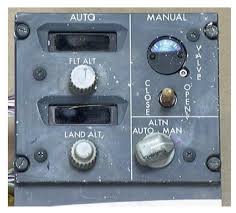
Image Courtesy: Google Images. Pressurisation Mode Selector in Manual Mode


2. Non-identification of the warnings and the reasons for the activation of the warnings (cabin altitude warning horn, passenger oxygen masks deployment indication, Master Caution), and continuation of the climb. (The initial actions by the flight crew to disconnect the autopilot, to retard and then again advance the throttles, indicated that it interpreted the warning horn as a Takeoff Configuration Warning). (At an aircraft altitude of 17 000 to 18 000 ft, the Master Caution was activated and was not cancelled for 53 seconds. The reason for its activation may have been either the inadequate cooling of the Equipment or the deployment of the oxygen masks in the cabin. Independently of the Master Caution indication, there are separate indications for both malfunctions on the overhead panel. The flight crew possibly identified the reason for the Master Caution to be only the inadequate cooling of the Equipment that was indicated on the overhead panel, and did not identify the second reason for its activation, i.e., passenger oxygen masks deployment, that was later also indicated on the Overhead panel. The crew became preoccupied with the Equipment Cooling fan situation and did not detect the problem with the pressurization system. The workload in the cockpit during the climb was already high and was exacerbated by the loud warning horn that the flight crew did not cancel).

3. Incapacitation of the flight crew due to hypoxia, resulting in continuation of the flight via the flight management computer and the autopilot, depletion of the fuel and engine flameout, and impact of the aircraft with the ground. (The incorrect interpretation of the reason for the warning horn indicated that the flight crew was not aware of the inadequate pressurization of the aircraft).


LATENT CAUSES

1. The Operator’s deficiencies in organization, quality management and safety culture, documented diachronically as findings in numerous audits.

2. The Regulatory Authority’s diachronic inadequate execution of its oversight responsibilities to ensure the safety of operations of the airlines under its supervision and its inadequate responses to findings of deficiencies documented in numerous audits.

3. Inadequate application of Crew Resource Management (CRM) principles by the flight crew.

4. Ineffectiveness and inadequacy of measures taken by the manufacturer in response to previous pressurization incidents in the particular type of aircraft, both with regard to modifications to aircraft systems as well as to guidance to the crews.


CONTRIBUTING FACTORS TO THE ACCIDENT

1. Omission of returning the pressurization mode selector to AUTO after un-scheduled maintenance on the aircraft.

2. Lack of specific procedures (on an international basis) for cabin crew procedures to address the situation of loss of pressurization, passenger oxygen masks deployment, and continuation of the aircraft ascent (climb).


3. Ineffectiveness of international aviation authorities to enforce implementation of corrective action plans after relevant audits.

Thursday, May 16, 2013

LION AIR ACCIDENT ON 13 APR 2013 - PRELIMINARY REPORT


(Relevant excerpts of the preliminary report accessed from the Indonesian authority website)

History of the Flight

On 13 April 2013, a Boeing 737-800 aircraft registered PK-LKS was being operated by PT. Lion Mentari Airlines (Lion Air) on a scheduled passenger flight as LNI 904. The aircraft departed from Husein Sastranegara International Airport (WICC) Bandung1 at 0545 UTC2. The aircraft flew at FL 390, while the Second in Command (SIC) was the Pilot Flying (PF) and the Pilot in Command (PIC) was the Pilot Monitoring (PM).

There were two pilots and 5 flight attendants with 101 passengers on board consisted of 95 adults, 5 children and 1 infant. The flight from the departure until start of approach was uneventful.

At 0648 UTC, the pilot made first communications with Bali Approach controller (Bali Director) when the aircraft position was 80 Nm from BLI4 VOR. The pilot received clearance direct to TALOT waypoint and descent to 17,000 ft.

At 0652 UTC, the Bali Director issued a further clearance for the pilot direct to KUTA waypoint and descent to 8,000 ft.

At 0659 UTC, the aircraft was vectored for VOR DME approach for runway 09 and descent to 3,000’.

At 0703 UTC, while the aircraft over KUTA waypoint, the Bali Director transferred the aircraft to Bali Control Tower (Ngurah Tower).

At 0704 UTC, the pilot contacted Ngurah Tower controller and informed that the aircraft position was leaving KUTA waypoint. The Ngurah Tower controller instructed the pilot to continue approach and to reduce the aircraft speed to provide sufficient separation distance with another aircraft.

At 0707 UTC, the Ngurah Tower issued take off clearance for departure aircraft on runway 09.

At 0708 UTC, with the aircraft at approximately 1,600 ft AGL, the Ngurah Tower controller saw the aircraft on final and gave a landing clearance with additional information that the wind condition was 120° / 05 kts.

The excerpts of the CVR and FDR data on the final approach are as follows:

At 0708:56 UTC, while the aircraft altitude was approximately 900 ft AGL the SIC stated that the runway was not in sight.

At 0709:33 UTC, after Enhance Ground Proximity Warning System (EGPWS) called out “MINIMUM” at aircraft altitude approximately 550 ft AGL, the pilot disengaged the autopilot and the auto throttle then continued to descend.

At 0709:53 UTC, while the aircraft altitude approximately 150 ft AGL the PIC took over the control.
The SIC handed the control to the PIC and stated that he could not see the runway.

At 0710:01 UTC, after the EGPWS warning “TWENTY”, the PIC commanded a go around.

At 0710:02 UTC, the aircraft impacted the water.

The OCA(H) as per the landing chart for VOR/ DME R/W 09 is 465’ (454’).

Saturday, February 2, 2013

COULD THIS ACCIDENT BE PREVENTED?


Helios' Boeing 737-300 underwent maintenance on the night prior to the accident. The pressurization system was checked, but after completion of the tests the Pressurization Mode Selector (PMS) was reportedly left in the "Manual" position instead of the "Auto" mode. In manual mode the crew had to manually open or close the outflow valves in order to control the cabin pressure. The outflow valves were one-third in the open position which meant that the cabin would not pressurize after takeoff. The PMS mode was apparently not noted during the pre-departure checks by the crew.

In the morning the 737 was to operate Flight 522 from Larnaca to Prague, Czech Republic with an intermediate stop at Athens, Greece. The flight departed Larnaca at 09:07 for the leg to Athens with a planned flying time of 1 hour and 23 minutes. As the airplane climbed over the Mediterranean the cabin altitude alert horn sounded. This occurred as the 737 passed through an altitude of 10,000 feet. Cabin altitude is usually held around 8,000 feet. The crew possibly thought it was an erroneous takeoff configuration warning because the sound is identical. Then, at 14,000 feet, the oxygen masks automatically deployed and a master caution light illuminated in the cockpit. Because of a lack of cooling air another alarm activated, indicating a temperature warning for the avionics bay.

The German captain and the Cypriot co-pilot tried to solve the problem but encountered some problems communicating with each other. They contacted the Helios´ maintenance base to seek advice. The engineer told that they needed to pull the circuit breaker to turn off the alarm. The radio contact ended as the aircraft climbed through 28 900 ft. The circuit breaker was located in a cabinet behind the captain. The captain got up from his seat to look for the circuit breaker. The crews were not wearing their oxygen masks as their mindset and actions were determined by the preconception that the problems were not related to the lack of cabin pressure.

As the airplane was still climbing the lack of oxygen seriously impaired the flight crew. The captain probably became unconscious when he was trying to find the circuit breaker. The first officer was still in his seat when he also became unconscious. Because the plane's autopilot was programmed for FL340 the Boeing continued to climb until leveling out at that altitude some 19 minutes after takeoff. At 09:37 the 737 entered the Athens FIR but no R/T contact was established with the flight. Over Rodos at about 09:52 the airplane entered the UL995 airway. At 10:21 the airplane passed the KEA VOR, which is located about 28 nm south of the Athens airport. The airplane then passed the Athens Airport and subsequently entered the KEA VOR holding pattern at 10:38. All efforts by Greek air traffic controllers to contact the pilots were futile. Around 11:00 two Greek F-16 fighter planes were scrambled from the Néa Anghialos air base. At 11:24, during the sixth holding pattern, the F-16's intercepted the airliner. The F-16 pilots reported that they were not able to observe the captain, while the first officer seemed to be unconscious and slumped over the controls.
At 11:49, the F-16's reported a person not wearing an oxygen mask entering the cockpit and occupying the captain's seat. The F-16 pilot tried to attract his attention without success. At 11:50, the left engine flamed out due to fuel depletion and the aircraft started descending. At 11:54, two Mayday messages were recorded on the CVR. At 12:00, the right engine also flamed out at an altitude of approximately 7100 feet. The aircraft continued descending rapidly and impacted hilly terrain.

The same Boeing 737 had, suffered a loss of cabin pressure on December 20, 2004 during a flight from Warsaw to Larnaca. Three passengers needed medical treatment after landing in Larnaca. This incident was caused by a leaking door seal of the right hand rear door.

DIRECT CAUSES:

1. Non-recognition that the cabin pressurization mode selector was in the MAN (manual) position during the performance of the:
a) Preflight procedure;
b) Before Start checklist; and
c) After Takeoff checklist.

2. Non-identification of the warnings and the reasons for the activation of the warnings (cabin altitude warning horn, passenger oxygen masks deployment indication, Master Caution), and continuation of the climb.

3. Incapacitation of the flight crew due to hypoxia, resulting in continuation of the flight via the flight management computer and the autopilot, depletion of the fuel and engine flameout, and impact of the aircraft with the ground.

LATENT CAUSES

1. The Operator’s deficiencies in organization, quality management and safety culture, documented diachronically as findings in numerous audits.

2. The Regulatory Authority’s diachronic inadequate execution of its oversight responsibilities to ensure the safety of operations of the airlines under its supervision and its inadequate responses to findings of deficiencies documented in numerous audits.

3. Inadequate application of Crew Resource Management (CRM) principles by the flight crew.

4. Ineffectiveness and inadequacy of measures taken by the manufacturer in response to previous pressurization incidents in the particular type of aircraft, both with regard to modifications to aircraft systems as well as to guidance to the crews.

CONTRIBUTING FACTORS TO THE ACCIDENT:

1. Omission of returning the pressurization mode selector to AUTO after un-scheduled maintenance on the aircraft.

2. Lack of specific procedures (on an international basis) for cabin crew procedures to address the situation of loss of pressurization, passenger oxygen masks deployment, and continuation of the aircraft ascent (climb).

3. Ineffectiveness of international aviation authorities to enforce implementation of corrective action plans after relevant audits.

Sunday, October 12, 2008

SPICEJET - CHENNAI TO DELHI AND BACK.

SpiceJet B737-900ER in flight

I was on leave for a week, for the week ending 12 Oct 08. I travelled to Chandigarh and back - Chennai to Delhi by Spicejet, and onward by Shatabdi Express. Return followed the same pattern in reverse order.


I was booked to travel by Spicejet on 05 Oct 08 for the Chennai - Delhi sector for a scheduled departure time of 0540 hrs. The baggage X-ray, check-in, and the drop to the aircraft went as per plan and was done very professionally. The door closing was dot on time. The aircraft and the passengers looked well cared for, and the journey was uneventful.

Flare at Delhi
Totally impressed with the service of this low cost carrier. However, the occupancy figures were extremely distressing. I am a great fan of the low cost model and do not want good low cost carriers like Spicejet to fold up, but if the occupancy remains at the distressing 50 - 60 seat occupancy in a B737-900ER, then it is just a matter of time.

Just after touchdown at Delhi

I travelled the return leg from Delhi to Chennai also by Spicejet, departing Delhi dot on schedule at 0615 hrs. Everything from baggage X-ray, to check-in, to the drop at the aircraft were perfect. The occupancy this time was relatively higher. This airline should, and deserves, to survive...I would pray for that.

I would recommend this airline to anyone wanting to travel in a low cost carrier.