Showing posts with label Aviation. Show all posts

Saturday, March 27, 2021

Military and Commercial Aviation - A View, Mine!

The last paragraph of an article that I have read so beautifully described everything that I too wish to state, based on my limited experience in commercial aviation, as also based solely on my perceptions. The paragraph is reproduced below.

At last I understood what true professionalism is. Being a pilot isn't all seat-of-the-pants flying and glory. It's self- discipline, practice, study, analysis and preparation. It's precision. If you can't keep the gauges where you want them with everything free and easy, how can you keep them there when everything goes wrong.

As a pilot with the IAF, I always considered the commercial licensed pilots as lesser mortals, who got the best of things, while we had to make do with what we had, even though, I felt that our job was more demanding. An example...

May 1984, Op Meghdoot, we were the 1st fighter sqn to land in Leh. We were put up, 2 to a room, with no running water in the bathroom, and with water stored in an empty tar drum outside the rooms & night temperatures of -6*C. We had a kerosene bukhari in the room but there was no legal supply of kerosene, as the supply was only authorised until 31 March. We were given 2 metal buckets to fill our washing needs from the tar drum outside, which was replenished twice a day by a bowser. Electricity was from a captive generator, if I remember right. We used to fill our bucket with water at night, and insert our bazooka (a wooden stick with a heater coil wrapped around it) in it at night, as the water would freeze at night. Get up in the morning, put the bazooka switch on & do all the ablutions/bathing with that 1 bucket. Life was good, we flew in the valleys, helicopter trip to Siachen glacier, with halts at Siala & Bilafondla, & being served warm orange juice laced with rum by our faujis on the glacier, at 17000'/ -55*C. However, we still envied the 5-star treatment of our commercial counterparts.

2006, I get my CPL and start my commercial flying with Blue Dart. I am sent to Johannesburg for my sim; boarding/ lodging in a 5-star resort & all travel plans, ticketing, etc done by the operations department. I feel like a son-in-law of the company. 3 weeks of ground school, and the sim session starts thereafter. I find that the instructor is being too fussy about the procedural aspects. Having 3200 hours on different types of aircraft as a pilot with the Air Force gives one an attitude of 'seen that, done that'. Finally clear the sim. Now the company wants me to fly some hours on the jump seat, followed by a few hours with a qualified co-pilot on the jump seat, while I fly as the u/t co-pilot. Finally, I get ‘released’ as a co-pilot. All I am initially permitted to do is walk around (external checks), checklist, get weather on ATIS, calculate speeds, set the speeds, R/T calls, and callout clear while taxiing, speeds on take-off, heights, checks & complete the navigation log. This seemed like pretty boring & mundane stuff for someone who had handled fast jets in varied terrains, heights & speeds in many different roles/ exercises, all demanding high levels of skill.

At Blue Dart, we operated only by night. As I commenced my line flying, I realised that there were no supervisors to brief/ see us off; a dispatcher would give us the weather, flight plan, fuel and communications briefing, handover two bags full of documents; the Captain was at liberty to ask for additional fuel, if he desired, depending on weather or congestion at destination. At the aircraft, the AME would be available for any queries. For any issues with the aircraft the Captain was required to consult the book on ‘go/ no go’ criteria. In short, it was the Captain who was required to take all decisions, and this becomes even more stark once the door is locked from inside; the Captain becomes wholly responsible for the duration of the flight of this living habitat, which has every possible thing that a mini township has; people, electricity, plumbing, galley, communications, sewerage, fire & safety systems, etc, in addition to the aircraft systems of hydraulics, engines, pneumatics, air conditioning, etc. In the ground classes you learn about regulations, weather, R/T, navigation, log keeping, CRM, technical, FDTL, etc. During the school, one aims to pass the exam, not realising that this is the only data that would be of help to take professional decisions, as there is no help available once the door is locked; it is just you, your crew, and your licence. This is much unlike the Air Force where the whole organisation is organised to provide backup to the launch, execution, and recovery of every sortie. Here there are multiple organisations; each with a professional, a licensed person, providing services, as per their licence, be it the flight crew, Met, ATC, AME, etc.

I started to fly in June; the monsoons had started to set in. Landing in to Mumbai at around midnight, with the aircraft wipers going at max speed, and the turbulence over the ghats never deterred the Captain to continue on the auto pilot coupled ILS, with me calling out the speeds and with nothing visible in front except blasts of rain hitting violently against the windshield. We flew the B-737-200, where-in the autopilot was cleared only upto and above 500’. The localiser and glide slope needles are stuck, right angles to each other. I callout 500’ – Captain disconnects autopilot and holds the needles at right angles while continuing with the approach to land. On my call ‘minimums’, he would call landing, if he had the visual cues to land, which are specified in the regulations, or plan a missed approach, briefing for which was already done prior to commencement of descent. Every flight was a steep learning experience for me; in spite of my 3200 hours of flying experience, there were many things that were new to me. Many a night we flew through a wall of towering Cbs, with lightening all around; the weather radar would help us find a gap, ATC would clear our detours, & we would squeeze through the gap. Latest weather at destination, weather at most likely diversions, as the route progressed were sought, fuel consumption/ fuel remaining were closely monitored. Flying to the absolute limits was the norm with balanced field length RTOW, V-speed calculations, before every flight.

I remember one night; I had a Captain who was in his mid-twenties, on a four leg flight from Chennai to Delhi, via Hyderabad, Mumbai, & Ahmedabad. We were rolling for take-off at about midnight, with full load; I had called 100 kts, and was in the process of calling out V1, when there was a loud bang on the windscreen and a burning smell in the cockpit. All I heard from the Captain was ‘Continuing’. We rotated, checked engine parameters, all was normal, and he decided to continue to Mumbai. Got the engine checked at Mumbai, and found no damage, as the bird had most likely gone through the fan stage, as generally happens. This incident highlighted the quick decision making required at that stage of flight, a delay of 1” to abort at that stage could have the aircraft about 220 yds in the overrun area, if I remember my calculations right, after about 14 years now.

Considering my experience, I had thought I would be ready to sit on the left seat after completing 100 hours as co-pilot, as required by the company Operations Manual. I did not feel competent to even ask my Chief Pilot for the same, on completion of the regulatory 100 hours in the right seat. The variables, monsoons, the total responsibility was all new and a bit disconcerting. Flying from 9 pm to about 8 am taught one the practical lessons on fatigue, window of Circadian low, and importance of following the FDTL, in letter and spirit. 5-star stays no longer looked like comfort, but a basic need to be able to perform in an environment highly dependent on good decision making by the crew, with minimal oversight from anyone else in the organisation; backups of SFS, Flt Cdr, Sqn Cdr, COO, ATC, Met, SUs, etc are not the norm. It is you and your licence. An example….

Our company bought an aircraft from China. A crew was detailed to go and fly it in. The Captain went up to the CEO and told him to change the crew, as both crew members had never been to China before. The CEO replied that no one in the company had been there, & so there was limited choice. Besides, he said that you have an ATPL, & you are well qualified to undertake this task. Matter ended. The crew brought the aircraft from China.

Having operated as a co-pilot only, in commercial aviation, I am sure there are better qualified commercial pilots in this group to comment on what I am going to say. My experience of about one year in commercial aviation taught me that as the name suggests commercial aviation is all about making money and is basically geared for that in terms of organisation. Being a public service, it is highly regulated and has licenced nearly every critical component that makes up civil aviation. Each person is a professional in his own field, and so are the flight crew. The Captain carries the can for each flight and for every decision made. Others assist him within the ambit of their licence; decision making rests solely with the Captain, with minimal supervisory oversight. The IAF on the other hand is a national asset; the whole nation pays for its upkeep, & also depends on it to provide national security. The Air Force organisation stands solidly behind every sortie that gets airborne; there are supervisory oversights at every stage, in peace. Risk is inherent, and is accepted as part of mission accomplishment. In commercial aviation, safety is paramount, and understandably so. In IAF, skills are paramount; commercial aviation is more procedural, not that skills are not important. Both have their strengths and are equally demanding in their respective ways. It took me an exposure to commercial aviation to understand this simple fact, which used to sometimes come up in our crew room conversations.

After having taught CRM and human factors, I can safely say that one’s reality is based on one’s perception, which is totally dependent on one’s ‘experiences’ & ‘learning’ in life. Looking at the same facts, two individuals will perceive the same situation differently because of the above. I am now convinced that each has a role and has created an organisation/ structure/ systems/ procedures to meet that role. Both are right and have their strengths. One is not better or worse. Commercial aviation has gained tremendously with the inflow of Air Force pilots in terms of developing good training ethos, teamwork, leadership – the strong points of the IAF. I am convinced that the Hudson river ditching was perfect, largely because Captain Sully was an ex-USAF pilot. His actions, communications, & decision making were exemplary, as were his skills, and after ditching, so was his concern for each of his crew and passengers. The IAF would gain equally if they interact more with the civil aviation in terms of procedures, rules, etc. The two are vital components of a nation’s airpower and would both benefit with closer interaction that will eventually lead to a healthy transfer of their inherent strengths.

Tuesday, September 6, 2016

Irony of Automation in Aviation

    
These statements are so true!

Computers do those things well that pilots already know how to do well, much better than pilots. But computers do not know how to do those things that a pilot would like to do well.

   In essence, the irony is that pilots are to oversee an automated system, which they do poorly, and take over when there are abnormal conditions, which they may not be very good at either.

-----------------ATPL Book 8 CAE Oxford Aviation Academy

Monday, May 9, 2016

PRESSURISATION SWITCH IN THE WRONG POSITION

HELIOS AIRWAYS FLIGHT 522: 14 AUG 2005: BOEING 737 – 300

SYNOPSIS

On 14 Aug 2005, Helios Airways international Flight 522 departed from Larnaca, Cyprus, at 06:07h for an intermediate stop at Athens, Greece on way to Prague, Czech Republic. The planned flying time was 1 hour and 23 minutes. While climbing through an altitude of 12040 ft, for FL 340, the cabin altitude warning horn sounded at 06:12h. The German captain and the Cypriot co-pilot tried to solve the problem but encountered some problems communicating with each other.

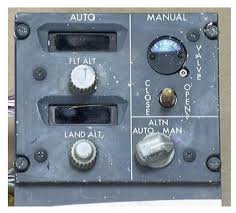
Helios' Boeing 737-300 5B-DBY underwent maintenance on the night prior to the accident. The pressurization system was checked, but after completion of the tests the Pressurization Mode Selector (PMS) was reportedly left in the "Manual" position instead of the "Auto" mode. In manual mode the crew had to manually open or close the outflow valves in order to control the cabin pressure. The outflow valves were one-third in the open position which meant that the cabin would not pressurize after takeoff. The PMS mode was apparently not noted during the pre-departure checks by the crew.

At 06:14h while climbing through an altitude of 15966 ft, the Captain contacted the Company Operations Centre (COC) and informed, “Take off configuration warning ON” and “Cooling equipment Normal and Alternate Offline”. Because of a lack of cooling air another alarm activated, indicating a temperature warning for the avionics bay. 

There were a few communications between the Captain and the COC during the period of 06:14h and 06:20h. On a query from the Captain, “where are my equipment cooling circuit breakers?” The engineer replied, “Behind the Captain’s seat”. These needed to be pulled out to turn off the alarm. The captain got up from his seat to look for the circuit breakers. At 06:20h, the Captain made his last communication, at which time the aircraft was climbing through 28900 ft.

During the communications between the Captain and the COC, at an altitude of approx. 18000 ft, the cabin altitude exceeded 14000 ft, leading to the deployment of oxygen masks in the passenger cabin, as per design.

The crew was not wearing their oxygen masks as their mindset and actions were determined by the preconception that the problems were not related to the lack of cabin pressure. As the airplane was still climbing, the lack of oxygen seriously impaired the flight crew. The captain probably became unconscious when he was trying to find the circuit breaker. The first officer was still in his seat when he also became unconscious. There were no further two way communications with the aircraft after 06:20h.

The aircraft continued to climb and leveled out at FL 340, as programmed. The aircraft continued on track maintaining FL 340 and eventually fed in to a standard instrument approach procedure for runway 03L at Athens International airport, while continuing to maintain FL 340. The approach was followed by a missed approach, and setting up of a holding pattern over KEA VOR, while continuing to maintain altitude.

All efforts by Greek air traffic controllers to contact the pilots were futile. Around 07:00h, two Greek F-16 fighter planes were scrambled to intercept the aircraft. The F-16s intercepted the aircraft on its sixth holding pattern, at about 07:23h. The F-16 pilots reported that they were not able to observe the captain, while the first officer seemed to be unconscious and slumped over the controls. Oxygen masks were reported to be dangling in a dark passenger cabin.

At 08:49h, the F-16's reported a person not wearing an oxygen mask entering the cockpit and occupying the captain's seat. The F-16 pilot tried to attract his attention without success. At 08:50h, the left engine flamed out due to fuel depletion and the aircraft started descending. At 08:54h, two Mayday messages were recorded on the CVR, in a very weak voice. At 09:00h, the right engine also flamed out at an altitude of 7084 ft. The aircraft continued descending rapidly and impacted hilly terrain about 33 kms northwest of Athens, close to Grammatiko village.

All 121 persons on board the aircraft, including 6 crew members and 115 passengers, were fatally injured during the accident.

DIRECT CAUSES
1. Non-recognition that the cabin pressurization mode selector was in the MAN (manual) position during the performance of the:
a) Pre-flight procedure;
b) Before Start checklist; and
c) After Takeoff checklist.

Image Courtesy: Google Images. Pressurisation Mode Selector in Manual Mode


2. Non-identification of the warnings and the reasons for the activation of the warnings (cabin altitude warning horn, passenger oxygen masks deployment indication, Master Caution), and continuation of the climb. (The initial actions by the flight crew to disconnect the autopilot, to retard and then again advance the throttles, indicated that it interpreted the warning horn as a Takeoff Configuration Warning). (At an aircraft altitude of 17 000 to 18 000 ft, the Master Caution was activated and was not cancelled for 53 seconds. The reason for its activation may have been either the inadequate cooling of the Equipment or the deployment of the oxygen masks in the cabin. Independently of the Master Caution indication, there are separate indications for both malfunctions on the overhead panel. The flight crew possibly identified the reason for the Master Caution to be only the inadequate cooling of the Equipment that was indicated on the overhead panel, and did not identify the second reason for its activation, i.e., passenger oxygen masks deployment, that was later also indicated on the Overhead panel. The crew became preoccupied with the Equipment Cooling fan situation and did not detect the problem with the pressurization system. The workload in the cockpit during the climb was already high and was exacerbated by the loud warning horn that the flight crew did not cancel).

3. Incapacitation of the flight crew due to hypoxia, resulting in continuation of the flight via the flight management computer and the autopilot, depletion of the fuel and engine flameout, and impact of the aircraft with the ground. (The incorrect interpretation of the reason for the warning horn indicated that the flight crew was not aware of the inadequate pressurization of the aircraft).


LATENT CAUSES

1. The Operator’s deficiencies in organization, quality management and safety culture, documented diachronically as findings in numerous audits.

2. The Regulatory Authority’s diachronic inadequate execution of its oversight responsibilities to ensure the safety of operations of the airlines under its supervision and its inadequate responses to findings of deficiencies documented in numerous audits.

3. Inadequate application of Crew Resource Management (CRM) principles by the flight crew.

4. Ineffectiveness and inadequacy of measures taken by the manufacturer in response to previous pressurization incidents in the particular type of aircraft, both with regard to modifications to aircraft systems as well as to guidance to the crews.


CONTRIBUTING FACTORS TO THE ACCIDENT

1. Omission of returning the pressurization mode selector to AUTO after un-scheduled maintenance on the aircraft.

2. Lack of specific procedures (on an international basis) for cabin crew procedures to address the situation of loss of pressurization, passenger oxygen masks deployment, and continuation of the aircraft ascent (climb).


3. Ineffectiveness of international aviation authorities to enforce implementation of corrective action plans after relevant audits.

Friday, May 6, 2016

SHUTTING DOWN THE ‘GOOD’ (WRONG) ENGINE


BRITISH MIDLANDS FLIGHT 092: 08 JAN 1989: BOEING 737 – 400


SYNOPSIS

Flight 092 left London for Belfast at 19:52h with a crew of 8, and 118 passengers on board. While climbing through FL283 moderate to severe vibration that was accompanied by ingress of smoke and fumes in to the flight deck were felt, as also fluctuations in the engine parameters of the No. 1 engine. Investigations revealed that these were the result of one of the outer panel of one of the no. 1 engine fan blades getting detached in flight, causing a series of compressor stalls that lead to airframe shuddering.

Believing the No. 2 engine had suffered damage, the crew throttled it back. The shuddering stopped, leading the flight crew to believe that their actions were correct, and they thus shut down the No 2 engine. The No. 1 engine operated normally after the initial severe vibrations, and during the descent in to East Midlands, the diversionary airfield.

The flight was cleared for an approach on to runway 27. The instrument approach on No. 1 engine continued normally, although with a high level of vibrations from the live engine. At 900 feet, 2.4nm from the runway, no. 1 engine suddenly suffered a reduction in power followed by a fire warning on this engine. Attempts to restart No. 2 engine were not successful. As the speed fell below 125 knots, the stick shaker activated and the aircraft struck trees at a speed of 115 knots. The aircraft continued and impacted the western carriageway of the M1 motorway 10 m lower and came to rest against the wooded embankment, 900 m short of the runway.

39 passengers died in the accident, and 8 more died later due to the injuries sustained. Of the remaining 79 occupants, 74 suffered serious injuries.

(Image Courtesy: Google Images: Aerial view of Crash site)


PROBABLE CAUSE

The operating crew shut down the No 2 engine after a fan blade had fractured in the No 1 engine. This engine subsequently suffered a major thrust loss due to secondary fan damage after power had been increased during the final approach to land.

The following factors contributed to the incorrect response of the flight crew

1. The combination of heavy engine vibration, noise, shuddering and an associated smell of fire were outside their training and experience.

2. They reacted to the initial engine problem prematurely and in a way that was contrary to their training. (Either pilot does not remember having noticed the engine parameters like N1, EGT, N2 or Oil Pressures of the engines before throttling back No. 2 engine).

3. They did not assimilate the indications on the engine instrument display before they throttled back the No. 2 engine. (The crew’s familiarity of the newly introduced EIS on the B 737-400 variant could have been a factor. The Captain had 23 hours and the first officer had 53 hours on the B 737-400. Both were given a 1day training session on the EIS, as there was no flight simulator available with the EIS. The variants before the B737-400 had the normal electro-mechanical engine instruments).

4. As the No 2 engine was throttled back, the noise and shuddering associated with the surging of the No 1 engine ceased, persuading them that they had correctly identified the defective engine. (The Auto Throttle system was disengaged while bringing No. 2 engine throttle back to idling. This led to manual control of the engines, and No. 1 engine fuel flow settled as per the prevailing engine conditions, rather than as demanded by the auto throttle to maintain flight parameters).


5. They were not informed of the flames which had emanated from the No.1 engine and which had been observed by many on board, including 3 cabin attendants in the aft cabin. (Inadequate communications between flight and cabin crew – a CRM issue that is greatly emphasised now).

Saturday, July 13, 2013

A TIMELY GO-AROUND DECISION AND SAFE OPERATIONS

The recent unfortunate accident involving Flight 214, a Boeing-777 aircraft, of Asiana Airlines at San Francisco is a case of a fully serviceable aircraft flying in to the ground in VMC conditions; due to an approach that became increasingly unstabilized with height. Could this accident be averted, had the crew taken a timely decision to go-around? Conditions being VMC, as per the recommendations enumerated below, the approach should have stabilized latest by 500 ft and should have remained so below 500’, to continue with an approach to land. As per reports, the airplane was configured for landing with 30 degrees of flaps and gear down with a target threshold speed of 137 knots. The aircraft descended through an altitude of 1400 ft at 170 kts and slowed down to 149 kts at 1000 feet. The throttles were reportedly at idle and the auto throttle was armed. At 500 feet altitude, 34 seconds prior to impact, the speed dropped to 134 kts, which was just below the target threshold speed. Any speed below the target speed, the approach should have been considered unstabilized, especially below 500 ft in VMC. The situation was allowed to worsen further when the airspeed dropped significantly, reaching 118 knots at 200 feet altitude. Eight seconds prior to impact, the throttles were moved forward. Airspeed reduced further to 112 knots at an altitude of 125 feet. Seven seconds prior to impact, one of the crew members made a call to increase speed. The stick shaker sounded 4 seconds prior to impact. One second later the speed was 103 knots, the lowest recorded by the FDR. One of the crew members made a call for go-around at 1.5 seconds before impact. This was too late to prevent an accident off an approach that was unstabilized. Accidents during the approach and landing (ALA) phase account for a major percentage of all accidents.

Analysis of data collected by a go-around study being conducted by the Flight Safety Foundation’s (FSF) international and European aviation committees has shown that potentially 54 percent of all aircraft accidents in year 2011 could have been prevented by a timely go-around decision by the flight deck crew. Clarifying on the figure of 54%, the FSF director of global programs is quoted to have said that, “this is based on 65 percent of that year’s accidents being in the approach and landing (ALA) phase, and using our analysis that 83 percent of ALAs could be prevented by a go-around decision”. The study has also elaborated that “the majority of accidents over the last 10 years have occurred during the approach, landing and go-around flight phases. The study has also highlighted the fact that the lack of a go-around decision is the leading risk factor in approach and landing accidents and is the primary cause of runway excursions during landing. Yet, less than 5% of unstabilized approaches lead to a go-around.”

Unstabilized approaches have been attributed to various factors, which include company policies, human factors, weather, crew resource management, ATC and automation. The Asiana case can also be attributed to a number of these factors. The crew felt that the auto throttle should have maintained the speed at 137 kts; the PF and PM were not effectively flying and monitoring the flight path and parameters, which permitted the IAS to drop well below the target speed, and the throttles to remain at idle; company culture may have also come into play in this scenario; fatigue after a long flight due to improper work load assignment – there were four pilots on this flight; three of them in the cockpit during the approach. All of these factors that led to the unstabilized approach would have been taken care of, if the crew had made the decision to go around in time. When things are not as planned in aviation, it is always better to have height and speed in hand. In this particular case there were many issues that pointed towards an unstabilized approach. To understand this it is best to study the elements that constitute a stabilized approach.

Stabilized Approach

Stabilized approach concept is all about maintaining a stable speed, descent rate, and vertical/ lateral flight path in the landing configuration. It is felt that a stabilized approach would generally lead to a safe landing, as the crew’s awareness of the horizontal/ vertical flight path; the IAS and the energy-condition of the aircraft would lead to improved overall situational awareness during the approach. Also, flying a stabilized approach permits the crew to devote adequate time and limited human ‘attention resources’ to flying, monitoring, communications, weather conditions, systems check, and most importantly to decision making. As has been brought out earlier, 95% of unstabilized approaches do not lead to a go-around, and this has contributed to 54% of the total accidents in 2011, and the lack of go-around decision is a major risk factor in ALA. It is now an accepted fact that the decision to execute a go-around is no indication of poor performance.

Recommended Elements of a Stabilized Approach

The following recommendations are developed by the Flight Safety Foundation. All approaches should be stabilized by 1,000 feet above airfield elevation (AFE) in instrument meteorological conditions (IMC) and by 500 feet AFE in visual meteorological conditions (VMC). An approach is considered stabilized when all of the following criteria are met:

·                     The airplane is on the correct flight path
·                      Only small changes in heading and pitch are required to maintain the correct flight path
·                     The airplane speed is not more than VREF + 20 knots indicated airspeed and not less than Vref
·                     The airplane is in the correct landing configuration
·                     Sink rate is no greater than 1,000 fpm; if an approach requires a sink rate greater than 1,000 fpm, a special briefing should be conducted
·                     Thrust setting is appropriate for the airplane configuration, and not below the minimum power on approach as defined by the aircraft operating manual.
·                     All briefings and checklists have been conducted.
·                     Specific types of approaches are stabilized if they also fulfill the following:

    • ILS approaches should be flown within one dot of the glide slope and localizer
    • During a circling approach, wings should be level on finals when the airplane reaches 300 feet AFE.
    • Unique approach procedures or abnormal conditions requiring a deviation from the above elements of a stabilized approach require a special briefing.

For safety reasons, an approach that becomes un-stabilized below 1,000 feet AFE in IMC, or below 500 feet AFE in VMC should be discontinued and a go-around executed. Also, stabilized conditions should be maintained throughout the rest of the approach for it to be considered a stabilized approach. If the above criteria cannot be established and maintained at and below 500 feet AFE, initiate a go-around.

Conclusion


Considering the statistics and the facts enumerated above, it is felt that all efforts should be made to fly stabilized approaches, and if due to some reason an approach becomes unstabilized then the decision to go-around should be taken well in time. A well considered, and executed, go-around will go a long way in ensuring safe operations, and enhance safety in aviation.

Monday, May 20, 2013

AIR TRANSAT ACCIDENT - 24 AUG 2001

Brief Details of the Accident

Flight TS 236 took off from Toronto at 0:52 UTC on Friday August 24, 2001 bound for Lisbon. There were 293 passengers and thirteen crew members on board. The aircraft was an Airbus A 330 registered as C-GITS that was manufactured in March 1999, configured with 362 seats and placed in service by Air Transat in April 1999. Leaving the gate in Toronto, the aircraft had 46.9 tonnes of fuel on board, 4.5 tonnes more than required by regulations.

At 05:36 UTC, the pilots received a warning of fuel imbalance. Not knowing at this point that they had a fuel leak, they followed a standard procedure to remedy the imbalance by transferring fuel from the port to the near-empty starboard tank.
At 05:16 UTC, a cockpit warning system chimed and warned of low oil temperature and high oil pressure on engine no. 2. There is no obvious connection between an oil temperature or pressure problem and a fuel leak. Consequently Captain Piché and co-pilot DeJager suspected these were false warnings and shared their observations with their maintenance control centre, who advised them to monitor the situation.
Unknown to the pilots, the aircraft had developed a fuel leak in a fuel line to its starboard engine. The fuel transfer caused fuel from the operational side of the aircraft to be wasted through the leak in the engine on the other side. The leak, which averaged at 1 gallon per second, caused a higher than normal fuel flow through the fuel-oil heat exchanger (FOHE). The FOHE is designed to transfer heat from engine oil to fuel for both cooling and efficiency purposes. The increased fuel flow caused both the drop in oil temperature, as well as the rise in oil pressure that the pilots had observed earlier.

At 05:45 UTC, the pilots decided to divert to Lajes air base in the Azores. The crew were still unsure if they really had a fuel leak or not. They declared a fuel emergency with Santa Maria Oceanic air traffic control three minutes later.
At 06:13 UTC, while still 135 miles (217 km) from Lajes, engine no. 2 on the right wing flamed out because of fuel starvation. Captain Piché ordered full thrust from the remaining operational engine, and the plane descended to 33,000 feet (10,000 m), unable to stay at its 39,000 feet (12,000 m) cruising altitude with only one engine operating. Ten minutes later, the crew sent a Mayday to Santa Maria Oceanic air traffic control.
Thirteen minutes later, engine no. 1 also flamed out at while the aircraft was still approximately 65 nautical miles (120 km) from Lajes Air Base. Without engine power, the aircraft not only lost all thrust, but also its primary source of electrical power. The emergency Ram Air Turbine was deployed automatically to provide essential power for critical sensors and instruments to fly the aircraft. However the aircraft lost its main hydraulic power which operates the flaps, brakes, and spoilers.
Military air traffic controllers who were tracking the aircraft on their radar system guided the aircraft to the airport. While Piché flew the plane, DeJager monitored its descent rate – around 2000 feet (600 metres) per minute – and calculated that the plane had about 15 to 20 minutes left before they had to ditch the plane in the water. The crew sighted the air base a few minutes later. Piché had to execute a series of 360 degree turns to lose speed and altitude. Although they successfully lined up with Runway 33, they faced a new danger. The plane was on a final descent, going faster than optimal. Although they had unlocked the slats and deployed the landing gear, the airspeed was still too high. Additionally, the aircraft would be unable to use its thrust reversers to slow the plane during the landing.
At 06:45 UTC, the plane touched down hard 1,030 feet (310 m) down Runway 33 at a speed of approximately 200 knots (370 km/h), instead of the 170 knots (310 km/h) recommended for an unpowered landing. The aircraft bounced back into the air, but touched down again 2,800 feet (850 m) from the approach end of the runway and came to a stop 7,600 feet (2,300 m) from the approach end of the 10,000 feet (3,000 m) runway. With the operation of the emergency brakes, eight tires burst. Fourteen passengers and two crew members suffered minor injuries during the evacuation of the aircraft. Two passengers suffered serious but not life-threatening injuries.
The favourable outcome was partly attributable to the flight being rerouted at the last minute via a more southerly route across the Atlantic than initially planned, which brought the aircraft within range of the Azores.

Investigations

The Portuguese GPIAA investigated the incident along with Canadian and French authorities.
The investigation revealed that the cause of the incident was a fuel leak in the number two engine, caused by an incorrect part installed in the hydraulic system by Air Transat maintenance staff. Air Transat maintenance staff had replaced the engine as part of routine maintenance, using a spare engine, lent by Rolls-Royce, from an older model. This engine did not include a hydraulic pump. Despite the lead mechanic's concerns, Air Transat ordered the use of a part from a similar engine, an adaptation that did not maintain adequate clearance between the hydraulic lines and the fuel line. This lack of clearance — on the order of millimeters from the intended part — allowed vibration in the hydraulic lines to degrade the fuel line and cause the leak. Air Transat accepted responsibility for the incident.
Although pilot error was listed as one of the lead causes for the incident, it was the skill of the pilots, and of the military Air Traffic Controller in service at the time, 1st Sgt. José Ramos, that allowed the flight to land without fuel, causing only minor injuries to the passengers and minor damage to the airplane, which is still in service. The pilots returned to a heroes' welcome from the Quebec press.
The incident also led to the issue of Airworthiness instructions to all operators of certain types of the Airbus aircraft that stressed that crews should check that any fuel imbalance is not caused by a fuel leak before opening the cross-feed valve. The French Airworthiness Directive (AD) required all airlines operating these Airbus models to make revisions to the Flight Manual before any further flights were allowed. The FAA gave a 15-day grace period before enforcing the AD. Airbus also modified its computer systems; the on-board computer now checks all fuel levels against the flight plan. It now gives a clear warning if more fuel is being lost than the engines can consume. Rolls Royce also issued a bulletin advising of the incompatibility of the affected engine parts.

Thursday, May 16, 2013

LION AIR ACCIDENT ON 13 APR 2013 - PRELIMINARY REPORT


(Relevant excerpts of the preliminary report accessed from the Indonesian authority website)

History of the Flight

On 13 April 2013, a Boeing 737-800 aircraft registered PK-LKS was being operated by PT. Lion Mentari Airlines (Lion Air) on a scheduled passenger flight as LNI 904. The aircraft departed from Husein Sastranegara International Airport (WICC) Bandung1 at 0545 UTC2. The aircraft flew at FL 390, while the Second in Command (SIC) was the Pilot Flying (PF) and the Pilot in Command (PIC) was the Pilot Monitoring (PM).

There were two pilots and 5 flight attendants with 101 passengers on board consisted of 95 adults, 5 children and 1 infant. The flight from the departure until start of approach was uneventful.

At 0648 UTC, the pilot made first communications with Bali Approach controller (Bali Director) when the aircraft position was 80 Nm from BLI4 VOR. The pilot received clearance direct to TALOT waypoint and descent to 17,000 ft.

At 0652 UTC, the Bali Director issued a further clearance for the pilot direct to KUTA waypoint and descent to 8,000 ft.

At 0659 UTC, the aircraft was vectored for VOR DME approach for runway 09 and descent to 3,000’.

At 0703 UTC, while the aircraft over KUTA waypoint, the Bali Director transferred the aircraft to Bali Control Tower (Ngurah Tower).

At 0704 UTC, the pilot contacted Ngurah Tower controller and informed that the aircraft position was leaving KUTA waypoint. The Ngurah Tower controller instructed the pilot to continue approach and to reduce the aircraft speed to provide sufficient separation distance with another aircraft.

At 0707 UTC, the Ngurah Tower issued take off clearance for departure aircraft on runway 09.

At 0708 UTC, with the aircraft at approximately 1,600 ft AGL, the Ngurah Tower controller saw the aircraft on final and gave a landing clearance with additional information that the wind condition was 120° / 05 kts.

The excerpts of the CVR and FDR data on the final approach are as follows:

At 0708:56 UTC, while the aircraft altitude was approximately 900 ft AGL the SIC stated that the runway was not in sight.

At 0709:33 UTC, after Enhance Ground Proximity Warning System (EGPWS) called out “MINIMUM” at aircraft altitude approximately 550 ft AGL, the pilot disengaged the autopilot and the auto throttle then continued to descend.

At 0709:53 UTC, while the aircraft altitude approximately 150 ft AGL the PIC took over the control.
The SIC handed the control to the PIC and stated that he could not see the runway.

At 0710:01 UTC, after the EGPWS warning “TWENTY”, the PIC commanded a go around.

At 0710:02 UTC, the aircraft impacted the water.

The OCA(H) as per the landing chart for VOR/ DME R/W 09 is 465’ (454’).

Wednesday, May 1, 2013

FINE AIR DC-8 ACCIDENT AT MIAMI 07 AUG 1997

(From Flight Safety Foundation website and NTSB accident Report)

Executive Summary


Fine Air Flight 101 was originally scheduled to depart Miami for Santo Domingo at 09:15 using another DC-8 airplane, N30UA, to carry cargo for Aeromar. Due to a delay of the inbound aircraft, Fine Air substituted N27UA for N30UA and rescheduled the departure for 12:00. N27UA arrived at Miami at 09:31 from San Juan, Puerto Rico, and was parked at the Fine Air hangar ramp. The security guard was not aware of the airplane change, and he instructed Aeromar loaders to load the airplane in accordance with the weight distribution form he possessed for N30UA. The first cargo pallet for flight 101 was loaded onto N27UA at 10:30 and the last pallet was loaded at 12:06. The resulting center of gravity (CG) of the accident airplane was near or even aft of the airplane’s aft CG limit. After the three crew members and the security guard had boarded the plane, the cabin door `was closed at 12:22. 


Eleven minutes later the flight obtained taxi clearance for runway 27R. The Miami tower controller cleared flight 101 for takeoff at 12:34. Takeoff power was selected and the DC-8 moved down the runway. The flight crew performed an elevator check at 80 knots. Fourteen seconds later the sound of a thump was heard. Just after calling V1 a second thump was heard. Two seconds later the airplane rotated. Immediately after takeoff the airplane pitched nose-up and entered a stall. The DC-8 recovered briefly from the stall, and stalled again. The airplane impacted terrain in a tail first, right wing down attitude. it slid west across a road (72nd Avenue) and into the International Airport Center at 28th Street and burst into flames. Investigation showed that the center of gravity resulted in the airplane’s trim being mis-set by at least 1.5 units airplane nose up, which presented the flight crew with a pitch control problem on takeoff.


FINDINGS (Findings that are relevant to pilots are being reproduced here from the NTSB accident report, which can be accessed at http://www.ntsb.gov/doclib/reports/1998/AAR9802.pdf):

  • The center of gravity (CG) of the accident airplane was near or even aft of the airplane’s aft CG limit.
  • The center of gravity shift resulted in the airplane’s trim being mis-set by at least 1.5 units airplane nose up (2.4 minus 0.9 units at 94,119 pounds).
  • The aft center of gravity (CG) location and mis-trimmed stabilizer presented the flight crew with a pitch control problem; however, because the actual CG location could not be determined, the severity of the control problem could not be determined.
  • The mistrim of the airplane (based on the incorrectly loaded cargo) presented the flightcrew with a situation that, without prior training or experience, required exceptional skills and reactions that cannot be expected of a typical line pilot.
PROBABLE CAUSE: "The National Transportation Safety Board determines that the probable cause of the accident, which resulted from the airplane being mis-loaded to produce a more aft center of gravity and a correspondingly incorrect stabilizer trim setting that precipitated an extreme pitch-up at rotation, was (1) the failure of Fine Air to exercise operational control over the cargo loading process; and (2) the failure of Aeromar to load the airplane as specified by Fine Air. Contributing to the accident was the failure of the FAA to adequately monitor Fine Airs operational control responsibilities for cargo loading and the failure of the FAA to ensure that known cargo-related deficiencies were corrected at Fine Air."

Sunday, April 28, 2013

BASIC NAVIGATION: UNDERSTANDING TIME

Introduction


Having understood direction, distance and speed, it is now important to spend some time in getting to know time, as it impacts aviation. In the previous chapter we had referred to the formula that we learnt in school i.e. S = ut. In basic navigation we have no access to distance in the air and thus we have to rely on flying at a certain speed in a certain direction for a certain time to reach from A to B. Things would have been simple if the time at all places on the surface of the earth was same, but it is not so. Can you guess why?

Our body clock takes its cues from the rising and setting of the sun and thus we have evolved systems that help us with keeping track of time with respect to the sun. Since the earth is going around the sun and also revolving around its own axis, we need to understand the solar system before we can comprehend why we need different systems like UTC, IST, GMT, LMT, Zone time, etc.

  • Why is aviation stuck with UTC? Is there a better way?

Time and Our Solar System

The ETD of our flight is 0700Z and the flight duration is 8:00 hours. As we can see in this statement, we have used time in two distinct ways – as a particular instant of time and also as a duration of time. Duration of time poses no problem because we have gadgets like watches, clocks that can give us the duration very accurately. However, the basic datum against which we set the clock or watch is what is of greater concern to us since we have many different standards of time, or datum. 

However, taking due cognizance of our body bio-rhythmic clock, the basis of our time-keeping or datum has to be the Sun. We had studied the solar system in an earlier chapter. It must be understood that our solar system comprises the sun and nine major planets, including our earth, revolving around it in elliptical orbits. Each planet is at a different distance from the sun; with Mercury being the closest taking 88 days to complete one orbit; and Pluto being the farthest taking 249 years to complete one orbit around the sun. The motion of all these planets around the sun follows the Kepler’s laws of Planetary Motion, which are as follows: -

·         Each planet follows an elliptical orbit around the sun, with the sun being at one of the foci of the ellipse. When viewed from the North celestial Pole, the planets orbit in an anti-clockwise direction.
·         The line joining the planet to the Sun sweeps out equal areas in equal time, or,
o   Distance from sun increases – Speed of orbit reduces
o   Distance from sun reduces – Speed of orbit increases.

(All Images in this post are courtesy of Google Images. Please let me know of any copyright, and I would most willingly remove the images.)

Earth’s Motion

  • Rotates West to East about its axis of rotation
  • Makes one orbit around the sun in about 365 days, 5 hours, 48’ and 45”.
  • Axis of rotation of the earth tilted at an angle of 66.5° to the orbital plane or putting it another way at an angle of 23.5° from the normal to the orbital plane.

Seasons on the Earth

Seasons on the earth are caused primarily due to the tilt of the earth’s axis. This causes the sun to be directly over 23.5° N in midsummer in the Northern hemisphere and over 23.5° S in mid winter over the Northern hemisphere. When it is summer in the Northern hemisphere, it is winter in the Southern hemisphere and vice versa.

  • Why is it winter in the Southern hemisphere when it summer over the Northern hemisphere?

We would now talk only in terms of the Northern hemisphere. The following takes place:


  • Summer: Earth is farthest from the sun (Aphelion) around 03 July with the Northern hemisphere tilted directly towards the sun; the sun being over its Northern most point on the earth, i.e. over the Tropic of Cancer (around 21 June), also known as the summer solstice for the Northern hemisphere
  • Winter: Earth is nearest to the sun (Perihelion) around 03 January with the Southern hemisphere tilted directly towards the sun; the sun being over its Southernmost point on the earth, i.e. over the Tropic of Capricorn (around 22 December), also known as the winter solstice for the Northern hemisphere.
  • Equinox: In between the two solstices are the spring (around 21 March) and the autumn (around 23 September) equinox (equal night), when the sun is directly over the equator leading to equal day and night on all parts of the earth.

Understanding Time and Different Types of Day that Man has devised

Sun’s Apparent Motion: As we have already discussed, the earth rotates around its own axis from West to East, or in an anti-clockwise direction when viewed from above the North Pole. If we consider the earth to be stationary, then it would appear that the sun travels around the earth in an East to West or clockwise direction. This is the reason why we say that the sun rises in the East and sets in the West. Also, while so traveling, the sun would cross all meridians of the earth.

Transit: The crossing of a meridian by a heavenly body is termed as a transit.

Sidereal Day: Two successive transits of a star is called a sidereal (star) day. One point that needs to be understood here is that stars are many light years away from the earth; whereas the earth is only 8 light minutes away from the sun. The long distance (infinite for all practical purposes) between the stars and the earth ensure that there would be negligible effect of the earth’s elliptical orbit around the sun on the time between two transits. This time is very nearly constant and is the time taken for the earth to complete one full 360° rotation around its own axis. This time is approx. 23h and 56’, and is called a sidereal day.


Apparent and Mean Solar Day: The motion around the sun is a little more involved. When viewed from the earth, the sun’s apparent clockwise motion around the earth would take approx 24 h for two successive transits if the earth were not revolving around the sun (same as a sidereal day). However, because the earth is revolving around the sun in approx 365 days (or it is traversing 1°/ day approx), it can be said that the successive transit would take place only after the earth has rotated through 361°. In addition, the motion of the earth around the sun follows Kepler’s law and is thus not at a constant speed because the earth’s distance from the sun is varying. Thus the apparent (True sun) solar day would also vary, and would not be a constant. This would be very inconvenient for timekeeping purposes. To overcome this problem, a mean solar day of 24 hours (the average value of the apparent solar days throughout the year) has been devised.

The Mean Sun: The mean sun is an imaginary body that moves approx with the apparent (real) sun – sometimes ahead and sometimes behind it. This mean sun ensures that our days are always 24 h, and very close to the real days. The discrepancy between the real (true or apparent sun) and mean sun (devised sun) is about 16’ later in November and about 14’ early in February. This discrepancy between the real and the mean sun is called the equation of time.

Leap Year

The earth takes 365d 5h 48’ and 45” to complete one orbit around the sun, and this is the astronomical year. Our seasons are as per this astronomical year. However, our calendar has only 365 d in a year, so if we do not add a day every fourth year, we would lose approx 6 h off our calendar every year. This would lead to seasons occurring in different months, over time. To ensure that the calendar year is synchronized with the seasons or astronomical year, an extra day is added to the month of February in every fourth year (a year that is divisible by 4 or leap year). The only exception to this rule is the century, when only every fourth century is a leap year (1600, 2000, and 2400). This is because in the leap years, we are catering for 6h instead of the actual 5h 48’ and 45”, and this time discrepancy has to be adjusted once in every 400 years. All this is done to keep the stability of seasons so that they occur on around the same dates every year.

Mean Solar Time and Arc

The mean sun takes 24 h to go around the earth, or 360° of arc. Its motion in degrees of longitude and time can thus be worked out as follows: -

  • Time                                                      Arc of Longitude
  • 24 h                        =                             360°
  • 1h                           =                             15° (360°/ 24h)
  • 4’                           =                             1°  
  • 1’                            =                             15”

Local Mean Time (LMT)

Local mean time is the time kept using the observer’s local anti-meridian and the mean sun in the following manner: -

  • Day starts (0000 h) when mean sun at anti-meridian, and ends after 24 h (2400 h) with sun on the same anti-meridian.
  • As the mean sun goes around the earth in a clockwise direction, any place East of the observer’s meridian would be ahead of the observer’s LMT, and any place West of this would have a LMT behind the observer’s LMT. The LMT can be calculated by using the arcs of longitude, as given above.

Universal Coordinated Time (UTC)

LMT at each meridian would be different. This would pose certain problems. Thus there was a need to have a time that was same all across the world. This time was the GMT or Greenwich Mean Time, or the LMT at Greenwich. The modern name for GMT that is approved by ICAO is UTC. It is the same as the GMT for all practical purposes, and is also the standard time used for all aviation related activities. However, this cannot be used for normal living by all people around the earth due to our body bio-rhythms.

Zone Times

In this system, each zone comprises of 15° of longitude (1 hour) and has a zone time. There are a total of 25 zones, starting with ‘Z’ (from 7.5°W to 7.5°E) and every 15° thereafter. Time zones around the International Date Line are only 7.5°. The time zones comprise the letters of the alphabet except ‘J’. The numbers in blue are to be added to the UTC to get the zone time; and the numbers in purple are to be substracted from teh UTC to get the zone time.

Standard Time

Zone time runs in to problems when countries stretch across more than one time zone. There is thus a need felt to have a standard time for the entire country or for designated parts of the country. This is the standard time for that country. IST is the LMT at Allahabad (82.5°E). This is used as a standard time for the whole of India. Longitude 82.5°E falls on the line between E and F time zones and thus IST is also referred to as EF. Countries like USA and Canada have more than 1 standard time. Standard times cannot be calculated unlike zone times. One needs to refer to tables to find the standard time.

Summer – Daylight Saving Time

As one goes away from the equator, the days are much longer in summer. To conserve energy, some countries that are in the higher latitudes have introduced something known as Daylight Saving Time during summer (which is six months apart in the Northern and the Southern hemisphere). Actual dates are published in the time charts. It is easy to remember the changes to the clock by the following rhyme: -

  • Spring forward in spring
  • Fall back in fall.

International Date Line (IDL)

The anti-meridian to the Prime Meridian is the general reference for the International Date Line. It does not follow the meridian exactly, but is curved at a few places to accommodate populated areas to one side of the date line.

The significance of the IDL is that the date changes when one crosses the IDL towards Easterly or Westerly direction, in the following manner: -

  • Traveling on an Easterly heading – subtract one day from the date or lose a day.
  • Traveling on a Westerly direction – add one day to the date or gain a day.

Time however continues to be the same. To prevent problems when crossing the IDL during a flight or in calculations, it is advisable to work in UTC before changing over to ST or LMT.

Thumb Rules

  • Longitude East, UTC least
  • Longitude West, UTC best.
  • Easterly direction travel across IDL – Lose a day
  • Westerly direction travel across IDL – Add a day.
  • Arc times: -
    • 24h                         -                              360°
    • 1h                           -                              15°