Showing posts with label CABIN CREW. Show all posts

Monday, May 9, 2016

PRESSURISATION SWITCH IN THE WRONG POSITION

HELIOS AIRWAYS FLIGHT 522: 14 AUG 2005: BOEING 737 – 300

SYNOPSIS

On 14 Aug 2005, Helios Airways international Flight 522 departed from Larnaca, Cyprus, at 06:07h for an intermediate stop at Athens, Greece on way to Prague, Czech Republic. The planned flying time was 1 hour and 23 minutes. While climbing through an altitude of 12040 ft, for FL 340, the cabin altitude warning horn sounded at 06:12h. The German captain and the Cypriot co-pilot tried to solve the problem but encountered some problems communicating with each other.

Helios' Boeing 737-300 5B-DBY underwent maintenance on the night prior to the accident. The pressurization system was checked, but after completion of the tests the Pressurization Mode Selector (PMS) was reportedly left in the "Manual" position instead of the "Auto" mode. In manual mode the crew had to manually open or close the outflow valves in order to control the cabin pressure. The outflow valves were one-third in the open position which meant that the cabin would not pressurize after takeoff. The PMS mode was apparently not noted during the pre-departure checks by the crew.

At 06:14h while climbing through an altitude of 15966 ft, the Captain contacted the Company Operations Centre (COC) and informed, “Take off configuration warning ON” and “Cooling equipment Normal and Alternate Offline”. Because of a lack of cooling air another alarm activated, indicating a temperature warning for the avionics bay. 

There were a few communications between the Captain and the COC during the period of 06:14h and 06:20h. On a query from the Captain, “where are my equipment cooling circuit breakers?” The engineer replied, “Behind the Captain’s seat”. These needed to be pulled out to turn off the alarm. The captain got up from his seat to look for the circuit breakers. At 06:20h, the Captain made his last communication, at which time the aircraft was climbing through 28900 ft.

During the communications between the Captain and the COC, at an altitude of approx. 18000 ft, the cabin altitude exceeded 14000 ft, leading to the deployment of oxygen masks in the passenger cabin, as per design.

The crew was not wearing their oxygen masks as their mindset and actions were determined by the preconception that the problems were not related to the lack of cabin pressure. As the airplane was still climbing, the lack of oxygen seriously impaired the flight crew. The captain probably became unconscious when he was trying to find the circuit breaker. The first officer was still in his seat when he also became unconscious. There were no further two way communications with the aircraft after 06:20h.

The aircraft continued to climb and leveled out at FL 340, as programmed. The aircraft continued on track maintaining FL 340 and eventually fed in to a standard instrument approach procedure for runway 03L at Athens International airport, while continuing to maintain FL 340. The approach was followed by a missed approach, and setting up of a holding pattern over KEA VOR, while continuing to maintain altitude.

All efforts by Greek air traffic controllers to contact the pilots were futile. Around 07:00h, two Greek F-16 fighter planes were scrambled to intercept the aircraft. The F-16s intercepted the aircraft on its sixth holding pattern, at about 07:23h. The F-16 pilots reported that they were not able to observe the captain, while the first officer seemed to be unconscious and slumped over the controls. Oxygen masks were reported to be dangling in a dark passenger cabin.

At 08:49h, the F-16's reported a person not wearing an oxygen mask entering the cockpit and occupying the captain's seat. The F-16 pilot tried to attract his attention without success. At 08:50h, the left engine flamed out due to fuel depletion and the aircraft started descending. At 08:54h, two Mayday messages were recorded on the CVR, in a very weak voice. At 09:00h, the right engine also flamed out at an altitude of 7084 ft. The aircraft continued descending rapidly and impacted hilly terrain about 33 kms northwest of Athens, close to Grammatiko village.

All 121 persons on board the aircraft, including 6 crew members and 115 passengers, were fatally injured during the accident.

DIRECT CAUSES
1. Non-recognition that the cabin pressurization mode selector was in the MAN (manual) position during the performance of the:
a) Pre-flight procedure;
b) Before Start checklist; and
c) After Takeoff checklist.
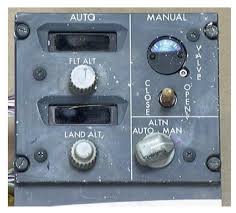
Image Courtesy: Google Images. Pressurisation Mode Selector in Manual Mode


2. Non-identification of the warnings and the reasons for the activation of the warnings (cabin altitude warning horn, passenger oxygen masks deployment indication, Master Caution), and continuation of the climb. (The initial actions by the flight crew to disconnect the autopilot, to retard and then again advance the throttles, indicated that it interpreted the warning horn as a Takeoff Configuration Warning). (At an aircraft altitude of 17 000 to 18 000 ft, the Master Caution was activated and was not cancelled for 53 seconds. The reason for its activation may have been either the inadequate cooling of the Equipment or the deployment of the oxygen masks in the cabin. Independently of the Master Caution indication, there are separate indications for both malfunctions on the overhead panel. The flight crew possibly identified the reason for the Master Caution to be only the inadequate cooling of the Equipment that was indicated on the overhead panel, and did not identify the second reason for its activation, i.e., passenger oxygen masks deployment, that was later also indicated on the Overhead panel. The crew became preoccupied with the Equipment Cooling fan situation and did not detect the problem with the pressurization system. The workload in the cockpit during the climb was already high and was exacerbated by the loud warning horn that the flight crew did not cancel).

3. Incapacitation of the flight crew due to hypoxia, resulting in continuation of the flight via the flight management computer and the autopilot, depletion of the fuel and engine flameout, and impact of the aircraft with the ground. (The incorrect interpretation of the reason for the warning horn indicated that the flight crew was not aware of the inadequate pressurization of the aircraft).


LATENT CAUSES

1. The Operator’s deficiencies in organization, quality management and safety culture, documented diachronically as findings in numerous audits.

2. The Regulatory Authority’s diachronic inadequate execution of its oversight responsibilities to ensure the safety of operations of the airlines under its supervision and its inadequate responses to findings of deficiencies documented in numerous audits.

3. Inadequate application of Crew Resource Management (CRM) principles by the flight crew.

4. Ineffectiveness and inadequacy of measures taken by the manufacturer in response to previous pressurization incidents in the particular type of aircraft, both with regard to modifications to aircraft systems as well as to guidance to the crews.


CONTRIBUTING FACTORS TO THE ACCIDENT

1. Omission of returning the pressurization mode selector to AUTO after un-scheduled maintenance on the aircraft.

2. Lack of specific procedures (on an international basis) for cabin crew procedures to address the situation of loss of pressurization, passenger oxygen masks deployment, and continuation of the aircraft ascent (climb).


3. Ineffectiveness of international aviation authorities to enforce implementation of corrective action plans after relevant audits.

Friday, May 6, 2016

SHUTTING DOWN THE ‘GOOD’ (WRONG) ENGINE


BRITISH MIDLANDS FLIGHT 092: 08 JAN 1989: BOEING 737 – 400


SYNOPSIS

Flight 092 left London for Belfast at 19:52h with a crew of 8, and 118 passengers on board. While climbing through FL283 moderate to severe vibration that was accompanied by ingress of smoke and fumes in to the flight deck were felt, as also fluctuations in the engine parameters of the No. 1 engine. Investigations revealed that these were the result of one of the outer panel of one of the no. 1 engine fan blades getting detached in flight, causing a series of compressor stalls that lead to airframe shuddering.

Believing the No. 2 engine had suffered damage, the crew throttled it back. The shuddering stopped, leading the flight crew to believe that their actions were correct, and they thus shut down the No 2 engine. The No. 1 engine operated normally after the initial severe vibrations, and during the descent in to East Midlands, the diversionary airfield.

The flight was cleared for an approach on to runway 27. The instrument approach on No. 1 engine continued normally, although with a high level of vibrations from the live engine. At 900 feet, 2.4nm from the runway, no. 1 engine suddenly suffered a reduction in power followed by a fire warning on this engine. Attempts to restart No. 2 engine were not successful. As the speed fell below 125 knots, the stick shaker activated and the aircraft struck trees at a speed of 115 knots. The aircraft continued and impacted the western carriageway of the M1 motorway 10 m lower and came to rest against the wooded embankment, 900 m short of the runway.

39 passengers died in the accident, and 8 more died later due to the injuries sustained. Of the remaining 79 occupants, 74 suffered serious injuries.

(Image Courtesy: Google Images: Aerial view of Crash site)


PROBABLE CAUSE

The operating crew shut down the No 2 engine after a fan blade had fractured in the No 1 engine. This engine subsequently suffered a major thrust loss due to secondary fan damage after power had been increased during the final approach to land.

The following factors contributed to the incorrect response of the flight crew

1. The combination of heavy engine vibration, noise, shuddering and an associated smell of fire were outside their training and experience.

2. They reacted to the initial engine problem prematurely and in a way that was contrary to their training. (Either pilot does not remember having noticed the engine parameters like N1, EGT, N2 or Oil Pressures of the engines before throttling back No. 2 engine).

3. They did not assimilate the indications on the engine instrument display before they throttled back the No. 2 engine. (The crew’s familiarity of the newly introduced EIS on the B 737-400 variant could have been a factor. The Captain had 23 hours and the first officer had 53 hours on the B 737-400. Both were given a 1day training session on the EIS, as there was no flight simulator available with the EIS. The variants before the B737-400 had the normal electro-mechanical engine instruments).

4. As the No 2 engine was throttled back, the noise and shuddering associated with the surging of the No 1 engine ceased, persuading them that they had correctly identified the defective engine. (The Auto Throttle system was disengaged while bringing No. 2 engine throttle back to idling. This led to manual control of the engines, and No. 1 engine fuel flow settled as per the prevailing engine conditions, rather than as demanded by the auto throttle to maintain flight parameters).


5. They were not informed of the flames which had emanated from the No.1 engine and which had been observed by many on board, including 3 cabin attendants in the aft cabin. (Inadequate communications between flight and cabin crew – a CRM issue that is greatly emphasised now).

Thursday, November 26, 2015

Weak link in the Indigo Airline System

I recently traveled by Indigo from Chandigarh to Bangalore. The flight was perfect with everything that is expected of an airline, starting from check-in; customer service; boarding; in-flight; cabin crew; the flight and of course the hallmark of Indigo - punctuality.
Image: Courtesy - Google Images


However, there was one flaw that seems to stick out, and would stay with me unless something is done about it by the airline. Imagine booking this flight on the Makemytrip website, after having spent an inordinate time trying to book it on the Indigo website. The Indigo website is slow, and has many glitches that forced me to re-enter data and keep refreshing pages.

Probably it has not been upgraded to keep up with the increased traffic loads on the website, caused due to increase in the fleet strength to 97 aircraft now. Or, could it be by design so that the company does not waste resources on a non core function that can be done more efficiently by a third party that has a core business of online reservations. I am not too sure on the philosophy of Indigo on this aspect.

In my opinion a low cost airline survives by cutting costs, and airline owned online booking platforms are one way of keeping costs down, unless Indigo management has now found out a better way to do it.

I am curious to know. Any one who knows this, please share with me on this blog.

Saturday, February 2, 2013

COULD THIS ACCIDENT BE PREVENTED?


Helios' Boeing 737-300 underwent maintenance on the night prior to the accident. The pressurization system was checked, but after completion of the tests the Pressurization Mode Selector (PMS) was reportedly left in the "Manual" position instead of the "Auto" mode. In manual mode the crew had to manually open or close the outflow valves in order to control the cabin pressure. The outflow valves were one-third in the open position which meant that the cabin would not pressurize after takeoff. The PMS mode was apparently not noted during the pre-departure checks by the crew.

In the morning the 737 was to operate Flight 522 from Larnaca to Prague, Czech Republic with an intermediate stop at Athens, Greece. The flight departed Larnaca at 09:07 for the leg to Athens with a planned flying time of 1 hour and 23 minutes. As the airplane climbed over the Mediterranean the cabin altitude alert horn sounded. This occurred as the 737 passed through an altitude of 10,000 feet. Cabin altitude is usually held around 8,000 feet. The crew possibly thought it was an erroneous takeoff configuration warning because the sound is identical. Then, at 14,000 feet, the oxygen masks automatically deployed and a master caution light illuminated in the cockpit. Because of a lack of cooling air another alarm activated, indicating a temperature warning for the avionics bay.

The German captain and the Cypriot co-pilot tried to solve the problem but encountered some problems communicating with each other. They contacted the Helios´ maintenance base to seek advice. The engineer told that they needed to pull the circuit breaker to turn off the alarm. The radio contact ended as the aircraft climbed through 28 900 ft. The circuit breaker was located in a cabinet behind the captain. The captain got up from his seat to look for the circuit breaker. The crews were not wearing their oxygen masks as their mindset and actions were determined by the preconception that the problems were not related to the lack of cabin pressure.

As the airplane was still climbing the lack of oxygen seriously impaired the flight crew. The captain probably became unconscious when he was trying to find the circuit breaker. The first officer was still in his seat when he also became unconscious. Because the plane's autopilot was programmed for FL340 the Boeing continued to climb until leveling out at that altitude some 19 minutes after takeoff. At 09:37 the 737 entered the Athens FIR but no R/T contact was established with the flight. Over Rodos at about 09:52 the airplane entered the UL995 airway. At 10:21 the airplane passed the KEA VOR, which is located about 28 nm south of the Athens airport. The airplane then passed the Athens Airport and subsequently entered the KEA VOR holding pattern at 10:38. All efforts by Greek air traffic controllers to contact the pilots were futile. Around 11:00 two Greek F-16 fighter planes were scrambled from the Néa Anghialos air base. At 11:24, during the sixth holding pattern, the F-16's intercepted the airliner. The F-16 pilots reported that they were not able to observe the captain, while the first officer seemed to be unconscious and slumped over the controls.
At 11:49, the F-16's reported a person not wearing an oxygen mask entering the cockpit and occupying the captain's seat. The F-16 pilot tried to attract his attention without success. At 11:50, the left engine flamed out due to fuel depletion and the aircraft started descending. At 11:54, two Mayday messages were recorded on the CVR. At 12:00, the right engine also flamed out at an altitude of approximately 7100 feet. The aircraft continued descending rapidly and impacted hilly terrain.

The same Boeing 737 had, suffered a loss of cabin pressure on December 20, 2004 during a flight from Warsaw to Larnaca. Three passengers needed medical treatment after landing in Larnaca. This incident was caused by a leaking door seal of the right hand rear door.

DIRECT CAUSES:

1. Non-recognition that the cabin pressurization mode selector was in the MAN (manual) position during the performance of the:
a) Preflight procedure;
b) Before Start checklist; and
c) After Takeoff checklist.

2. Non-identification of the warnings and the reasons for the activation of the warnings (cabin altitude warning horn, passenger oxygen masks deployment indication, Master Caution), and continuation of the climb.

3. Incapacitation of the flight crew due to hypoxia, resulting in continuation of the flight via the flight management computer and the autopilot, depletion of the fuel and engine flameout, and impact of the aircraft with the ground.

LATENT CAUSES

1. The Operator’s deficiencies in organization, quality management and safety culture, documented diachronically as findings in numerous audits.

2. The Regulatory Authority’s diachronic inadequate execution of its oversight responsibilities to ensure the safety of operations of the airlines under its supervision and its inadequate responses to findings of deficiencies documented in numerous audits.

3. Inadequate application of Crew Resource Management (CRM) principles by the flight crew.

4. Ineffectiveness and inadequacy of measures taken by the manufacturer in response to previous pressurization incidents in the particular type of aircraft, both with regard to modifications to aircraft systems as well as to guidance to the crews.

CONTRIBUTING FACTORS TO THE ACCIDENT:

1. Omission of returning the pressurization mode selector to AUTO after un-scheduled maintenance on the aircraft.

2. Lack of specific procedures (on an international basis) for cabin crew procedures to address the situation of loss of pressurization, passenger oxygen masks deployment, and continuation of the aircraft ascent (climb).

3. Ineffectiveness of international aviation authorities to enforce implementation of corrective action plans after relevant audits.

Monday, October 27, 2008

ROLE OF CABIN CREW IN CIVIL AVIATION

“One can’t make a career of serving orange juice with a smile. The in-flight crew soon realizes that” is how Ashutosh Upadhyay, a person who runs a placement agency ‘The Headhunters’ sums up the job of cabin crew in today's Times of India (After Pink Slip - 27 Oct 2008). I believe this is not only the perception of Mr. Upadhyay but nearly every one who travels, or thinks, about air travel. The cabin crew’s job is considered to be that of a glorified server. This is misleading, and may only be partly true. The truth is……


The cabin crews are professionally trained flight crew whose carriage is mandated by regulations across the world. The aim of these regulations is to assist the Captain in providing safe transportation to the passengers while they are on board the aircraft. The aircraft is a very sophisticated piece of machinery and is very reliable, but can have problems like any other machine – the only difference being that this machine is in the third dimension and in a very hostile environment too. Sitting in a pressurized cabin gives one a false feeling of security, as the cabin is maintained at settings that are comfortable for people. This can change any minute. Although the probability of this happening is very low, the possibility always exists. Imagine what can happen to a person exposed to the extreme temperatures and pressures at the flight altitudes.


The regulations lay down the minimum number of cabin crews that are needed to be on board based on the number of seats, not the number of passengers. This is to err on the positive side, keeping passenger safety in mind. In case you have not perceived this earlier – it is the cabin crew’s job to apprise all passengers about the safety precautions while on board. Most people ignore these briefings by the cabin crew, although it is vital for the passengers to be familiar with all of them like belt locking/ unlocking, use of emergency oxygen, actions on take-off/ landing, position of emergency exits, actions on crash landing/ ditching etc. Emergencies do not come announced. So it is best to be prepared and listen to the safety briefings by the cabin crew.


The cabin crew’s job does not finish with just the briefing. They have to ensure that the briefings are complied with so that the safety of passengers is not compromised. Have you ever noticed them going around checking that your seats are upright and the table folded during take off and landing and that there is nothing obstructing the pathways. Most mishaps happen during these two phases of flight and thus these are extra precautions that are taken by the cabin crew.


In case there is an in-flight emergency the cabin crews are trained to fight fires, administer emergency oxygen and any other assistance that may be needed. They are also required to check on the health of the cockpit crew, so that the flight can be conducted without problems.

Once these primary functions of the cabin crew are over, they become the more visible part of the customer service process of the company they fly for. Aviation is also a service industry and thus it is this service that gets highlighted with fare paying passengers. These are secondary functions but have a higher visibility, and thus the perception of most people.


So next time when you travel please try and see what the cabin crew do during the flight.