Showing posts with label communication. Show all posts

Monday, May 9, 2016

PRESSURISATION SWITCH IN THE WRONG POSITION

HELIOS AIRWAYS FLIGHT 522: 14 AUG 2005: BOEING 737 – 300

SYNOPSIS

On 14 Aug 2005, Helios Airways international Flight 522 departed from Larnaca, Cyprus, at 06:07h for an intermediate stop at Athens, Greece on way to Prague, Czech Republic. The planned flying time was 1 hour and 23 minutes. While climbing through an altitude of 12040 ft, for FL 340, the cabin altitude warning horn sounded at 06:12h. The German captain and the Cypriot co-pilot tried to solve the problem but encountered some problems communicating with each other.

Helios' Boeing 737-300 5B-DBY underwent maintenance on the night prior to the accident. The pressurization system was checked, but after completion of the tests the Pressurization Mode Selector (PMS) was reportedly left in the "Manual" position instead of the "Auto" mode. In manual mode the crew had to manually open or close the outflow valves in order to control the cabin pressure. The outflow valves were one-third in the open position which meant that the cabin would not pressurize after takeoff. The PMS mode was apparently not noted during the pre-departure checks by the crew.

At 06:14h while climbing through an altitude of 15966 ft, the Captain contacted the Company Operations Centre (COC) and informed, “Take off configuration warning ON” and “Cooling equipment Normal and Alternate Offline”. Because of a lack of cooling air another alarm activated, indicating a temperature warning for the avionics bay. 

There were a few communications between the Captain and the COC during the period of 06:14h and 06:20h. On a query from the Captain, “where are my equipment cooling circuit breakers?” The engineer replied, “Behind the Captain’s seat”. These needed to be pulled out to turn off the alarm. The captain got up from his seat to look for the circuit breakers. At 06:20h, the Captain made his last communication, at which time the aircraft was climbing through 28900 ft.

During the communications between the Captain and the COC, at an altitude of approx. 18000 ft, the cabin altitude exceeded 14000 ft, leading to the deployment of oxygen masks in the passenger cabin, as per design.

The crew was not wearing their oxygen masks as their mindset and actions were determined by the preconception that the problems were not related to the lack of cabin pressure. As the airplane was still climbing, the lack of oxygen seriously impaired the flight crew. The captain probably became unconscious when he was trying to find the circuit breaker. The first officer was still in his seat when he also became unconscious. There were no further two way communications with the aircraft after 06:20h.

The aircraft continued to climb and leveled out at FL 340, as programmed. The aircraft continued on track maintaining FL 340 and eventually fed in to a standard instrument approach procedure for runway 03L at Athens International airport, while continuing to maintain FL 340. The approach was followed by a missed approach, and setting up of a holding pattern over KEA VOR, while continuing to maintain altitude.

All efforts by Greek air traffic controllers to contact the pilots were futile. Around 07:00h, two Greek F-16 fighter planes were scrambled to intercept the aircraft. The F-16s intercepted the aircraft on its sixth holding pattern, at about 07:23h. The F-16 pilots reported that they were not able to observe the captain, while the first officer seemed to be unconscious and slumped over the controls. Oxygen masks were reported to be dangling in a dark passenger cabin.

At 08:49h, the F-16's reported a person not wearing an oxygen mask entering the cockpit and occupying the captain's seat. The F-16 pilot tried to attract his attention without success. At 08:50h, the left engine flamed out due to fuel depletion and the aircraft started descending. At 08:54h, two Mayday messages were recorded on the CVR, in a very weak voice. At 09:00h, the right engine also flamed out at an altitude of 7084 ft. The aircraft continued descending rapidly and impacted hilly terrain about 33 kms northwest of Athens, close to Grammatiko village.

All 121 persons on board the aircraft, including 6 crew members and 115 passengers, were fatally injured during the accident.

DIRECT CAUSES
1. Non-recognition that the cabin pressurization mode selector was in the MAN (manual) position during the performance of the:
a) Pre-flight procedure;
b) Before Start checklist; and
c) After Takeoff checklist.
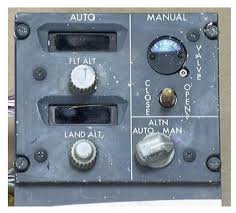
Image Courtesy: Google Images. Pressurisation Mode Selector in Manual Mode


2. Non-identification of the warnings and the reasons for the activation of the warnings (cabin altitude warning horn, passenger oxygen masks deployment indication, Master Caution), and continuation of the climb. (The initial actions by the flight crew to disconnect the autopilot, to retard and then again advance the throttles, indicated that it interpreted the warning horn as a Takeoff Configuration Warning). (At an aircraft altitude of 17 000 to 18 000 ft, the Master Caution was activated and was not cancelled for 53 seconds. The reason for its activation may have been either the inadequate cooling of the Equipment or the deployment of the oxygen masks in the cabin. Independently of the Master Caution indication, there are separate indications for both malfunctions on the overhead panel. The flight crew possibly identified the reason for the Master Caution to be only the inadequate cooling of the Equipment that was indicated on the overhead panel, and did not identify the second reason for its activation, i.e., passenger oxygen masks deployment, that was later also indicated on the Overhead panel. The crew became preoccupied with the Equipment Cooling fan situation and did not detect the problem with the pressurization system. The workload in the cockpit during the climb was already high and was exacerbated by the loud warning horn that the flight crew did not cancel).

3. Incapacitation of the flight crew due to hypoxia, resulting in continuation of the flight via the flight management computer and the autopilot, depletion of the fuel and engine flameout, and impact of the aircraft with the ground. (The incorrect interpretation of the reason for the warning horn indicated that the flight crew was not aware of the inadequate pressurization of the aircraft).


LATENT CAUSES

1. The Operator’s deficiencies in organization, quality management and safety culture, documented diachronically as findings in numerous audits.

2. The Regulatory Authority’s diachronic inadequate execution of its oversight responsibilities to ensure the safety of operations of the airlines under its supervision and its inadequate responses to findings of deficiencies documented in numerous audits.

3. Inadequate application of Crew Resource Management (CRM) principles by the flight crew.

4. Ineffectiveness and inadequacy of measures taken by the manufacturer in response to previous pressurization incidents in the particular type of aircraft, both with regard to modifications to aircraft systems as well as to guidance to the crews.


CONTRIBUTING FACTORS TO THE ACCIDENT

1. Omission of returning the pressurization mode selector to AUTO after un-scheduled maintenance on the aircraft.

2. Lack of specific procedures (on an international basis) for cabin crew procedures to address the situation of loss of pressurization, passenger oxygen masks deployment, and continuation of the aircraft ascent (climb).


3. Ineffectiveness of international aviation authorities to enforce implementation of corrective action plans after relevant audits.

Friday, May 6, 2016

SHUTTING DOWN THE ‘GOOD’ (WRONG) ENGINE


BRITISH MIDLANDS FLIGHT 092: 08 JAN 1989: BOEING 737 – 400


SYNOPSIS

Flight 092 left London for Belfast at 19:52h with a crew of 8, and 118 passengers on board. While climbing through FL283 moderate to severe vibration that was accompanied by ingress of smoke and fumes in to the flight deck were felt, as also fluctuations in the engine parameters of the No. 1 engine. Investigations revealed that these were the result of one of the outer panel of one of the no. 1 engine fan blades getting detached in flight, causing a series of compressor stalls that lead to airframe shuddering.

Believing the No. 2 engine had suffered damage, the crew throttled it back. The shuddering stopped, leading the flight crew to believe that their actions were correct, and they thus shut down the No 2 engine. The No. 1 engine operated normally after the initial severe vibrations, and during the descent in to East Midlands, the diversionary airfield.

The flight was cleared for an approach on to runway 27. The instrument approach on No. 1 engine continued normally, although with a high level of vibrations from the live engine. At 900 feet, 2.4nm from the runway, no. 1 engine suddenly suffered a reduction in power followed by a fire warning on this engine. Attempts to restart No. 2 engine were not successful. As the speed fell below 125 knots, the stick shaker activated and the aircraft struck trees at a speed of 115 knots. The aircraft continued and impacted the western carriageway of the M1 motorway 10 m lower and came to rest against the wooded embankment, 900 m short of the runway.

39 passengers died in the accident, and 8 more died later due to the injuries sustained. Of the remaining 79 occupants, 74 suffered serious injuries.

(Image Courtesy: Google Images: Aerial view of Crash site)


PROBABLE CAUSE

The operating crew shut down the No 2 engine after a fan blade had fractured in the No 1 engine. This engine subsequently suffered a major thrust loss due to secondary fan damage after power had been increased during the final approach to land.

The following factors contributed to the incorrect response of the flight crew

1. The combination of heavy engine vibration, noise, shuddering and an associated smell of fire were outside their training and experience.

2. They reacted to the initial engine problem prematurely and in a way that was contrary to their training. (Either pilot does not remember having noticed the engine parameters like N1, EGT, N2 or Oil Pressures of the engines before throttling back No. 2 engine).

3. They did not assimilate the indications on the engine instrument display before they throttled back the No. 2 engine. (The crew’s familiarity of the newly introduced EIS on the B 737-400 variant could have been a factor. The Captain had 23 hours and the first officer had 53 hours on the B 737-400. Both were given a 1day training session on the EIS, as there was no flight simulator available with the EIS. The variants before the B737-400 had the normal electro-mechanical engine instruments).

4. As the No 2 engine was throttled back, the noise and shuddering associated with the surging of the No 1 engine ceased, persuading them that they had correctly identified the defective engine. (The Auto Throttle system was disengaged while bringing No. 2 engine throttle back to idling. This led to manual control of the engines, and No. 1 engine fuel flow settled as per the prevailing engine conditions, rather than as demanded by the auto throttle to maintain flight parameters).


5. They were not informed of the flames which had emanated from the No.1 engine and which had been observed by many on board, including 3 cabin attendants in the aft cabin. (Inadequate communications between flight and cabin crew – a CRM issue that is greatly emphasised now).

Thursday, May 30, 2013

PILOTS AND COMMUNICATIONS

Aircraft Operations and Communications

An aircraft comes in to regular flight operations only once it has been accorded regulatory approval, the whole purpose of which is aimed at providing an error free product. However, latent errors can still be present. The recent Boeing 787 battery snafu that led to the world wide fleet being grounded is a case in point. Even when the approval process ensures an error free aircraft, there are still chances of errors creeping in during regular flight operations because each individual aircraft is tended to by a large number of diverse groups. These errors can be prevented and safety & efficiency can be ensured only if all these diverse groups work as a team, which can only happen when there is adequate co-ordination between, and within, the various groups, viz. the flight crew, cabin crew, dispatch, Air Traffic Control, maintenance personnel, and others directly or indirectly connected with the safe operation of the flight. Communications is that vital link that helps in ensuring good co-ordination between all of these different agencies. Thus understanding communications is important for anyone connected with aviation, and more importantly for the flight deck crew, they being aviation’s last line of defence to prevent any mishap from happening.

Communication is a two way process, in which a message is sent out from the sender to the receiver; the receiver gives feedback; and this process continues in a loop until the same meaning is shared between the sender and the receiver. The message can be sent either verbally in the form of oral or written communications or through non verbal means like body language, gestures, postures, face & eye expressions, touch, etc. Communication is a concept that has been variously defined in text books. These definitions essentially characterise communications in terms of two basic issues, which are: -  

·         First, communication entails the transfer of information (facts, opinions, ideas, feelings, instructions, commands, etc.)  from the sender to the receiver
·         And second, communication entails the transfer of meaning from the sender to the receiver

Effective Communications

Communications are useful only when they are effective, in that the transfer of information from the sender to the receiver should lead to the same meaning being shared by each of them, at the completion of the transaction(s). This can only happen when the sender and receiver are both active participants in the process and thus entails a responsibility not only on the sender to obtain or elicit feedback in order to determine whether or not the communication was effective but also on the receiver, who is responsible to provide honest feedback. Or in other words, effective communication is a two way process, and is only effective when the desired understanding or action takes place. In the fatal Air India Express accident at Mangalore, the First Officer had thrice communicated to the Commander to go around, but no go around action was initiated by the Commander during the approach and touchdown phase. Would this communication be considered effective? In this paper we would only focus on effective communication between the flight deck crew.

Communications and Crew Resource Management

Effective communication between flight deck crew members is an essential tool for achieving technical, procedural, and also crew resource management objectives. The communication process amongst the flight deck crew fulfils many important functions. Research shows that these functions include:

·         The most obvious being the transfer of information in the form of checklists, logs, R/T, etc.
·         Interpersonal/ team relationships that are crucial in any highly effective team, primarily because humans are emotional, in addition to being rational beings
·         Working towards shaping predictable behaviour and expectations from the other crew members, through the medium of briefings and critiques
·         It helps the crew to develop a shared mental model about the location, spatial orientation, environment, aircraft systems, time and fuel; thereby enhancing situational awareness
·         It allows individual crew members to become aware of problems and to contribute effectively to the problem solving and decision-making process on the flight deck
·         It helps the efficient and effective management of the flight with optimum use of available resources, including the crew, through planning, implementing/ revising & monitoring the tasks; the environment; and the crew.

These functions are all crucial for safe and efficient flight operations and underpin the important role of communications on the flight deck. Research has shown that each message can have different content, depending on the circumstances. These circumstances could be whether we communicate face to face, or under high workload conditions, or on R/T, or through written messages or through gestures.

Face to Face Communications

In this kind of a situation, the message content is dependent just 7% on the spoken words. The major part of the message content is conveyed by the tone employed while speaking (38%); and on the non verbal aspects of communications (55%) like body language, eye & facial expressions, postures etc. The flight deck crew would encounter this situation when they come face to face on arrival at the dispatch and also during low workload periods, as in a long cruise on autopilot. It is important to remember that in such a situation, words of the sender convey very little meaning to the receiver, if they are not backed by the right tone and the non verbal cues. The message communicated during this interaction would be stored and all future interactions on the flight deck would take place keeping the sense of the stored communications in mind.

Pre-Flight Brief:  Face to face communications normally include a pre flight brief. A good pre-flight brief is very important because it effectively touches nearly every function of communications that are enumerated above. Open questions, like ‘how is this weather likely to impact our flight? Why do you think so?’ by the Commander can draw in the other crew members into giving valuable inputs that should be incorporated in the plan, if feasible. This gives the crew a sense of ownership and would also send a very positive message, which would lead to a very effective team that is motivated to optimum individual, as well as team performance. The Commander has a major role to play in setting the tone, but the crew members also need to live up to the transactional analysis dictum of ‘I am OK, you are OK’. This can only happen if the crew members believe/ are made to believe that they have an important role to play in the safe and efficient conduct of the flight. This can happen if all crew members are encouraged to participate in the communication process, and more importantly are listened to, and treated like trained professionals having a vital role to play during the flight. Operating from the adult ego state would be desirable but depending on the experience of the crew it may need to switch between the adult and the nurturing parent/ natural child ego states too, at times. Crossed and other damaging ego states should be avoided under all circumstances.

High workload situations

The contents of the message change completely in a high work load situation, like during a take-off, landing or during non normal situations. Here words convey 55% of the meaning; the tone of the words spoken another 38%, and body language just the balance 7%. This tells us that it is most important to use standard phraseology with the correct intonation and sense of urgency during these situations. Standard phraseology has the advantage of brevity with accuracy, as both the sender and receiver are on the same page instantly. This however, does not rule out the need to give feedback, read back and hear back, as appropriate. High workload situations are most prone to the use of leading questions, wherein the need for quick answers overrides all else, but these are also the situations when these are most dangerous. Leading questions under such situations are thus best avoided. The analysis of a number of aircraft accidents indicate an increasing number of leading questions leading up to the accident. Leading questions generally are an indicator of a loss of situational awareness. 

Communications on R/T, Intercom or Telephone

In such a situation the content of the message is conveyed 55% through the spoken words and the balance 45% through the intonation, speed and clarity of the spoken words. Standard phraseology is vital in this situation along with feedback, read back and hear back. In case of any disruptions in any of the messages, it is important to retransmit/ seek a clarification instead of assuming, as was the case in the tragic Tenerife accident. Choice of words in verbal communications has significant safety implications. In order to minimise potential ambiguities and other variances in aviation, there are certain standard rules regarding which words, phrases or other elements need to be used for communicating. As an example, ICAO phraseology requires that the word ‘departure’ is used instead of ‘take-off’ in all cases, except for the actual take-off itself. It also requires all clearances, heading, altitudes, runways etc. to be read-back by the crew, as also hear back by the ATC. This was introduced to enhance safety following many cases where messages were misinterpreted/ read back incorrectly.

Written communications

90% of the meaning is conveyed through words or symbols in written communications, with only the balance 10% through the tone of the message. This implies that the choice and use of words and symbols are critical in written communications, like in SOPs, checklists, let down charts, etc. This is even more so in the modern day cockpits with EFIS; the choice of symbols, colours, updating of the databases, etc. become even more critical as there is no dynamic feedback available in the cockpit that can prevent misconceptions/ misrepresentations from leading to an untoward incident. Updation date of the database should be checked before every flight by the crew to ensure that the database is current. The initiator of the written communications should be able to unambiguously create the message in such a way that clearly conveys the intended meaning. It is the responsibility of the crew also to clarify every written communication and get it rectified in case the words and symbols, etc. are perceived differently from what they are intended to convey. Latent errors in written communications are possible and should be eliminated for safe operations.

Gestures

This form of communication is routinely used in aviation while marshalling an aircraft, and demands that each signal should convey a common understanding to the sender as well as the receiver. Since aviation is an international profession, all the hand signals have been standardised and should be used to prevent chances of misunderstanding. Non standard signals should be avoided.

Accent free English Language for Communications

As discussed above, words are important in almost all forms of communications barring gestures, but even more so on R/T, intercom or telephone and also during high workload situations. The message conveyed is affected by the language employed, the individual accents, pronunciation, vocabulary and grammatical styles. Investigations in to a number of accidents brought home the requirement for a common language for the flight crew in which they should be reasonably proficient to ensure effective communications. ICAO thus recommended through SARPs that language testing should be undertaken to ensure proficiency.  Indian DGCA has implemented this recommendation vide a CAR in Section 7 titled, “English for Aviation Language - Training, Assessment, Test and Certification”.   This CAR lays down the six skill areas in which the crew need to be proficient, and tested. These areas include pronunciation, structure, vocabulary, fluency, comprehension and interactions. Six levels of competency have been identified, and crew have to attain a minimum of Level 4 to operate. The aim of this requirement is to make communications possible, and effective. Crew would still come across individual variations, and should be sensitive to this fact and thus ensure that these variations do not hinder effective communications.

Communications, Workload and Situational Awareness

It is a known fact that human cognitive resources are limited and are shared between current reasoning processes and actions. Communications also consume mental resources. This fact needs to be clearly understood and internalised to ensure that one is sensitive to the workload on the flight deck before initiating/ responding to communications or before interrupting communications already underway, for some other task. We have all experienced situations wherein an increased workload tended to shorten our sentences, as also reduce their numbers, thus increasing the chances of communication errors. The most relevant example is the execution of the ‘Before take-off checklist’. Invariably this gets interrupted by the ATC that is ready to give out the departure clearance. It is best to ask the ATC to standby and complete the checklist before taking down the clearance or take down the clearance and then re-initiate the checklist from the beginning to ensure that both of these crucial tasks are not interrupted, thus making them prone to errors.


Similarly, a person absorbed in a difficult or unfamiliar task like in an emergency situation is less likely to understand what someone is saying to them. It is always best to wait until the task is completed, or stabilised before interrupting them. It is difficult to continue with a demanding task while at the same time communicating effectively. Leading questions at such times can be disastrous, as the person may respond verbally without paying attention, due to lack of mental resources available at his/ her disposal. Please be aware that under conditions of excessive workload, one of the first signs of degraded situational awareness is a loss of the ability to listen in. Since communications consume limited mental resources, to conserve on these, communications should be restricted to task oriented only during the critical phases of flight when sterile cockpit is called for. This ensures that communications are not distracting the crew during periods of anticipated high workload and helps the crew maintain situational awareness.

Monday, September 1, 2008

GARUDA INDONESIA ACCIDENT ON 07 MAR 2007 - FACTS AND CAUSE

Relevant Facts leading to the accident
On 07 Mar 2007, Garuda Indonesia flight 200 was being operated on a domestic flight from Jakarta to Yogyakarta (Indonesia). The PIC was also the PF. The PIC intended to carry out an ILS approach to R/W 09 at Yogyakarta, and had briefed for the same. ATC cleared the aircraft for a visual approach, with a requirement to proceed to long final and report runway in sight. Although the crew acknowledged the visual approach clearance, they continued with the ILS approach, without informing the controller. Descent and approach were carried out in VMC. At 10.1 miles (initial fix) from the R/W, the aircraft was at 3927 feet (against an altitude of 2500’, as published in the approach chart) at a speed of 283 kts. The PIC intended to make the FAF (6.6 DME) at the correct altitude and thus carried out a steep descent. This did not permit the speed to wash off at the anticipated rate (a tail wind at this altitude also added to the problem). Speed brakes were not selected. He was aware that it was difficult to make the FAF correctly. Flap 1 was selected and thereafter gear was selected down. The PIC called ‘Check speed, flaps 15’. The copilot called ‘Flaps 5’, as the speed was beyond the flap 15 speed of 205 kts. Flaps 5 were selected. The PIC called for ‘flap 15’ twice but the copilot did not select flap 15 as the speeds were beyond the limits. The PIC called ‘Check speed, flaps 15’ again but the copilot did not select flaps as the speed was beyond 240 kts. Also, he did not apprise the PIC of this fact. During the approach the GPWS alerts and warnings sounded 15 times, and the co-pilot also called for a go-around. The PIC continued the approach with flaps 5, and the aircraft attained glide slope close to R/W 09 threshold. The PIC asked the copilot if the landing checklist had been completed, to which he received no response from the copilot. The aircraft crossed threshold at 232 kts (98 kts faster than the flaps 40 landing speed). Ground speed was 235 kts. The aircraft touched down at 221 kts, bounced twice before settling on the runway. Shortly after touchdown, the copilot called for a go around. The PIC selected thrust reverser and continued with the landing. The aircraft overran the R/W, to the right of the centerline at 110 kts. The aircraft crossed a road, and impacted an embankment before stopping in a paddy field 252 metres from R/W 27 threshold. The aircraft was destroyed by the impact forces and post impact fire. 119 of the total 140 occupants survived the accident.

Causes
1. Flight crew communication and co-ordination was less than effective after the aircraft passed 2336’ on descent after flap 1 was selected.
2. The PIC flew the aircraft at an excessively high airspeed and steep descent during the approach. The PIC did not go around when stabilized approach criteria were not met.
3. The PIC did not act on the GPWS warnings, and the two call outs by the copilot to go around. (The PIC was 'fixated' on landing the aircraft - was responding to only one stimuli when there were a host of other stimuli seeking his attention. Happens under stress)
4. The copilot did not follow company instructions to take over control of the aircraft when he saw that the PIC repeatedly ignored warnings to go around.
5. Garuda did not provide simulator training to its B737 flight crews covering vital actions and required responses to GPWS alerts and warnings.