Showing posts with label COCKPIT. Show all posts

Monday, May 9, 2016

PRESSURISATION SWITCH IN THE WRONG POSITION

HELIOS AIRWAYS FLIGHT 522: 14 AUG 2005: BOEING 737 – 300

SYNOPSIS

On 14 Aug 2005, Helios Airways international Flight 522 departed from Larnaca, Cyprus, at 06:07h for an intermediate stop at Athens, Greece on way to Prague, Czech Republic. The planned flying time was 1 hour and 23 minutes. While climbing through an altitude of 12040 ft, for FL 340, the cabin altitude warning horn sounded at 06:12h. The German captain and the Cypriot co-pilot tried to solve the problem but encountered some problems communicating with each other.

Helios' Boeing 737-300 5B-DBY underwent maintenance on the night prior to the accident. The pressurization system was checked, but after completion of the tests the Pressurization Mode Selector (PMS) was reportedly left in the "Manual" position instead of the "Auto" mode. In manual mode the crew had to manually open or close the outflow valves in order to control the cabin pressure. The outflow valves were one-third in the open position which meant that the cabin would not pressurize after takeoff. The PMS mode was apparently not noted during the pre-departure checks by the crew.

At 06:14h while climbing through an altitude of 15966 ft, the Captain contacted the Company Operations Centre (COC) and informed, “Take off configuration warning ON” and “Cooling equipment Normal and Alternate Offline”. Because of a lack of cooling air another alarm activated, indicating a temperature warning for the avionics bay. 

There were a few communications between the Captain and the COC during the period of 06:14h and 06:20h. On a query from the Captain, “where are my equipment cooling circuit breakers?” The engineer replied, “Behind the Captain’s seat”. These needed to be pulled out to turn off the alarm. The captain got up from his seat to look for the circuit breakers. At 06:20h, the Captain made his last communication, at which time the aircraft was climbing through 28900 ft.

During the communications between the Captain and the COC, at an altitude of approx. 18000 ft, the cabin altitude exceeded 14000 ft, leading to the deployment of oxygen masks in the passenger cabin, as per design.

The crew was not wearing their oxygen masks as their mindset and actions were determined by the preconception that the problems were not related to the lack of cabin pressure. As the airplane was still climbing, the lack of oxygen seriously impaired the flight crew. The captain probably became unconscious when he was trying to find the circuit breaker. The first officer was still in his seat when he also became unconscious. There were no further two way communications with the aircraft after 06:20h.

The aircraft continued to climb and leveled out at FL 340, as programmed. The aircraft continued on track maintaining FL 340 and eventually fed in to a standard instrument approach procedure for runway 03L at Athens International airport, while continuing to maintain FL 340. The approach was followed by a missed approach, and setting up of a holding pattern over KEA VOR, while continuing to maintain altitude.

All efforts by Greek air traffic controllers to contact the pilots were futile. Around 07:00h, two Greek F-16 fighter planes were scrambled to intercept the aircraft. The F-16s intercepted the aircraft on its sixth holding pattern, at about 07:23h. The F-16 pilots reported that they were not able to observe the captain, while the first officer seemed to be unconscious and slumped over the controls. Oxygen masks were reported to be dangling in a dark passenger cabin.

At 08:49h, the F-16's reported a person not wearing an oxygen mask entering the cockpit and occupying the captain's seat. The F-16 pilot tried to attract his attention without success. At 08:50h, the left engine flamed out due to fuel depletion and the aircraft started descending. At 08:54h, two Mayday messages were recorded on the CVR, in a very weak voice. At 09:00h, the right engine also flamed out at an altitude of 7084 ft. The aircraft continued descending rapidly and impacted hilly terrain about 33 kms northwest of Athens, close to Grammatiko village.

All 121 persons on board the aircraft, including 6 crew members and 115 passengers, were fatally injured during the accident.

DIRECT CAUSES
1. Non-recognition that the cabin pressurization mode selector was in the MAN (manual) position during the performance of the:
a) Pre-flight procedure;
b) Before Start checklist; and
c) After Takeoff checklist.
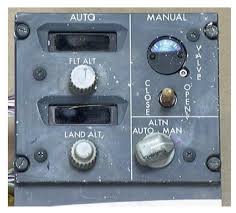
Image Courtesy: Google Images. Pressurisation Mode Selector in Manual Mode


2. Non-identification of the warnings and the reasons for the activation of the warnings (cabin altitude warning horn, passenger oxygen masks deployment indication, Master Caution), and continuation of the climb. (The initial actions by the flight crew to disconnect the autopilot, to retard and then again advance the throttles, indicated that it interpreted the warning horn as a Takeoff Configuration Warning). (At an aircraft altitude of 17 000 to 18 000 ft, the Master Caution was activated and was not cancelled for 53 seconds. The reason for its activation may have been either the inadequate cooling of the Equipment or the deployment of the oxygen masks in the cabin. Independently of the Master Caution indication, there are separate indications for both malfunctions on the overhead panel. The flight crew possibly identified the reason for the Master Caution to be only the inadequate cooling of the Equipment that was indicated on the overhead panel, and did not identify the second reason for its activation, i.e., passenger oxygen masks deployment, that was later also indicated on the Overhead panel. The crew became preoccupied with the Equipment Cooling fan situation and did not detect the problem with the pressurization system. The workload in the cockpit during the climb was already high and was exacerbated by the loud warning horn that the flight crew did not cancel).

3. Incapacitation of the flight crew due to hypoxia, resulting in continuation of the flight via the flight management computer and the autopilot, depletion of the fuel and engine flameout, and impact of the aircraft with the ground. (The incorrect interpretation of the reason for the warning horn indicated that the flight crew was not aware of the inadequate pressurization of the aircraft).


LATENT CAUSES

1. The Operator’s deficiencies in organization, quality management and safety culture, documented diachronically as findings in numerous audits.

2. The Regulatory Authority’s diachronic inadequate execution of its oversight responsibilities to ensure the safety of operations of the airlines under its supervision and its inadequate responses to findings of deficiencies documented in numerous audits.

3. Inadequate application of Crew Resource Management (CRM) principles by the flight crew.

4. Ineffectiveness and inadequacy of measures taken by the manufacturer in response to previous pressurization incidents in the particular type of aircraft, both with regard to modifications to aircraft systems as well as to guidance to the crews.


CONTRIBUTING FACTORS TO THE ACCIDENT

1. Omission of returning the pressurization mode selector to AUTO after un-scheduled maintenance on the aircraft.

2. Lack of specific procedures (on an international basis) for cabin crew procedures to address the situation of loss of pressurization, passenger oxygen masks deployment, and continuation of the aircraft ascent (climb).


3. Ineffectiveness of international aviation authorities to enforce implementation of corrective action plans after relevant audits.

Saturday, February 2, 2013

COULD THIS ACCIDENT BE PREVENTED?


Helios' Boeing 737-300 underwent maintenance on the night prior to the accident. The pressurization system was checked, but after completion of the tests the Pressurization Mode Selector (PMS) was reportedly left in the "Manual" position instead of the "Auto" mode. In manual mode the crew had to manually open or close the outflow valves in order to control the cabin pressure. The outflow valves were one-third in the open position which meant that the cabin would not pressurize after takeoff. The PMS mode was apparently not noted during the pre-departure checks by the crew.

In the morning the 737 was to operate Flight 522 from Larnaca to Prague, Czech Republic with an intermediate stop at Athens, Greece. The flight departed Larnaca at 09:07 for the leg to Athens with a planned flying time of 1 hour and 23 minutes. As the airplane climbed over the Mediterranean the cabin altitude alert horn sounded. This occurred as the 737 passed through an altitude of 10,000 feet. Cabin altitude is usually held around 8,000 feet. The crew possibly thought it was an erroneous takeoff configuration warning because the sound is identical. Then, at 14,000 feet, the oxygen masks automatically deployed and a master caution light illuminated in the cockpit. Because of a lack of cooling air another alarm activated, indicating a temperature warning for the avionics bay.

The German captain and the Cypriot co-pilot tried to solve the problem but encountered some problems communicating with each other. They contacted the Helios´ maintenance base to seek advice. The engineer told that they needed to pull the circuit breaker to turn off the alarm. The radio contact ended as the aircraft climbed through 28 900 ft. The circuit breaker was located in a cabinet behind the captain. The captain got up from his seat to look for the circuit breaker. The crews were not wearing their oxygen masks as their mindset and actions were determined by the preconception that the problems were not related to the lack of cabin pressure.

As the airplane was still climbing the lack of oxygen seriously impaired the flight crew. The captain probably became unconscious when he was trying to find the circuit breaker. The first officer was still in his seat when he also became unconscious. Because the plane's autopilot was programmed for FL340 the Boeing continued to climb until leveling out at that altitude some 19 minutes after takeoff. At 09:37 the 737 entered the Athens FIR but no R/T contact was established with the flight. Over Rodos at about 09:52 the airplane entered the UL995 airway. At 10:21 the airplane passed the KEA VOR, which is located about 28 nm south of the Athens airport. The airplane then passed the Athens Airport and subsequently entered the KEA VOR holding pattern at 10:38. All efforts by Greek air traffic controllers to contact the pilots were futile. Around 11:00 two Greek F-16 fighter planes were scrambled from the Néa Anghialos air base. At 11:24, during the sixth holding pattern, the F-16's intercepted the airliner. The F-16 pilots reported that they were not able to observe the captain, while the first officer seemed to be unconscious and slumped over the controls.
At 11:49, the F-16's reported a person not wearing an oxygen mask entering the cockpit and occupying the captain's seat. The F-16 pilot tried to attract his attention without success. At 11:50, the left engine flamed out due to fuel depletion and the aircraft started descending. At 11:54, two Mayday messages were recorded on the CVR. At 12:00, the right engine also flamed out at an altitude of approximately 7100 feet. The aircraft continued descending rapidly and impacted hilly terrain.

The same Boeing 737 had, suffered a loss of cabin pressure on December 20, 2004 during a flight from Warsaw to Larnaca. Three passengers needed medical treatment after landing in Larnaca. This incident was caused by a leaking door seal of the right hand rear door.

DIRECT CAUSES:

1. Non-recognition that the cabin pressurization mode selector was in the MAN (manual) position during the performance of the:
a) Preflight procedure;
b) Before Start checklist; and
c) After Takeoff checklist.

2. Non-identification of the warnings and the reasons for the activation of the warnings (cabin altitude warning horn, passenger oxygen masks deployment indication, Master Caution), and continuation of the climb.

3. Incapacitation of the flight crew due to hypoxia, resulting in continuation of the flight via the flight management computer and the autopilot, depletion of the fuel and engine flameout, and impact of the aircraft with the ground.

LATENT CAUSES

1. The Operator’s deficiencies in organization, quality management and safety culture, documented diachronically as findings in numerous audits.

2. The Regulatory Authority’s diachronic inadequate execution of its oversight responsibilities to ensure the safety of operations of the airlines under its supervision and its inadequate responses to findings of deficiencies documented in numerous audits.

3. Inadequate application of Crew Resource Management (CRM) principles by the flight crew.

4. Ineffectiveness and inadequacy of measures taken by the manufacturer in response to previous pressurization incidents in the particular type of aircraft, both with regard to modifications to aircraft systems as well as to guidance to the crews.

CONTRIBUTING FACTORS TO THE ACCIDENT:

1. Omission of returning the pressurization mode selector to AUTO after un-scheduled maintenance on the aircraft.

2. Lack of specific procedures (on an international basis) for cabin crew procedures to address the situation of loss of pressurization, passenger oxygen masks deployment, and continuation of the aircraft ascent (climb).

3. Ineffectiveness of international aviation authorities to enforce implementation of corrective action plans after relevant audits.

Monday, October 27, 2008

ROLE OF CABIN CREW IN CIVIL AVIATION

“One can’t make a career of serving orange juice with a smile. The in-flight crew soon realizes that” is how Ashutosh Upadhyay, a person who runs a placement agency ‘The Headhunters’ sums up the job of cabin crew in today's Times of India (After Pink Slip - 27 Oct 2008). I believe this is not only the perception of Mr. Upadhyay but nearly every one who travels, or thinks, about air travel. The cabin crew’s job is considered to be that of a glorified server. This is misleading, and may only be partly true. The truth is……


The cabin crews are professionally trained flight crew whose carriage is mandated by regulations across the world. The aim of these regulations is to assist the Captain in providing safe transportation to the passengers while they are on board the aircraft. The aircraft is a very sophisticated piece of machinery and is very reliable, but can have problems like any other machine – the only difference being that this machine is in the third dimension and in a very hostile environment too. Sitting in a pressurized cabin gives one a false feeling of security, as the cabin is maintained at settings that are comfortable for people. This can change any minute. Although the probability of this happening is very low, the possibility always exists. Imagine what can happen to a person exposed to the extreme temperatures and pressures at the flight altitudes.


The regulations lay down the minimum number of cabin crews that are needed to be on board based on the number of seats, not the number of passengers. This is to err on the positive side, keeping passenger safety in mind. In case you have not perceived this earlier – it is the cabin crew’s job to apprise all passengers about the safety precautions while on board. Most people ignore these briefings by the cabin crew, although it is vital for the passengers to be familiar with all of them like belt locking/ unlocking, use of emergency oxygen, actions on take-off/ landing, position of emergency exits, actions on crash landing/ ditching etc. Emergencies do not come announced. So it is best to be prepared and listen to the safety briefings by the cabin crew.


The cabin crew’s job does not finish with just the briefing. They have to ensure that the briefings are complied with so that the safety of passengers is not compromised. Have you ever noticed them going around checking that your seats are upright and the table folded during take off and landing and that there is nothing obstructing the pathways. Most mishaps happen during these two phases of flight and thus these are extra precautions that are taken by the cabin crew.


In case there is an in-flight emergency the cabin crews are trained to fight fires, administer emergency oxygen and any other assistance that may be needed. They are also required to check on the health of the cockpit crew, so that the flight can be conducted without problems.

Once these primary functions of the cabin crew are over, they become the more visible part of the customer service process of the company they fly for. Aviation is also a service industry and thus it is this service that gets highlighted with fare paying passengers. These are secondary functions but have a higher visibility, and thus the perception of most people.


So next time when you travel please try and see what the cabin crew do during the flight.

Sunday, September 14, 2008

HUMAN LIMITATIONS - CRM AND ERROR MANAGEMENT

Basics about the Cockpit
In aviation, the Captain has been assigned a very important position. He is the designated leader, and is given the legal authority for the flight. He is responsible, along with his crew, for the safe and efficient operation of the flight. His decision under most normal conditions of flight is final. However, he may take the help of all available resources to arrive at the final decision, as he may not have the full picture, at all times. He is also responsible for crew performance, directing actions of the crew and can ask for assistance of any crew member. The First Officer (F/O) is a qualified crew member who has the education, training, and skills and as some one rightly put it ‘he is like a second in command’ who can take over as Captain in the event of incapacitation of the Captain. This is an important point. However, depending on his experience and personality, the F/O may not be able to handle all situations like the Captain but would be competent to handle all probable situations in flight. With these basics, let us analyse the worst case.

Human Limitations
It must be understood that both the Captain and the F/O are human beings and that their performance is susceptible to all human limitations. These include being prone to loss of situational awareness, stress and fatigue; having an attitude and perceptual problems. Other problems may include limitations in the application of knowledge, exercise of judgment, short term memory (working memory, which is akin to the RAM in a computer) overload, and finally incapacitation. Also, we are all familiar with the saying that ‘to err is human’. This saying will continue to be true as long as we human beings have limitations. However, in aviation – a profession that is very constrained by time; is highly stressful; has complex processes; and which is closely scrutinized the media, regulator and public, we can ill afford to have human errors, as these errors can be fatal, and have been so in the past. Human errors are defined as ‘the unintentional act of performing a task incorrectly which can potentially degrade the system’. Errors can include problems in practice, procedures, and systems. Human error has been a major contributor to incidents/ accidents in the past. Here it also needs to be emphasized that accidents do not generally happen due to a single factor. They are a culmination of a ‘chain of events’ of small factors. The aircrew is the last link in this chain that can prevent these errors from turning into incidents/ accidents. To prevent these incidents/ accidents, the crews need to be aware of error management.
Error Management
Error management can be best accomplished by ‘Error Avoidance’. In case this is not possible then the next step would be ‘Early detection’. Finally, in case the error has been detected late or not detected, then steps have to be taken to ‘minimise the consequences’ as a result of these residual errors. Let’s take an example to understand this process. We have been cleared for a radar vectored ILS approach for R/W 28 at Delhi. The local QNH is 983 hpa and the weather is Rain/ Thundershowers with low clouds at 300ft. We are descending through transition level, and about to change the altimeter setting when the TCAS warning goes off. You are put off for a while, and forget to change your altimeter setting to local QNH with the result that you are now flying 900 ft. below the required altitude. An error has been made. This could have been prevented if the crew had remembered to call out the QNH changeover, after the excitement about the TCAS had been resolved. Once this error has been made, the next option is to detect it at the earliest. This can happen when the PF calls for the completion of the approach checklist. The next checkpoint would be when the radio altimeter is called out and altimeter cross checked. The next stage would be the callout at the Outer Marker, followed lastly by the Landing checklist. In case this error goes undetected then it would be vital to mitigate the consequences of this error by initiating go around at the Decision Altitude, if there are no visual references to land. This is a very mild example of an error and the three step process to prevent incident/ accident. The PNF (PM) by just doing his job of giving the callouts at the correct time would help in neutralizing the error. In an actual case the error could have been introduced by any component of the aviation system involved with the preparation, launch, execution and recovery of the flight. In such cases it may be very difficult, at times, to prevent the error and equally so to detect the error. A 2-crew operation can help in such cases. Our checks, callouts, and procedures have been designed with an aim of detecting and neutralizing errors before they can become problematic. The 2-crew cockpit has the inherent advantage of built in redundancy. It also helps in workload sharing and in ensuring constant crosschecking and monitoring of all actions (by both crew members); monitoring of aircraft trajectory; automation systems and mode status; and aircraft systems and components. To ensure all of this, it is vital to practice CRM. The major rationale for CRM is to enhance crew co-ordination and through this ‘to reduce the frequency and severity of errors’, or error management. Error management can be further enhanced by optimizing human performance in the here and now. What is CRM? NTSB defines CRM as ‘using all available resources – information, equipment and people to achieve safe and efficient flight operations’

Thursday, August 14, 2008

INDIAN AVIATION SCENARIO - 2008

Unprecedented growth in the Indian aviation sector over the past few years has come with a number of opportunities and challenges. One of these challenges pertains to the availability of qualified pilots for commercial aviation. Sensing this opportunity a large number of young students have opted to choose a career in aviation over the past few years. Of these a large number have gone abroad, completed their mandatory training for issue of Commercial Pilot’s Licence (CPL) on a fast track mode and have eventually found their way into the Indian aviation system. These pilots with about 200 – 250 hours of flying experience on slow moving piston engine aircraft are today occupying the right seat on multi-engine jets that fly at many times the speed of the Cessna class of aircraft, at altitudes that these pilots have never been exposed to. This opportunity, with its own set of challenges, has come about due to the skewed demand and supply equation in the Indian aviation sector. Now that this is a reality in India, it is best to take a reality check of the situation.

We have a situation today wherein a young pilot with relatively, both quantitatively and qualitatively, low flying experience occupying the right seat with a Captain with over 10000 hours of flying experience in the left seat. This is not an uncommon experience in Indian commercial aviation today. The First Officer is legally qualified and endorsed on the type being flown, having gone through the process of various trainings, including simulator training, flying as supernumerary and supervised line flying before being ‘released’ for line flying. Once released, this pilot though fully qualified to occupy the right seat is diffident. He is overwhelmed by the cockpit environment, the speed of the aircraft, the systems on the aircraft, the procedures – both normal and non-normal, the flying skills required to operate multi-engine jets, the automation levels and lastly the application of the knowledge that he has gained during training. Perforce this individual operates from a position of ‘I am not OK, you are OK’. This kind of a situation would continue until he reaches a stage where he has come to terms with all the above issues. This could, I believe, take any thing from 200 – 500 hours of flying experience, depending on the individual. Does this imply that this individual would be of no help in the cockpit in a 2-man crew? Finding an answer to this question is very vital. Most companies have procedures in place to ensure that such a pilot only flies with experienced Captains.

Experienced Captains come with their own set of beliefs and values. Let’s take two extreme scenarios to highlight the problem. One extreme position is a Captain who operates from a position of ‘I am OK, you are not OK’. This Captain has loads of experience and feels that he can do it all by himself. His body language seems to ignore the presence of the young First Officer (F/O), because he believes that the F/O would be no great help and would at best be a burden. His belief is further strengthened when he finds the F/O withdrawn, diffident, quiet, reluctant to speak, unassertive, unsure and clumsy in the cockpit. On the other extreme, we have a Captain who is knowledgeable about the human failings and the error model and also about CRM techniques including interpersonal relationships, communications, decision making and team work. This Captain understands the limitations of this relatively inexperienced F/O and takes appropriate steps to ensure that he utilizes the strengths of this trained and qualified crew member while guarding against, and at the same time nurturing, his weak areas. This is also the desirable case. The actual scenarios would invariably play out somewhere in between these two extremes and would be easier to resolve than the extreme positions. This is the aviation scenario in India today.