Showing posts with label PROCEDURES. Show all posts

Monday, May 9, 2016

PRESSURISATION SWITCH IN THE WRONG POSITION

HELIOS AIRWAYS FLIGHT 522: 14 AUG 2005: BOEING 737 – 300

SYNOPSIS

On 14 Aug 2005, Helios Airways international Flight 522 departed from Larnaca, Cyprus, at 06:07h for an intermediate stop at Athens, Greece on way to Prague, Czech Republic. The planned flying time was 1 hour and 23 minutes. While climbing through an altitude of 12040 ft, for FL 340, the cabin altitude warning horn sounded at 06:12h. The German captain and the Cypriot co-pilot tried to solve the problem but encountered some problems communicating with each other.

Helios' Boeing 737-300 5B-DBY underwent maintenance on the night prior to the accident. The pressurization system was checked, but after completion of the tests the Pressurization Mode Selector (PMS) was reportedly left in the "Manual" position instead of the "Auto" mode. In manual mode the crew had to manually open or close the outflow valves in order to control the cabin pressure. The outflow valves were one-third in the open position which meant that the cabin would not pressurize after takeoff. The PMS mode was apparently not noted during the pre-departure checks by the crew.

At 06:14h while climbing through an altitude of 15966 ft, the Captain contacted the Company Operations Centre (COC) and informed, “Take off configuration warning ON” and “Cooling equipment Normal and Alternate Offline”. Because of a lack of cooling air another alarm activated, indicating a temperature warning for the avionics bay. 

There were a few communications between the Captain and the COC during the period of 06:14h and 06:20h. On a query from the Captain, “where are my equipment cooling circuit breakers?” The engineer replied, “Behind the Captain’s seat”. These needed to be pulled out to turn off the alarm. The captain got up from his seat to look for the circuit breakers. At 06:20h, the Captain made his last communication, at which time the aircraft was climbing through 28900 ft.

During the communications between the Captain and the COC, at an altitude of approx. 18000 ft, the cabin altitude exceeded 14000 ft, leading to the deployment of oxygen masks in the passenger cabin, as per design.

The crew was not wearing their oxygen masks as their mindset and actions were determined by the preconception that the problems were not related to the lack of cabin pressure. As the airplane was still climbing, the lack of oxygen seriously impaired the flight crew. The captain probably became unconscious when he was trying to find the circuit breaker. The first officer was still in his seat when he also became unconscious. There were no further two way communications with the aircraft after 06:20h.

The aircraft continued to climb and leveled out at FL 340, as programmed. The aircraft continued on track maintaining FL 340 and eventually fed in to a standard instrument approach procedure for runway 03L at Athens International airport, while continuing to maintain FL 340. The approach was followed by a missed approach, and setting up of a holding pattern over KEA VOR, while continuing to maintain altitude.

All efforts by Greek air traffic controllers to contact the pilots were futile. Around 07:00h, two Greek F-16 fighter planes were scrambled to intercept the aircraft. The F-16s intercepted the aircraft on its sixth holding pattern, at about 07:23h. The F-16 pilots reported that they were not able to observe the captain, while the first officer seemed to be unconscious and slumped over the controls. Oxygen masks were reported to be dangling in a dark passenger cabin.

At 08:49h, the F-16's reported a person not wearing an oxygen mask entering the cockpit and occupying the captain's seat. The F-16 pilot tried to attract his attention without success. At 08:50h, the left engine flamed out due to fuel depletion and the aircraft started descending. At 08:54h, two Mayday messages were recorded on the CVR, in a very weak voice. At 09:00h, the right engine also flamed out at an altitude of 7084 ft. The aircraft continued descending rapidly and impacted hilly terrain about 33 kms northwest of Athens, close to Grammatiko village.

All 121 persons on board the aircraft, including 6 crew members and 115 passengers, were fatally injured during the accident.

DIRECT CAUSES
1. Non-recognition that the cabin pressurization mode selector was in the MAN (manual) position during the performance of the:
a) Pre-flight procedure;
b) Before Start checklist; and
c) After Takeoff checklist.
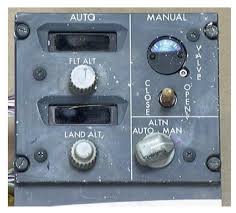
Image Courtesy: Google Images. Pressurisation Mode Selector in Manual Mode


2. Non-identification of the warnings and the reasons for the activation of the warnings (cabin altitude warning horn, passenger oxygen masks deployment indication, Master Caution), and continuation of the climb. (The initial actions by the flight crew to disconnect the autopilot, to retard and then again advance the throttles, indicated that it interpreted the warning horn as a Takeoff Configuration Warning). (At an aircraft altitude of 17 000 to 18 000 ft, the Master Caution was activated and was not cancelled for 53 seconds. The reason for its activation may have been either the inadequate cooling of the Equipment or the deployment of the oxygen masks in the cabin. Independently of the Master Caution indication, there are separate indications for both malfunctions on the overhead panel. The flight crew possibly identified the reason for the Master Caution to be only the inadequate cooling of the Equipment that was indicated on the overhead panel, and did not identify the second reason for its activation, i.e., passenger oxygen masks deployment, that was later also indicated on the Overhead panel. The crew became preoccupied with the Equipment Cooling fan situation and did not detect the problem with the pressurization system. The workload in the cockpit during the climb was already high and was exacerbated by the loud warning horn that the flight crew did not cancel).

3. Incapacitation of the flight crew due to hypoxia, resulting in continuation of the flight via the flight management computer and the autopilot, depletion of the fuel and engine flameout, and impact of the aircraft with the ground. (The incorrect interpretation of the reason for the warning horn indicated that the flight crew was not aware of the inadequate pressurization of the aircraft).


LATENT CAUSES

1. The Operator’s deficiencies in organization, quality management and safety culture, documented diachronically as findings in numerous audits.

2. The Regulatory Authority’s diachronic inadequate execution of its oversight responsibilities to ensure the safety of operations of the airlines under its supervision and its inadequate responses to findings of deficiencies documented in numerous audits.

3. Inadequate application of Crew Resource Management (CRM) principles by the flight crew.

4. Ineffectiveness and inadequacy of measures taken by the manufacturer in response to previous pressurization incidents in the particular type of aircraft, both with regard to modifications to aircraft systems as well as to guidance to the crews.


CONTRIBUTING FACTORS TO THE ACCIDENT

1. Omission of returning the pressurization mode selector to AUTO after un-scheduled maintenance on the aircraft.

2. Lack of specific procedures (on an international basis) for cabin crew procedures to address the situation of loss of pressurization, passenger oxygen masks deployment, and continuation of the aircraft ascent (climb).


3. Ineffectiveness of international aviation authorities to enforce implementation of corrective action plans after relevant audits.

Thursday, May 30, 2013

PILOTS AND COMMUNICATIONS

Aircraft Operations and Communications

An aircraft comes in to regular flight operations only once it has been accorded regulatory approval, the whole purpose of which is aimed at providing an error free product. However, latent errors can still be present. The recent Boeing 787 battery snafu that led to the world wide fleet being grounded is a case in point. Even when the approval process ensures an error free aircraft, there are still chances of errors creeping in during regular flight operations because each individual aircraft is tended to by a large number of diverse groups. These errors can be prevented and safety & efficiency can be ensured only if all these diverse groups work as a team, which can only happen when there is adequate co-ordination between, and within, the various groups, viz. the flight crew, cabin crew, dispatch, Air Traffic Control, maintenance personnel, and others directly or indirectly connected with the safe operation of the flight. Communications is that vital link that helps in ensuring good co-ordination between all of these different agencies. Thus understanding communications is important for anyone connected with aviation, and more importantly for the flight deck crew, they being aviation’s last line of defence to prevent any mishap from happening.

Communication is a two way process, in which a message is sent out from the sender to the receiver; the receiver gives feedback; and this process continues in a loop until the same meaning is shared between the sender and the receiver. The message can be sent either verbally in the form of oral or written communications or through non verbal means like body language, gestures, postures, face & eye expressions, touch, etc. Communication is a concept that has been variously defined in text books. These definitions essentially characterise communications in terms of two basic issues, which are: -  

·         First, communication entails the transfer of information (facts, opinions, ideas, feelings, instructions, commands, etc.)  from the sender to the receiver
·         And second, communication entails the transfer of meaning from the sender to the receiver

Effective Communications

Communications are useful only when they are effective, in that the transfer of information from the sender to the receiver should lead to the same meaning being shared by each of them, at the completion of the transaction(s). This can only happen when the sender and receiver are both active participants in the process and thus entails a responsibility not only on the sender to obtain or elicit feedback in order to determine whether or not the communication was effective but also on the receiver, who is responsible to provide honest feedback. Or in other words, effective communication is a two way process, and is only effective when the desired understanding or action takes place. In the fatal Air India Express accident at Mangalore, the First Officer had thrice communicated to the Commander to go around, but no go around action was initiated by the Commander during the approach and touchdown phase. Would this communication be considered effective? In this paper we would only focus on effective communication between the flight deck crew.

Communications and Crew Resource Management

Effective communication between flight deck crew members is an essential tool for achieving technical, procedural, and also crew resource management objectives. The communication process amongst the flight deck crew fulfils many important functions. Research shows that these functions include:

·         The most obvious being the transfer of information in the form of checklists, logs, R/T, etc.
·         Interpersonal/ team relationships that are crucial in any highly effective team, primarily because humans are emotional, in addition to being rational beings
·         Working towards shaping predictable behaviour and expectations from the other crew members, through the medium of briefings and critiques
·         It helps the crew to develop a shared mental model about the location, spatial orientation, environment, aircraft systems, time and fuel; thereby enhancing situational awareness
·         It allows individual crew members to become aware of problems and to contribute effectively to the problem solving and decision-making process on the flight deck
·         It helps the efficient and effective management of the flight with optimum use of available resources, including the crew, through planning, implementing/ revising & monitoring the tasks; the environment; and the crew.

These functions are all crucial for safe and efficient flight operations and underpin the important role of communications on the flight deck. Research has shown that each message can have different content, depending on the circumstances. These circumstances could be whether we communicate face to face, or under high workload conditions, or on R/T, or through written messages or through gestures.

Face to Face Communications

In this kind of a situation, the message content is dependent just 7% on the spoken words. The major part of the message content is conveyed by the tone employed while speaking (38%); and on the non verbal aspects of communications (55%) like body language, eye & facial expressions, postures etc. The flight deck crew would encounter this situation when they come face to face on arrival at the dispatch and also during low workload periods, as in a long cruise on autopilot. It is important to remember that in such a situation, words of the sender convey very little meaning to the receiver, if they are not backed by the right tone and the non verbal cues. The message communicated during this interaction would be stored and all future interactions on the flight deck would take place keeping the sense of the stored communications in mind.

Pre-Flight Brief:  Face to face communications normally include a pre flight brief. A good pre-flight brief is very important because it effectively touches nearly every function of communications that are enumerated above. Open questions, like ‘how is this weather likely to impact our flight? Why do you think so?’ by the Commander can draw in the other crew members into giving valuable inputs that should be incorporated in the plan, if feasible. This gives the crew a sense of ownership and would also send a very positive message, which would lead to a very effective team that is motivated to optimum individual, as well as team performance. The Commander has a major role to play in setting the tone, but the crew members also need to live up to the transactional analysis dictum of ‘I am OK, you are OK’. This can only happen if the crew members believe/ are made to believe that they have an important role to play in the safe and efficient conduct of the flight. This can happen if all crew members are encouraged to participate in the communication process, and more importantly are listened to, and treated like trained professionals having a vital role to play during the flight. Operating from the adult ego state would be desirable but depending on the experience of the crew it may need to switch between the adult and the nurturing parent/ natural child ego states too, at times. Crossed and other damaging ego states should be avoided under all circumstances.

High workload situations

The contents of the message change completely in a high work load situation, like during a take-off, landing or during non normal situations. Here words convey 55% of the meaning; the tone of the words spoken another 38%, and body language just the balance 7%. This tells us that it is most important to use standard phraseology with the correct intonation and sense of urgency during these situations. Standard phraseology has the advantage of brevity with accuracy, as both the sender and receiver are on the same page instantly. This however, does not rule out the need to give feedback, read back and hear back, as appropriate. High workload situations are most prone to the use of leading questions, wherein the need for quick answers overrides all else, but these are also the situations when these are most dangerous. Leading questions under such situations are thus best avoided. The analysis of a number of aircraft accidents indicate an increasing number of leading questions leading up to the accident. Leading questions generally are an indicator of a loss of situational awareness. 

Communications on R/T, Intercom or Telephone

In such a situation the content of the message is conveyed 55% through the spoken words and the balance 45% through the intonation, speed and clarity of the spoken words. Standard phraseology is vital in this situation along with feedback, read back and hear back. In case of any disruptions in any of the messages, it is important to retransmit/ seek a clarification instead of assuming, as was the case in the tragic Tenerife accident. Choice of words in verbal communications has significant safety implications. In order to minimise potential ambiguities and other variances in aviation, there are certain standard rules regarding which words, phrases or other elements need to be used for communicating. As an example, ICAO phraseology requires that the word ‘departure’ is used instead of ‘take-off’ in all cases, except for the actual take-off itself. It also requires all clearances, heading, altitudes, runways etc. to be read-back by the crew, as also hear back by the ATC. This was introduced to enhance safety following many cases where messages were misinterpreted/ read back incorrectly.

Written communications

90% of the meaning is conveyed through words or symbols in written communications, with only the balance 10% through the tone of the message. This implies that the choice and use of words and symbols are critical in written communications, like in SOPs, checklists, let down charts, etc. This is even more so in the modern day cockpits with EFIS; the choice of symbols, colours, updating of the databases, etc. become even more critical as there is no dynamic feedback available in the cockpit that can prevent misconceptions/ misrepresentations from leading to an untoward incident. Updation date of the database should be checked before every flight by the crew to ensure that the database is current. The initiator of the written communications should be able to unambiguously create the message in such a way that clearly conveys the intended meaning. It is the responsibility of the crew also to clarify every written communication and get it rectified in case the words and symbols, etc. are perceived differently from what they are intended to convey. Latent errors in written communications are possible and should be eliminated for safe operations.

Gestures

This form of communication is routinely used in aviation while marshalling an aircraft, and demands that each signal should convey a common understanding to the sender as well as the receiver. Since aviation is an international profession, all the hand signals have been standardised and should be used to prevent chances of misunderstanding. Non standard signals should be avoided.

Accent free English Language for Communications

As discussed above, words are important in almost all forms of communications barring gestures, but even more so on R/T, intercom or telephone and also during high workload situations. The message conveyed is affected by the language employed, the individual accents, pronunciation, vocabulary and grammatical styles. Investigations in to a number of accidents brought home the requirement for a common language for the flight crew in which they should be reasonably proficient to ensure effective communications. ICAO thus recommended through SARPs that language testing should be undertaken to ensure proficiency.  Indian DGCA has implemented this recommendation vide a CAR in Section 7 titled, “English for Aviation Language - Training, Assessment, Test and Certification”.   This CAR lays down the six skill areas in which the crew need to be proficient, and tested. These areas include pronunciation, structure, vocabulary, fluency, comprehension and interactions. Six levels of competency have been identified, and crew have to attain a minimum of Level 4 to operate. The aim of this requirement is to make communications possible, and effective. Crew would still come across individual variations, and should be sensitive to this fact and thus ensure that these variations do not hinder effective communications.

Communications, Workload and Situational Awareness

It is a known fact that human cognitive resources are limited and are shared between current reasoning processes and actions. Communications also consume mental resources. This fact needs to be clearly understood and internalised to ensure that one is sensitive to the workload on the flight deck before initiating/ responding to communications or before interrupting communications already underway, for some other task. We have all experienced situations wherein an increased workload tended to shorten our sentences, as also reduce their numbers, thus increasing the chances of communication errors. The most relevant example is the execution of the ‘Before take-off checklist’. Invariably this gets interrupted by the ATC that is ready to give out the departure clearance. It is best to ask the ATC to standby and complete the checklist before taking down the clearance or take down the clearance and then re-initiate the checklist from the beginning to ensure that both of these crucial tasks are not interrupted, thus making them prone to errors.


Similarly, a person absorbed in a difficult or unfamiliar task like in an emergency situation is less likely to understand what someone is saying to them. It is always best to wait until the task is completed, or stabilised before interrupting them. It is difficult to continue with a demanding task while at the same time communicating effectively. Leading questions at such times can be disastrous, as the person may respond verbally without paying attention, due to lack of mental resources available at his/ her disposal. Please be aware that under conditions of excessive workload, one of the first signs of degraded situational awareness is a loss of the ability to listen in. Since communications consume limited mental resources, to conserve on these, communications should be restricted to task oriented only during the critical phases of flight when sterile cockpit is called for. This ensures that communications are not distracting the crew during periods of anticipated high workload and helps the crew maintain situational awareness.

Monday, May 20, 2013

AIR TRANSAT ACCIDENT - 24 AUG 2001

Brief Details of the Accident

Flight TS 236 took off from Toronto at 0:52 UTC on Friday August 24, 2001 bound for Lisbon. There were 293 passengers and thirteen crew members on board. The aircraft was an Airbus A 330 registered as C-GITS that was manufactured in March 1999, configured with 362 seats and placed in service by Air Transat in April 1999. Leaving the gate in Toronto, the aircraft had 46.9 tonnes of fuel on board, 4.5 tonnes more than required by regulations.

At 05:36 UTC, the pilots received a warning of fuel imbalance. Not knowing at this point that they had a fuel leak, they followed a standard procedure to remedy the imbalance by transferring fuel from the port to the near-empty starboard tank.
At 05:16 UTC, a cockpit warning system chimed and warned of low oil temperature and high oil pressure on engine no. 2. There is no obvious connection between an oil temperature or pressure problem and a fuel leak. Consequently Captain Piché and co-pilot DeJager suspected these were false warnings and shared their observations with their maintenance control centre, who advised them to monitor the situation.
Unknown to the pilots, the aircraft had developed a fuel leak in a fuel line to its starboard engine. The fuel transfer caused fuel from the operational side of the aircraft to be wasted through the leak in the engine on the other side. The leak, which averaged at 1 gallon per second, caused a higher than normal fuel flow through the fuel-oil heat exchanger (FOHE). The FOHE is designed to transfer heat from engine oil to fuel for both cooling and efficiency purposes. The increased fuel flow caused both the drop in oil temperature, as well as the rise in oil pressure that the pilots had observed earlier.

At 05:45 UTC, the pilots decided to divert to Lajes air base in the Azores. The crew were still unsure if they really had a fuel leak or not. They declared a fuel emergency with Santa Maria Oceanic air traffic control three minutes later.
At 06:13 UTC, while still 135 miles (217 km) from Lajes, engine no. 2 on the right wing flamed out because of fuel starvation. Captain Piché ordered full thrust from the remaining operational engine, and the plane descended to 33,000 feet (10,000 m), unable to stay at its 39,000 feet (12,000 m) cruising altitude with only one engine operating. Ten minutes later, the crew sent a Mayday to Santa Maria Oceanic air traffic control.
Thirteen minutes later, engine no. 1 also flamed out at while the aircraft was still approximately 65 nautical miles (120 km) from Lajes Air Base. Without engine power, the aircraft not only lost all thrust, but also its primary source of electrical power. The emergency Ram Air Turbine was deployed automatically to provide essential power for critical sensors and instruments to fly the aircraft. However the aircraft lost its main hydraulic power which operates the flaps, brakes, and spoilers.
Military air traffic controllers who were tracking the aircraft on their radar system guided the aircraft to the airport. While Piché flew the plane, DeJager monitored its descent rate – around 2000 feet (600 metres) per minute – and calculated that the plane had about 15 to 20 minutes left before they had to ditch the plane in the water. The crew sighted the air base a few minutes later. Piché had to execute a series of 360 degree turns to lose speed and altitude. Although they successfully lined up with Runway 33, they faced a new danger. The plane was on a final descent, going faster than optimal. Although they had unlocked the slats and deployed the landing gear, the airspeed was still too high. Additionally, the aircraft would be unable to use its thrust reversers to slow the plane during the landing.
At 06:45 UTC, the plane touched down hard 1,030 feet (310 m) down Runway 33 at a speed of approximately 200 knots (370 km/h), instead of the 170 knots (310 km/h) recommended for an unpowered landing. The aircraft bounced back into the air, but touched down again 2,800 feet (850 m) from the approach end of the runway and came to a stop 7,600 feet (2,300 m) from the approach end of the 10,000 feet (3,000 m) runway. With the operation of the emergency brakes, eight tires burst. Fourteen passengers and two crew members suffered minor injuries during the evacuation of the aircraft. Two passengers suffered serious but not life-threatening injuries.
The favourable outcome was partly attributable to the flight being rerouted at the last minute via a more southerly route across the Atlantic than initially planned, which brought the aircraft within range of the Azores.

Investigations

The Portuguese GPIAA investigated the incident along with Canadian and French authorities.
The investigation revealed that the cause of the incident was a fuel leak in the number two engine, caused by an incorrect part installed in the hydraulic system by Air Transat maintenance staff. Air Transat maintenance staff had replaced the engine as part of routine maintenance, using a spare engine, lent by Rolls-Royce, from an older model. This engine did not include a hydraulic pump. Despite the lead mechanic's concerns, Air Transat ordered the use of a part from a similar engine, an adaptation that did not maintain adequate clearance between the hydraulic lines and the fuel line. This lack of clearance — on the order of millimeters from the intended part — allowed vibration in the hydraulic lines to degrade the fuel line and cause the leak. Air Transat accepted responsibility for the incident.
Although pilot error was listed as one of the lead causes for the incident, it was the skill of the pilots, and of the military Air Traffic Controller in service at the time, 1st Sgt. José Ramos, that allowed the flight to land without fuel, causing only minor injuries to the passengers and minor damage to the airplane, which is still in service. The pilots returned to a heroes' welcome from the Quebec press.
The incident also led to the issue of Airworthiness instructions to all operators of certain types of the Airbus aircraft that stressed that crews should check that any fuel imbalance is not caused by a fuel leak before opening the cross-feed valve. The French Airworthiness Directive (AD) required all airlines operating these Airbus models to make revisions to the Flight Manual before any further flights were allowed. The FAA gave a 15-day grace period before enforcing the AD. Airbus also modified its computer systems; the on-board computer now checks all fuel levels against the flight plan. It now gives a clear warning if more fuel is being lost than the engines can consume. Rolls Royce also issued a bulletin advising of the incompatibility of the affected engine parts.

Thursday, May 16, 2013

LION AIR ACCIDENT ON 13 APR 2013 - PRELIMINARY REPORT


(Relevant excerpts of the preliminary report accessed from the Indonesian authority website)

History of the Flight

On 13 April 2013, a Boeing 737-800 aircraft registered PK-LKS was being operated by PT. Lion Mentari Airlines (Lion Air) on a scheduled passenger flight as LNI 904. The aircraft departed from Husein Sastranegara International Airport (WICC) Bandung1 at 0545 UTC2. The aircraft flew at FL 390, while the Second in Command (SIC) was the Pilot Flying (PF) and the Pilot in Command (PIC) was the Pilot Monitoring (PM).

There were two pilots and 5 flight attendants with 101 passengers on board consisted of 95 adults, 5 children and 1 infant. The flight from the departure until start of approach was uneventful.

At 0648 UTC, the pilot made first communications with Bali Approach controller (Bali Director) when the aircraft position was 80 Nm from BLI4 VOR. The pilot received clearance direct to TALOT waypoint and descent to 17,000 ft.

At 0652 UTC, the Bali Director issued a further clearance for the pilot direct to KUTA waypoint and descent to 8,000 ft.

At 0659 UTC, the aircraft was vectored for VOR DME approach for runway 09 and descent to 3,000’.

At 0703 UTC, while the aircraft over KUTA waypoint, the Bali Director transferred the aircraft to Bali Control Tower (Ngurah Tower).

At 0704 UTC, the pilot contacted Ngurah Tower controller and informed that the aircraft position was leaving KUTA waypoint. The Ngurah Tower controller instructed the pilot to continue approach and to reduce the aircraft speed to provide sufficient separation distance with another aircraft.

At 0707 UTC, the Ngurah Tower issued take off clearance for departure aircraft on runway 09.

At 0708 UTC, with the aircraft at approximately 1,600 ft AGL, the Ngurah Tower controller saw the aircraft on final and gave a landing clearance with additional information that the wind condition was 120° / 05 kts.

The excerpts of the CVR and FDR data on the final approach are as follows:

At 0708:56 UTC, while the aircraft altitude was approximately 900 ft AGL the SIC stated that the runway was not in sight.

At 0709:33 UTC, after Enhance Ground Proximity Warning System (EGPWS) called out “MINIMUM” at aircraft altitude approximately 550 ft AGL, the pilot disengaged the autopilot and the auto throttle then continued to descend.

At 0709:53 UTC, while the aircraft altitude approximately 150 ft AGL the PIC took over the control.
The SIC handed the control to the PIC and stated that he could not see the runway.

At 0710:01 UTC, after the EGPWS warning “TWENTY”, the PIC commanded a go around.

At 0710:02 UTC, the aircraft impacted the water.

The OCA(H) as per the landing chart for VOR/ DME R/W 09 is 465’ (454’).

Wednesday, May 1, 2013

FINE AIR DC-8 ACCIDENT AT MIAMI 07 AUG 1997

(From Flight Safety Foundation website and NTSB accident Report)

Executive Summary


Fine Air Flight 101 was originally scheduled to depart Miami for Santo Domingo at 09:15 using another DC-8 airplane, N30UA, to carry cargo for Aeromar. Due to a delay of the inbound aircraft, Fine Air substituted N27UA for N30UA and rescheduled the departure for 12:00. N27UA arrived at Miami at 09:31 from San Juan, Puerto Rico, and was parked at the Fine Air hangar ramp. The security guard was not aware of the airplane change, and he instructed Aeromar loaders to load the airplane in accordance with the weight distribution form he possessed for N30UA. The first cargo pallet for flight 101 was loaded onto N27UA at 10:30 and the last pallet was loaded at 12:06. The resulting center of gravity (CG) of the accident airplane was near or even aft of the airplane’s aft CG limit. After the three crew members and the security guard had boarded the plane, the cabin door `was closed at 12:22. 


Eleven minutes later the flight obtained taxi clearance for runway 27R. The Miami tower controller cleared flight 101 for takeoff at 12:34. Takeoff power was selected and the DC-8 moved down the runway. The flight crew performed an elevator check at 80 knots. Fourteen seconds later the sound of a thump was heard. Just after calling V1 a second thump was heard. Two seconds later the airplane rotated. Immediately after takeoff the airplane pitched nose-up and entered a stall. The DC-8 recovered briefly from the stall, and stalled again. The airplane impacted terrain in a tail first, right wing down attitude. it slid west across a road (72nd Avenue) and into the International Airport Center at 28th Street and burst into flames. Investigation showed that the center of gravity resulted in the airplane’s trim being mis-set by at least 1.5 units airplane nose up, which presented the flight crew with a pitch control problem on takeoff.


FINDINGS (Findings that are relevant to pilots are being reproduced here from the NTSB accident report, which can be accessed at http://www.ntsb.gov/doclib/reports/1998/AAR9802.pdf):

  • The center of gravity (CG) of the accident airplane was near or even aft of the airplane’s aft CG limit.
  • The center of gravity shift resulted in the airplane’s trim being mis-set by at least 1.5 units airplane nose up (2.4 minus 0.9 units at 94,119 pounds).
  • The aft center of gravity (CG) location and mis-trimmed stabilizer presented the flight crew with a pitch control problem; however, because the actual CG location could not be determined, the severity of the control problem could not be determined.
  • The mistrim of the airplane (based on the incorrectly loaded cargo) presented the flightcrew with a situation that, without prior training or experience, required exceptional skills and reactions that cannot be expected of a typical line pilot.
PROBABLE CAUSE: "The National Transportation Safety Board determines that the probable cause of the accident, which resulted from the airplane being mis-loaded to produce a more aft center of gravity and a correspondingly incorrect stabilizer trim setting that precipitated an extreme pitch-up at rotation, was (1) the failure of Fine Air to exercise operational control over the cargo loading process; and (2) the failure of Aeromar to load the airplane as specified by Fine Air. Contributing to the accident was the failure of the FAA to adequately monitor Fine Airs operational control responsibilities for cargo loading and the failure of the FAA to ensure that known cargo-related deficiencies were corrected at Fine Air."

Thursday, August 14, 2008

INDIAN AVIATION SCENARIO - 2008

Unprecedented growth in the Indian aviation sector over the past few years has come with a number of opportunities and challenges. One of these challenges pertains to the availability of qualified pilots for commercial aviation. Sensing this opportunity a large number of young students have opted to choose a career in aviation over the past few years. Of these a large number have gone abroad, completed their mandatory training for issue of Commercial Pilot’s Licence (CPL) on a fast track mode and have eventually found their way into the Indian aviation system. These pilots with about 200 – 250 hours of flying experience on slow moving piston engine aircraft are today occupying the right seat on multi-engine jets that fly at many times the speed of the Cessna class of aircraft, at altitudes that these pilots have never been exposed to. This opportunity, with its own set of challenges, has come about due to the skewed demand and supply equation in the Indian aviation sector. Now that this is a reality in India, it is best to take a reality check of the situation.

We have a situation today wherein a young pilot with relatively, both quantitatively and qualitatively, low flying experience occupying the right seat with a Captain with over 10000 hours of flying experience in the left seat. This is not an uncommon experience in Indian commercial aviation today. The First Officer is legally qualified and endorsed on the type being flown, having gone through the process of various trainings, including simulator training, flying as supernumerary and supervised line flying before being ‘released’ for line flying. Once released, this pilot though fully qualified to occupy the right seat is diffident. He is overwhelmed by the cockpit environment, the speed of the aircraft, the systems on the aircraft, the procedures – both normal and non-normal, the flying skills required to operate multi-engine jets, the automation levels and lastly the application of the knowledge that he has gained during training. Perforce this individual operates from a position of ‘I am not OK, you are OK’. This kind of a situation would continue until he reaches a stage where he has come to terms with all the above issues. This could, I believe, take any thing from 200 – 500 hours of flying experience, depending on the individual. Does this imply that this individual would be of no help in the cockpit in a 2-man crew? Finding an answer to this question is very vital. Most companies have procedures in place to ensure that such a pilot only flies with experienced Captains.

Experienced Captains come with their own set of beliefs and values. Let’s take two extreme scenarios to highlight the problem. One extreme position is a Captain who operates from a position of ‘I am OK, you are not OK’. This Captain has loads of experience and feels that he can do it all by himself. His body language seems to ignore the presence of the young First Officer (F/O), because he believes that the F/O would be no great help and would at best be a burden. His belief is further strengthened when he finds the F/O withdrawn, diffident, quiet, reluctant to speak, unassertive, unsure and clumsy in the cockpit. On the other extreme, we have a Captain who is knowledgeable about the human failings and the error model and also about CRM techniques including interpersonal relationships, communications, decision making and team work. This Captain understands the limitations of this relatively inexperienced F/O and takes appropriate steps to ensure that he utilizes the strengths of this trained and qualified crew member while guarding against, and at the same time nurturing, his weak areas. This is also the desirable case. The actual scenarios would invariably play out somewhere in between these two extremes and would be easier to resolve than the extreme positions. This is the aviation scenario in India today.