Showing posts with label accident. Show all posts

Monday, May 9, 2016

PRESSURISATION SWITCH IN THE WRONG POSITION

HELIOS AIRWAYS FLIGHT 522: 14 AUG 2005: BOEING 737 – 300

SYNOPSIS

On 14 Aug 2005, Helios Airways international Flight 522 departed from Larnaca, Cyprus, at 06:07h for an intermediate stop at Athens, Greece on way to Prague, Czech Republic. The planned flying time was 1 hour and 23 minutes. While climbing through an altitude of 12040 ft, for FL 340, the cabin altitude warning horn sounded at 06:12h. The German captain and the Cypriot co-pilot tried to solve the problem but encountered some problems communicating with each other.

Helios' Boeing 737-300 5B-DBY underwent maintenance on the night prior to the accident. The pressurization system was checked, but after completion of the tests the Pressurization Mode Selector (PMS) was reportedly left in the "Manual" position instead of the "Auto" mode. In manual mode the crew had to manually open or close the outflow valves in order to control the cabin pressure. The outflow valves were one-third in the open position which meant that the cabin would not pressurize after takeoff. The PMS mode was apparently not noted during the pre-departure checks by the crew.

At 06:14h while climbing through an altitude of 15966 ft, the Captain contacted the Company Operations Centre (COC) and informed, “Take off configuration warning ON” and “Cooling equipment Normal and Alternate Offline”. Because of a lack of cooling air another alarm activated, indicating a temperature warning for the avionics bay. 

There were a few communications between the Captain and the COC during the period of 06:14h and 06:20h. On a query from the Captain, “where are my equipment cooling circuit breakers?” The engineer replied, “Behind the Captain’s seat”. These needed to be pulled out to turn off the alarm. The captain got up from his seat to look for the circuit breakers. At 06:20h, the Captain made his last communication, at which time the aircraft was climbing through 28900 ft.

During the communications between the Captain and the COC, at an altitude of approx. 18000 ft, the cabin altitude exceeded 14000 ft, leading to the deployment of oxygen masks in the passenger cabin, as per design.

The crew was not wearing their oxygen masks as their mindset and actions were determined by the preconception that the problems were not related to the lack of cabin pressure. As the airplane was still climbing, the lack of oxygen seriously impaired the flight crew. The captain probably became unconscious when he was trying to find the circuit breaker. The first officer was still in his seat when he also became unconscious. There were no further two way communications with the aircraft after 06:20h.

The aircraft continued to climb and leveled out at FL 340, as programmed. The aircraft continued on track maintaining FL 340 and eventually fed in to a standard instrument approach procedure for runway 03L at Athens International airport, while continuing to maintain FL 340. The approach was followed by a missed approach, and setting up of a holding pattern over KEA VOR, while continuing to maintain altitude.

All efforts by Greek air traffic controllers to contact the pilots were futile. Around 07:00h, two Greek F-16 fighter planes were scrambled to intercept the aircraft. The F-16s intercepted the aircraft on its sixth holding pattern, at about 07:23h. The F-16 pilots reported that they were not able to observe the captain, while the first officer seemed to be unconscious and slumped over the controls. Oxygen masks were reported to be dangling in a dark passenger cabin.

At 08:49h, the F-16's reported a person not wearing an oxygen mask entering the cockpit and occupying the captain's seat. The F-16 pilot tried to attract his attention without success. At 08:50h, the left engine flamed out due to fuel depletion and the aircraft started descending. At 08:54h, two Mayday messages were recorded on the CVR, in a very weak voice. At 09:00h, the right engine also flamed out at an altitude of 7084 ft. The aircraft continued descending rapidly and impacted hilly terrain about 33 kms northwest of Athens, close to Grammatiko village.

All 121 persons on board the aircraft, including 6 crew members and 115 passengers, were fatally injured during the accident.

DIRECT CAUSES
1. Non-recognition that the cabin pressurization mode selector was in the MAN (manual) position during the performance of the:
a) Pre-flight procedure;
b) Before Start checklist; and
c) After Takeoff checklist.
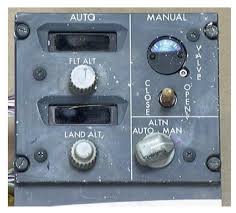
Image Courtesy: Google Images. Pressurisation Mode Selector in Manual Mode


2. Non-identification of the warnings and the reasons for the activation of the warnings (cabin altitude warning horn, passenger oxygen masks deployment indication, Master Caution), and continuation of the climb. (The initial actions by the flight crew to disconnect the autopilot, to retard and then again advance the throttles, indicated that it interpreted the warning horn as a Takeoff Configuration Warning). (At an aircraft altitude of 17 000 to 18 000 ft, the Master Caution was activated and was not cancelled for 53 seconds. The reason for its activation may have been either the inadequate cooling of the Equipment or the deployment of the oxygen masks in the cabin. Independently of the Master Caution indication, there are separate indications for both malfunctions on the overhead panel. The flight crew possibly identified the reason for the Master Caution to be only the inadequate cooling of the Equipment that was indicated on the overhead panel, and did not identify the second reason for its activation, i.e., passenger oxygen masks deployment, that was later also indicated on the Overhead panel. The crew became preoccupied with the Equipment Cooling fan situation and did not detect the problem with the pressurization system. The workload in the cockpit during the climb was already high and was exacerbated by the loud warning horn that the flight crew did not cancel).

3. Incapacitation of the flight crew due to hypoxia, resulting in continuation of the flight via the flight management computer and the autopilot, depletion of the fuel and engine flameout, and impact of the aircraft with the ground. (The incorrect interpretation of the reason for the warning horn indicated that the flight crew was not aware of the inadequate pressurization of the aircraft).


LATENT CAUSES

1. The Operator’s deficiencies in organization, quality management and safety culture, documented diachronically as findings in numerous audits.

2. The Regulatory Authority’s diachronic inadequate execution of its oversight responsibilities to ensure the safety of operations of the airlines under its supervision and its inadequate responses to findings of deficiencies documented in numerous audits.

3. Inadequate application of Crew Resource Management (CRM) principles by the flight crew.

4. Ineffectiveness and inadequacy of measures taken by the manufacturer in response to previous pressurization incidents in the particular type of aircraft, both with regard to modifications to aircraft systems as well as to guidance to the crews.


CONTRIBUTING FACTORS TO THE ACCIDENT

1. Omission of returning the pressurization mode selector to AUTO after un-scheduled maintenance on the aircraft.

2. Lack of specific procedures (on an international basis) for cabin crew procedures to address the situation of loss of pressurization, passenger oxygen masks deployment, and continuation of the aircraft ascent (climb).


3. Ineffectiveness of international aviation authorities to enforce implementation of corrective action plans after relevant audits.

Friday, May 6, 2016

SHUTTING DOWN THE ‘GOOD’ (WRONG) ENGINE


BRITISH MIDLANDS FLIGHT 092: 08 JAN 1989: BOEING 737 – 400


SYNOPSIS

Flight 092 left London for Belfast at 19:52h with a crew of 8, and 118 passengers on board. While climbing through FL283 moderate to severe vibration that was accompanied by ingress of smoke and fumes in to the flight deck were felt, as also fluctuations in the engine parameters of the No. 1 engine. Investigations revealed that these were the result of one of the outer panel of one of the no. 1 engine fan blades getting detached in flight, causing a series of compressor stalls that lead to airframe shuddering.

Believing the No. 2 engine had suffered damage, the crew throttled it back. The shuddering stopped, leading the flight crew to believe that their actions were correct, and they thus shut down the No 2 engine. The No. 1 engine operated normally after the initial severe vibrations, and during the descent in to East Midlands, the diversionary airfield.

The flight was cleared for an approach on to runway 27. The instrument approach on No. 1 engine continued normally, although with a high level of vibrations from the live engine. At 900 feet, 2.4nm from the runway, no. 1 engine suddenly suffered a reduction in power followed by a fire warning on this engine. Attempts to restart No. 2 engine were not successful. As the speed fell below 125 knots, the stick shaker activated and the aircraft struck trees at a speed of 115 knots. The aircraft continued and impacted the western carriageway of the M1 motorway 10 m lower and came to rest against the wooded embankment, 900 m short of the runway.

39 passengers died in the accident, and 8 more died later due to the injuries sustained. Of the remaining 79 occupants, 74 suffered serious injuries.

(Image Courtesy: Google Images: Aerial view of Crash site)


PROBABLE CAUSE

The operating crew shut down the No 2 engine after a fan blade had fractured in the No 1 engine. This engine subsequently suffered a major thrust loss due to secondary fan damage after power had been increased during the final approach to land.

The following factors contributed to the incorrect response of the flight crew

1. The combination of heavy engine vibration, noise, shuddering and an associated smell of fire were outside their training and experience.

2. They reacted to the initial engine problem prematurely and in a way that was contrary to their training. (Either pilot does not remember having noticed the engine parameters like N1, EGT, N2 or Oil Pressures of the engines before throttling back No. 2 engine).

3. They did not assimilate the indications on the engine instrument display before they throttled back the No. 2 engine. (The crew’s familiarity of the newly introduced EIS on the B 737-400 variant could have been a factor. The Captain had 23 hours and the first officer had 53 hours on the B 737-400. Both were given a 1day training session on the EIS, as there was no flight simulator available with the EIS. The variants before the B737-400 had the normal electro-mechanical engine instruments).

4. As the No 2 engine was throttled back, the noise and shuddering associated with the surging of the No 1 engine ceased, persuading them that they had correctly identified the defective engine. (The Auto Throttle system was disengaged while bringing No. 2 engine throttle back to idling. This led to manual control of the engines, and No. 1 engine fuel flow settled as per the prevailing engine conditions, rather than as demanded by the auto throttle to maintain flight parameters).


5. They were not informed of the flames which had emanated from the No.1 engine and which had been observed by many on board, including 3 cabin attendants in the aft cabin. (Inadequate communications between flight and cabin crew – a CRM issue that is greatly emphasised now).

Tuesday, November 26, 2013

Stall Recovery Template issued by FAA in June 2012.

Relevant extracts of FAA Advisory Circular 120 - 109 dated 08 Jun 2012, based on the Colgan Air, Air France and other stall related accidents at high and low altitudes.


TABLE 1. STALL RECOVERY TEMPLATE (WITH ASSOCIATED RATIONALE) 


1. Autopilot and autothrottle………………………………..Disconnect

Rationale: While maintaining the attitude of the airplane, disconnect the autopilot and autothrottle. Ensure the pitch attitude does not increase when disconnecting the autopilot. This may be very important in out-of-trim situations. Manual control is essential to recovery in all situations. Leaving the autopilot or autothrottle connected may result in inadvertent changes or adjustments that may not be easily recognized or appropriate, especially during high workload situations.

2. a) Nose down pitch control…........................................Apply until stall warning is eliminated
 b) Nose down pitch trim…….………………………..….As Needed 

Rationale: a) Reducing the angle of attack is crucial for recovery. This will also address autopilot-induced excessive nose up trim.
b) If the control column does not provide sufficient response, pitch trim may be necessary. However, excessive use of pitch trim may aggravate the condition, or may result in loss of control or high structural loads.

3. Bank…………………………………………………..…….Wings Level 

Rationale: This orients the lift vector for recovery.

4. Thrust …………………………………………….………….As Needed 

Rationale: During a stall recovery, maximum thrust is not always needed. A stall can occur at high thrust or at idle thrust. Therefore, the thrust is to be adjusted accordingly during the recovery. For airplanes with engines installed below the wing, applying maximum thrust may create a strong nose-up pitching moment if airspeed is low. For airplanes with engines mounted above the wings, thrust application creates a helpful pitch-down tendency. For propeller-driven airplanes, thrust application increases the airflow around the wing, assisting in stall recovery.

5. Speed brakes/Spoilers……….…….…………………………..Retract 

Rationale: This will improve lift and stall margin.

6. Return to the desired flightpath.

Rationale: Apply gentle action for recovery to avoid secondary stalls then return to desired flightpath.

Saturday, July 13, 2013

A TIMELY GO-AROUND DECISION AND SAFE OPERATIONS

The recent unfortunate accident involving Flight 214, a Boeing-777 aircraft, of Asiana Airlines at San Francisco is a case of a fully serviceable aircraft flying in to the ground in VMC conditions; due to an approach that became increasingly unstabilized with height. Could this accident be averted, had the crew taken a timely decision to go-around? Conditions being VMC, as per the recommendations enumerated below, the approach should have stabilized latest by 500 ft and should have remained so below 500’, to continue with an approach to land. As per reports, the airplane was configured for landing with 30 degrees of flaps and gear down with a target threshold speed of 137 knots. The aircraft descended through an altitude of 1400 ft at 170 kts and slowed down to 149 kts at 1000 feet. The throttles were reportedly at idle and the auto throttle was armed. At 500 feet altitude, 34 seconds prior to impact, the speed dropped to 134 kts, which was just below the target threshold speed. Any speed below the target speed, the approach should have been considered unstabilized, especially below 500 ft in VMC. The situation was allowed to worsen further when the airspeed dropped significantly, reaching 118 knots at 200 feet altitude. Eight seconds prior to impact, the throttles were moved forward. Airspeed reduced further to 112 knots at an altitude of 125 feet. Seven seconds prior to impact, one of the crew members made a call to increase speed. The stick shaker sounded 4 seconds prior to impact. One second later the speed was 103 knots, the lowest recorded by the FDR. One of the crew members made a call for go-around at 1.5 seconds before impact. This was too late to prevent an accident off an approach that was unstabilized. Accidents during the approach and landing (ALA) phase account for a major percentage of all accidents.

Analysis of data collected by a go-around study being conducted by the Flight Safety Foundation’s (FSF) international and European aviation committees has shown that potentially 54 percent of all aircraft accidents in year 2011 could have been prevented by a timely go-around decision by the flight deck crew. Clarifying on the figure of 54%, the FSF director of global programs is quoted to have said that, “this is based on 65 percent of that year’s accidents being in the approach and landing (ALA) phase, and using our analysis that 83 percent of ALAs could be prevented by a go-around decision”. The study has also elaborated that “the majority of accidents over the last 10 years have occurred during the approach, landing and go-around flight phases. The study has also highlighted the fact that the lack of a go-around decision is the leading risk factor in approach and landing accidents and is the primary cause of runway excursions during landing. Yet, less than 5% of unstabilized approaches lead to a go-around.”

Unstabilized approaches have been attributed to various factors, which include company policies, human factors, weather, crew resource management, ATC and automation. The Asiana case can also be attributed to a number of these factors. The crew felt that the auto throttle should have maintained the speed at 137 kts; the PF and PM were not effectively flying and monitoring the flight path and parameters, which permitted the IAS to drop well below the target speed, and the throttles to remain at idle; company culture may have also come into play in this scenario; fatigue after a long flight due to improper work load assignment – there were four pilots on this flight; three of them in the cockpit during the approach. All of these factors that led to the unstabilized approach would have been taken care of, if the crew had made the decision to go around in time. When things are not as planned in aviation, it is always better to have height and speed in hand. In this particular case there were many issues that pointed towards an unstabilized approach. To understand this it is best to study the elements that constitute a stabilized approach.

Stabilized Approach

Stabilized approach concept is all about maintaining a stable speed, descent rate, and vertical/ lateral flight path in the landing configuration. It is felt that a stabilized approach would generally lead to a safe landing, as the crew’s awareness of the horizontal/ vertical flight path; the IAS and the energy-condition of the aircraft would lead to improved overall situational awareness during the approach. Also, flying a stabilized approach permits the crew to devote adequate time and limited human ‘attention resources’ to flying, monitoring, communications, weather conditions, systems check, and most importantly to decision making. As has been brought out earlier, 95% of unstabilized approaches do not lead to a go-around, and this has contributed to 54% of the total accidents in 2011, and the lack of go-around decision is a major risk factor in ALA. It is now an accepted fact that the decision to execute a go-around is no indication of poor performance.

Recommended Elements of a Stabilized Approach

The following recommendations are developed by the Flight Safety Foundation. All approaches should be stabilized by 1,000 feet above airfield elevation (AFE) in instrument meteorological conditions (IMC) and by 500 feet AFE in visual meteorological conditions (VMC). An approach is considered stabilized when all of the following criteria are met:

·                     The airplane is on the correct flight path
·                      Only small changes in heading and pitch are required to maintain the correct flight path
·                     The airplane speed is not more than VREF + 20 knots indicated airspeed and not less than Vref
·                     The airplane is in the correct landing configuration
·                     Sink rate is no greater than 1,000 fpm; if an approach requires a sink rate greater than 1,000 fpm, a special briefing should be conducted
·                     Thrust setting is appropriate for the airplane configuration, and not below the minimum power on approach as defined by the aircraft operating manual.
·                     All briefings and checklists have been conducted.
·                     Specific types of approaches are stabilized if they also fulfill the following:

    • ILS approaches should be flown within one dot of the glide slope and localizer
    • During a circling approach, wings should be level on finals when the airplane reaches 300 feet AFE.
    • Unique approach procedures or abnormal conditions requiring a deviation from the above elements of a stabilized approach require a special briefing.

For safety reasons, an approach that becomes un-stabilized below 1,000 feet AFE in IMC, or below 500 feet AFE in VMC should be discontinued and a go-around executed. Also, stabilized conditions should be maintained throughout the rest of the approach for it to be considered a stabilized approach. If the above criteria cannot be established and maintained at and below 500 feet AFE, initiate a go-around.

Conclusion


Considering the statistics and the facts enumerated above, it is felt that all efforts should be made to fly stabilized approaches, and if due to some reason an approach becomes unstabilized then the decision to go-around should be taken well in time. A well considered, and executed, go-around will go a long way in ensuring safe operations, and enhance safety in aviation.

Monday, July 8, 2013

ASIANA AIR B-777-200 CRASH AT SFO ON 06 JUL 2013

A Boeing 777-200 of Asiana Airlines with 307 people on board crashes while landing on runway 28L at San Francisco, killing 2 people and injuring 180. The accident took place at about 11:28 am local time on 06 Jul 2013. As per initial reports coming through, the ILS Glide slope for the runway was non-operational for runway 28L at SFO. It appears that the aircraft came in low. Watching the debris trail on the runway, it appears that some portion of the aircraft touched well short of the beginning of the runway, let alone the threshold. Why? 

The aircraft has called finals at 7 miles and every thing appears normal. Has any failure taken place after that; the aircraft has encountered wind shear; or is it just a case of an undershooting approach with the tail portion of the aircraft hitting the snow wall - a vertical wall at the edge of the land/ water junction.

Awaiting further news on the cause of the accident - prima facie appears to be human error, with the aircraft making an undershooting approach in the absence of ILS glide slope information. No news about VASI or other visual approach aids. Weather at the time was VFR.

Monday, May 20, 2013

AIR TRANSAT ACCIDENT - 24 AUG 2001

Brief Details of the Accident

Flight TS 236 took off from Toronto at 0:52 UTC on Friday August 24, 2001 bound for Lisbon. There were 293 passengers and thirteen crew members on board. The aircraft was an Airbus A 330 registered as C-GITS that was manufactured in March 1999, configured with 362 seats and placed in service by Air Transat in April 1999. Leaving the gate in Toronto, the aircraft had 46.9 tonnes of fuel on board, 4.5 tonnes more than required by regulations.

At 05:36 UTC, the pilots received a warning of fuel imbalance. Not knowing at this point that they had a fuel leak, they followed a standard procedure to remedy the imbalance by transferring fuel from the port to the near-empty starboard tank.
At 05:16 UTC, a cockpit warning system chimed and warned of low oil temperature and high oil pressure on engine no. 2. There is no obvious connection between an oil temperature or pressure problem and a fuel leak. Consequently Captain Piché and co-pilot DeJager suspected these were false warnings and shared their observations with their maintenance control centre, who advised them to monitor the situation.
Unknown to the pilots, the aircraft had developed a fuel leak in a fuel line to its starboard engine. The fuel transfer caused fuel from the operational side of the aircraft to be wasted through the leak in the engine on the other side. The leak, which averaged at 1 gallon per second, caused a higher than normal fuel flow through the fuel-oil heat exchanger (FOHE). The FOHE is designed to transfer heat from engine oil to fuel for both cooling and efficiency purposes. The increased fuel flow caused both the drop in oil temperature, as well as the rise in oil pressure that the pilots had observed earlier.

At 05:45 UTC, the pilots decided to divert to Lajes air base in the Azores. The crew were still unsure if they really had a fuel leak or not. They declared a fuel emergency with Santa Maria Oceanic air traffic control three minutes later.
At 06:13 UTC, while still 135 miles (217 km) from Lajes, engine no. 2 on the right wing flamed out because of fuel starvation. Captain Piché ordered full thrust from the remaining operational engine, and the plane descended to 33,000 feet (10,000 m), unable to stay at its 39,000 feet (12,000 m) cruising altitude with only one engine operating. Ten minutes later, the crew sent a Mayday to Santa Maria Oceanic air traffic control.
Thirteen minutes later, engine no. 1 also flamed out at while the aircraft was still approximately 65 nautical miles (120 km) from Lajes Air Base. Without engine power, the aircraft not only lost all thrust, but also its primary source of electrical power. The emergency Ram Air Turbine was deployed automatically to provide essential power for critical sensors and instruments to fly the aircraft. However the aircraft lost its main hydraulic power which operates the flaps, brakes, and spoilers.
Military air traffic controllers who were tracking the aircraft on their radar system guided the aircraft to the airport. While Piché flew the plane, DeJager monitored its descent rate – around 2000 feet (600 metres) per minute – and calculated that the plane had about 15 to 20 minutes left before they had to ditch the plane in the water. The crew sighted the air base a few minutes later. Piché had to execute a series of 360 degree turns to lose speed and altitude. Although they successfully lined up with Runway 33, they faced a new danger. The plane was on a final descent, going faster than optimal. Although they had unlocked the slats and deployed the landing gear, the airspeed was still too high. Additionally, the aircraft would be unable to use its thrust reversers to slow the plane during the landing.
At 06:45 UTC, the plane touched down hard 1,030 feet (310 m) down Runway 33 at a speed of approximately 200 knots (370 km/h), instead of the 170 knots (310 km/h) recommended for an unpowered landing. The aircraft bounced back into the air, but touched down again 2,800 feet (850 m) from the approach end of the runway and came to a stop 7,600 feet (2,300 m) from the approach end of the 10,000 feet (3,000 m) runway. With the operation of the emergency brakes, eight tires burst. Fourteen passengers and two crew members suffered minor injuries during the evacuation of the aircraft. Two passengers suffered serious but not life-threatening injuries.
The favourable outcome was partly attributable to the flight being rerouted at the last minute via a more southerly route across the Atlantic than initially planned, which brought the aircraft within range of the Azores.

Investigations

The Portuguese GPIAA investigated the incident along with Canadian and French authorities.
The investigation revealed that the cause of the incident was a fuel leak in the number two engine, caused by an incorrect part installed in the hydraulic system by Air Transat maintenance staff. Air Transat maintenance staff had replaced the engine as part of routine maintenance, using a spare engine, lent by Rolls-Royce, from an older model. This engine did not include a hydraulic pump. Despite the lead mechanic's concerns, Air Transat ordered the use of a part from a similar engine, an adaptation that did not maintain adequate clearance between the hydraulic lines and the fuel line. This lack of clearance — on the order of millimeters from the intended part — allowed vibration in the hydraulic lines to degrade the fuel line and cause the leak. Air Transat accepted responsibility for the incident.
Although pilot error was listed as one of the lead causes for the incident, it was the skill of the pilots, and of the military Air Traffic Controller in service at the time, 1st Sgt. José Ramos, that allowed the flight to land without fuel, causing only minor injuries to the passengers and minor damage to the airplane, which is still in service. The pilots returned to a heroes' welcome from the Quebec press.
The incident also led to the issue of Airworthiness instructions to all operators of certain types of the Airbus aircraft that stressed that crews should check that any fuel imbalance is not caused by a fuel leak before opening the cross-feed valve. The French Airworthiness Directive (AD) required all airlines operating these Airbus models to make revisions to the Flight Manual before any further flights were allowed. The FAA gave a 15-day grace period before enforcing the AD. Airbus also modified its computer systems; the on-board computer now checks all fuel levels against the flight plan. It now gives a clear warning if more fuel is being lost than the engines can consume. Rolls Royce also issued a bulletin advising of the incompatibility of the affected engine parts.

Thursday, May 16, 2013

LION AIR ACCIDENT ON 13 APR 2013 - PRELIMINARY REPORT


(Relevant excerpts of the preliminary report accessed from the Indonesian authority website)

History of the Flight

On 13 April 2013, a Boeing 737-800 aircraft registered PK-LKS was being operated by PT. Lion Mentari Airlines (Lion Air) on a scheduled passenger flight as LNI 904. The aircraft departed from Husein Sastranegara International Airport (WICC) Bandung1 at 0545 UTC2. The aircraft flew at FL 390, while the Second in Command (SIC) was the Pilot Flying (PF) and the Pilot in Command (PIC) was the Pilot Monitoring (PM).

There were two pilots and 5 flight attendants with 101 passengers on board consisted of 95 adults, 5 children and 1 infant. The flight from the departure until start of approach was uneventful.

At 0648 UTC, the pilot made first communications with Bali Approach controller (Bali Director) when the aircraft position was 80 Nm from BLI4 VOR. The pilot received clearance direct to TALOT waypoint and descent to 17,000 ft.

At 0652 UTC, the Bali Director issued a further clearance for the pilot direct to KUTA waypoint and descent to 8,000 ft.

At 0659 UTC, the aircraft was vectored for VOR DME approach for runway 09 and descent to 3,000’.

At 0703 UTC, while the aircraft over KUTA waypoint, the Bali Director transferred the aircraft to Bali Control Tower (Ngurah Tower).

At 0704 UTC, the pilot contacted Ngurah Tower controller and informed that the aircraft position was leaving KUTA waypoint. The Ngurah Tower controller instructed the pilot to continue approach and to reduce the aircraft speed to provide sufficient separation distance with another aircraft.

At 0707 UTC, the Ngurah Tower issued take off clearance for departure aircraft on runway 09.

At 0708 UTC, with the aircraft at approximately 1,600 ft AGL, the Ngurah Tower controller saw the aircraft on final and gave a landing clearance with additional information that the wind condition was 120° / 05 kts.

The excerpts of the CVR and FDR data on the final approach are as follows:

At 0708:56 UTC, while the aircraft altitude was approximately 900 ft AGL the SIC stated that the runway was not in sight.

At 0709:33 UTC, after Enhance Ground Proximity Warning System (EGPWS) called out “MINIMUM” at aircraft altitude approximately 550 ft AGL, the pilot disengaged the autopilot and the auto throttle then continued to descend.

At 0709:53 UTC, while the aircraft altitude approximately 150 ft AGL the PIC took over the control.
The SIC handed the control to the PIC and stated that he could not see the runway.

At 0710:01 UTC, after the EGPWS warning “TWENTY”, the PIC commanded a go around.

At 0710:02 UTC, the aircraft impacted the water.

The OCA(H) as per the landing chart for VOR/ DME R/W 09 is 465’ (454’).

Wednesday, May 1, 2013

FINE AIR DC-8 ACCIDENT AT MIAMI 07 AUG 1997

(From Flight Safety Foundation website and NTSB accident Report)

Executive Summary


Fine Air Flight 101 was originally scheduled to depart Miami for Santo Domingo at 09:15 using another DC-8 airplane, N30UA, to carry cargo for Aeromar. Due to a delay of the inbound aircraft, Fine Air substituted N27UA for N30UA and rescheduled the departure for 12:00. N27UA arrived at Miami at 09:31 from San Juan, Puerto Rico, and was parked at the Fine Air hangar ramp. The security guard was not aware of the airplane change, and he instructed Aeromar loaders to load the airplane in accordance with the weight distribution form he possessed for N30UA. The first cargo pallet for flight 101 was loaded onto N27UA at 10:30 and the last pallet was loaded at 12:06. The resulting center of gravity (CG) of the accident airplane was near or even aft of the airplane’s aft CG limit. After the three crew members and the security guard had boarded the plane, the cabin door `was closed at 12:22. 


Eleven minutes later the flight obtained taxi clearance for runway 27R. The Miami tower controller cleared flight 101 for takeoff at 12:34. Takeoff power was selected and the DC-8 moved down the runway. The flight crew performed an elevator check at 80 knots. Fourteen seconds later the sound of a thump was heard. Just after calling V1 a second thump was heard. Two seconds later the airplane rotated. Immediately after takeoff the airplane pitched nose-up and entered a stall. The DC-8 recovered briefly from the stall, and stalled again. The airplane impacted terrain in a tail first, right wing down attitude. it slid west across a road (72nd Avenue) and into the International Airport Center at 28th Street and burst into flames. Investigation showed that the center of gravity resulted in the airplane’s trim being mis-set by at least 1.5 units airplane nose up, which presented the flight crew with a pitch control problem on takeoff.


FINDINGS (Findings that are relevant to pilots are being reproduced here from the NTSB accident report, which can be accessed at http://www.ntsb.gov/doclib/reports/1998/AAR9802.pdf):

  • The center of gravity (CG) of the accident airplane was near or even aft of the airplane’s aft CG limit.
  • The center of gravity shift resulted in the airplane’s trim being mis-set by at least 1.5 units airplane nose up (2.4 minus 0.9 units at 94,119 pounds).
  • The aft center of gravity (CG) location and mis-trimmed stabilizer presented the flight crew with a pitch control problem; however, because the actual CG location could not be determined, the severity of the control problem could not be determined.
  • The mistrim of the airplane (based on the incorrectly loaded cargo) presented the flightcrew with a situation that, without prior training or experience, required exceptional skills and reactions that cannot be expected of a typical line pilot.
PROBABLE CAUSE: "The National Transportation Safety Board determines that the probable cause of the accident, which resulted from the airplane being mis-loaded to produce a more aft center of gravity and a correspondingly incorrect stabilizer trim setting that precipitated an extreme pitch-up at rotation, was (1) the failure of Fine Air to exercise operational control over the cargo loading process; and (2) the failure of Aeromar to load the airplane as specified by Fine Air. Contributing to the accident was the failure of the FAA to adequately monitor Fine Airs operational control responsibilities for cargo loading and the failure of the FAA to ensure that known cargo-related deficiencies were corrected at Fine Air."

Friday, April 19, 2013

AIR INDIA EXPRESS ACCIDENT AT MANGALORE: 22 MAY 2010

(Adapted from Flight Safety Foundation website)

The outbound flight IX-811 of Air India Express between Mangalore and Dubai was uneventful and landed at Dubai at 01:14 IST. The airplane was serviced and refuelled. The same flight crew operated the return leg from Dubai to Mangalore as flight IX-812. The airplane taxied out for departure at 02:36 IST. 

Take-off, climb and cruise were uneventful. During the flight, there was no conversation between the two pilots for about 1:40 hours because the Captain was asleep. The First Officer was making all the radio calls.
The aircraft reported position at IGAMA at 05:33 hours IST and was advised to expect an ILS DME Arc approach to Mangalore. At about 130 miles from Mangalore, the First Officer requested descent clearance, which was denied by the Mangalore Area Controller, who was using standard procedural control to ensure safe separation with other air traffic. The flight was advised to call at 80 DME. At 05:46 IST, the flight reported 80 DME, as instructed by Mangalore Area Control. The aircraft was cleared to 7000 ft. The aircraft commenced descent at 77 DME from Mangalore at 05:47 IST. The visibility reported was 6 km.

Mangalore airport has a table top runway, best described by AIP India as, "Aerodrome located on hilltop. Valleys 200ft to 250ft immediately beyond paved surface of Runway." Owing to the surrounding terrain, Air India Express had made a special qualification requirement that only the PIC shall carry out the take- off and landing. The Captain on the accident flight had made a total of 16 landings in the past at this airport and the First Officer had operated as a Co-pilot on 66 flights at this airport.

While the aircraft had commenced descent, there was no recorded conversation regarding the mandatory preparation for descent and landing briefing as stipulated in the SOP. After the aircraft was at about 50 miles and descending out of FL 295, the conversation between the two pilots indicated that an incomplete approach briefing had been carried out. At about 25 nm from DME and descending through FL 184, the Mangalore Area Controller cleared the aircraft to continue descent to 2900 ft. At this stage, the First Officer requested, if they could proceed directly to Radial 338 and join the 10 DME Arc. Throughout the descent profile and DME Arc Approach for ILS 24, the aircraft was much higher than normally expected altitudes. The aircraft was handed over by the Mangalore Area Controller to ATC Tower at 05:52 IST. The Tower controller, thereafter, asked the aircraft to report established on 10 DME Arc for ILS Runway 24. By now the yawning by the First Officer recorded on the CVR indicated that even he was showing signs of tiredness. This flight was operating in WOCL (Window of Circadian Low). On having reported 10 DME Arc, the ATC Tower had asked the aircraft to report when established on ILS.

It appears that the Captain had realised that the aircraft altitude was higher than normal and had selected Landing Gear 'DOWN' at an altitude of approximately 8,500 ft with speed brakes still deployed in Flight Detent position, so as to increase the rate of descent. As indicated by the DFDR, the aircraft continued to be high and did not follow the standard procedure of intercepting the ILS Glide Path at the correct intercept altitude. This incorrect procedure led to the aircraft being at almost twice the altitude as compared to a Standard ILS Approach.

During approach, the CVR indicated that the Captain had selected Flaps 40 degrees and completed the Landing Check List. At 06:03 hours IST at about 2.5 DME, the Radio Altimeter had alerted an altitude of 2500 ft. This was immediately followed by the First Officer saying "It is too high" and "Runway straight down". In reply, the Captain had exclaimed "Oh my god". At this moment, the Captain had disconnected the Auto Pilot and simultaneously increased the rate of descent considerably to establish on the desired approach path. At this stage, the First Officer had queried "Go around?" To this query from the First Officer, the Captain had called out "Wrong loc .. ... localiser .. ... glide path".  

The First Officer had given a second call to the Captain for "Go around" followed by "Unstabilised". However, the First Officer did not appear to take any action, to initiate a Go Around. Having acquired the runway visually and to execute a landing, it appears that the Captain had increased the rate of descent to almost 4000 ft per minute. Due to this, there were numerous warnings from EGPWS for 'SINK RATE' and 'PULL UP'. On their own, the pilots did not report having established on ILS Approach.

Instead, the ATC Tower had queried the same. To this call, the Captain had forcefully prompted the First Officer to give a call of "Affirmative". The Tower controller gave landing clearance thereafter and also indicated "Winds calm". The aircraft was high on approach and touched down on the runway, much farther than normal.

The aircraft had crossed the threshold at about 200 ft / IAS in excess of 160 kt, against the target of 50 ft and 144 kts for this landing weight. Despite the EGPWS warnings and calls from the First Officer to go around, the Captain had persisted with the approach in unstabilised conditions. Short of touchdown, there was yet another (Third) call from the First Officer, "Go around captain...We don't have runway left". However, the Captain had continued with the landing and the final touchdown was about 5200 ft from the threshold of runway 24, leaving approximately 2800 ft of remaining paved surface.

The Captain had selected Thrust Reversers soon after touchdown. Within 6 seconds of applying brakes, the Captain had initiated a 'Go Around', in contravention of Boeing SOP. The aircraft overshot the runway including the strip of 60 metres. After overshooting the runway and strip, the aircraft continued into the Runway End Safety Area (RESA) of 90 metres. Soon after which the right wing impacted the localiser antenna structure located further at 85 metres from the end of RESA. Thereafter, the aircraft hit the boundary fence and fell into a gorge.

(Image Courtesy: ARKarthik.com

CAUSE OF THE ACCIDENT

Direct

The Court of Inquiry determines that the cause of this accident was Captain's failure to discontinue the 'unstabilised approach' and his persistence in continuing with the landing, despite three calls from the First Officer to 'go around' and a number of warnings from EGPWS.

Contributing Factors to the Accident

1.            In spite of availability of adequate rest period prior to the flight, the Captain was in prolonged sleep during flight, which could have led to sleep inertia. As a resu lt of relatively short period of time between his awakening and the approach, it possibly led to impaired judgment. This aspect might have got accentuated while flying in the Window of Circadian Low (WOCL).

2.            In the absence of Mangalore Area Control Radar (MSSR), due to unserviceability, the aircraft was given descent at a shorter distance on DME as compared to the normal. However, the flight crew did not plan the descent profile properly, resulting in remaining high on approach.

3.            Probably in view of ambiguity in various instructions empowering the 'copilot' to initiate a 'go around ', the First Officer gave repeated calls to this effect, but did not take over the controls to actually discontinue the ill-fated approach.

Sunday, March 31, 2013

HELIOS AIRWAYS FLIGHT 522: 14 AUG 2005


(From Flight Safety Foundation)

Brief Description

Helios' Boeing 737-300 underwent maintenance on the night prior to the accident. The pressurization system was checked, but after completion of the tests the Pressurization Mode Selector (PMS) was reportedly left in the "Manual" position instead of the "Auto" mode. In manual mode the crew had to manually open or close the outflow valves in order to control the cabin pressure. The outflow valves were one-third in the open position which meant that the cabin would not pressurize after takeoff. The PMS mode was apparently not noted during the pre-departure checks by the crew.

In the morning the 737 was to operate Flight 522 from Larnaca to Prague, Czech Republic with an intermediate stop at Athens, Greece. The flight departed Larnaca at 09:07 for the leg to Athens with a planned flying time of 1 hour and 23 minutes. As the airplane climbed over the Mediterranean the cabin altitude alert horn sounded. This occurred as the 737 passed through an altitude of 10,000 feet. Cabin altitude is usually held around 8,000 feet. The crew possibly thought it was an erroneous takeoff configuration warning because the sound is identical. Then, at 14,000 feet, the oxygen masks automatically deployed and a master caution light illuminated in the cockpit. Because of a lack of cooling air another alarm activated, indicating a temperature warning for the avionics bay.

The German captain and the Cypriot co-pilot tried to solve the problem but encountered some problems communicating with each other. They contacted the Helios´ maintenance base to seek advice. The engineer told that they needed to pull the circuit breaker to turn off the alarm. The radio contact ended as the aircraft climbed through 28 900 ft. The circuit breaker was located in a cabinet behind the captain. The captain got up from his seat to look for the circuit breaker. The crews were not wearing their oxygen masks as their mindset and actions were determined by the preconception that the problems were not related to the lack of cabin pressure.

As the airplane was still climbing the lack of oxygen seriously impaired the flight crew. The captain probably became unconscious when he was trying to find the circuit breaker. The first officer was still in his seat when he also became unconscious. Because the plane's autopilot was programmed for FL340 the Boeing continued to climb until leveling out at that altitude some 19 minutes after takeoff. At 09:37 the 737 entered the Athens FIR but no R/T contact was established with the flight. Over Rodos at about 09:52 the airplane entered the UL995 airway. At 10:21 the airplane passed the KEA VOR, which is located about 28 nm south of the Athens airport. The airplane then passed the Athens Airport and subsequently entered the KEA VOR holding pattern at 10:38. All efforts by Greek air traffic controllers to contact the pilots were futile. Around 11:00 two Greek F-16 fighter planes were scrambled from the Néa Anghialos air base. At 11:24, during the sixth holding pattern, the F-16's intercepted the airliner. The F-16 pilots reported that they were not able to observe the captain, while the first officer seemed to be unconscious and slumped over the controls.
At 11:49, the F-16's reported a person not wearing an oxygen mask entering the cockpit and occupying the captain's seat. The F-16 pilot tried to attract his attention without success. At 11:50, the left engine flamed out due to fuel depletion and the aircraft started descending. At 11:54, two Mayday messages were recorded on the CVR. At 12:00, the right engine also flamed out at an altitude of approximately 7100 feet. The aircraft continued descending rapidly and impacted hilly terrain.

The same Boeing 737 had, suffered a loss of cabin pressure on December 20, 2004 during a flight from Warsaw to Larnaca. Three passengers needed medical treatment after landing in Larnaca. This incident was caused by a leaking door seal of the right hand rear door.

Direct Causes

1. Non-recognition that the cabin pressurization mode selector was in the MAN (manual) position during the performance of the:
a) Preflight procedure;
b) Before Start checklist; and
c) After Takeoff checklist.

2. Non-identification of the warnings and the reasons for the activation of the warnings (cabin altitude warning horn, passenger oxygen masks deployment indication, Master Caution), and continuation of the climb.

3. Incapacitation of the flight crew due to hypoxia, resulting in continuation of the flight via the flight management computer and the autopilot, depletion of the fuel and engine flameout, and impact of the aircraft with the ground.

Latent Causes

1. The Operator’s deficiencies in organization, quality management and safety culture, documented diachronically as findings in numerous audits.

2. The Regulatory Authority’s diachronic inadequate execution of its oversight responsibilities to ensure the safety of operations of the airlines under its supervision and its inadequate responses to findings of deficiencies documented in numerous audits.

3. Inadequate application of Crew Resource Management (CRM) principles by the flight crew.

4. Ineffectiveness and inadequacy of measures taken by the manufacturer in response to previous pressurization incidents in the particular type of aircraft, both with regard to modifications to aircraft systems as well as to guidance to the crews.

Contributing Factors to the Accident

1. Omission of returning the pressurization mode selector to AUTO after un-scheduled maintenance on the aircraft.

2. Lack of specific procedures (on an international basis) for cabin crew procedures to address the situation of loss of pressurization, passenger oxygen masks deployment, and continuation of the aircraft ascent (climb).

3. Ineffectiveness of international aviation authorities to enforce implementation of corrective action plans after relevant audits.